
Have you ever realized that your previously strong and luxurious shower now feels… sad? The water pressure is less strong, the spray pattern is inconsistent, and just like that, your “morning refresh” feels more like a torrential downpour of frustration. I’ve been there – staring up at the shower head, wondering how something that looks “fine” can feel so blah. Spoiler alert, that is all mineral buildup, soap scum, and maybe even some mildew hiding in plain sight.
Here’s the truth that most people overlook – a dirty shower head is not just annoying, it can collect bacteria over time. The good news is that these can’t be cleaned by fancy cleaners or specialized tools – these can be revived simply with ingredients mostly likely already under your sink. In this post, I’m sharing these 7 hacks to clean a shower head that works and are also truly quick, science-based, and refreshing easy to keep up once you start.
So if you have hard water buildup, or want to go one step further to add a bit more shine to your weekly cleaning routine, these tricks will surely get your shower head back to the feeling of new again. Within the next few minutes, you will exactly learn how to remove limescale, dissolve mineral deposits, and keep that bathroom sparkly white using all natural and cost-effective methods that any one (think DIY homemaker) will be searching all over Pinterest for “easy shower cleaning hacks” “how to clean a shower head with vinegar and baking soda” or “homemade limescale remover” – key words, great! Let’s get into it.
Why does your shower head get dirty so quickly?
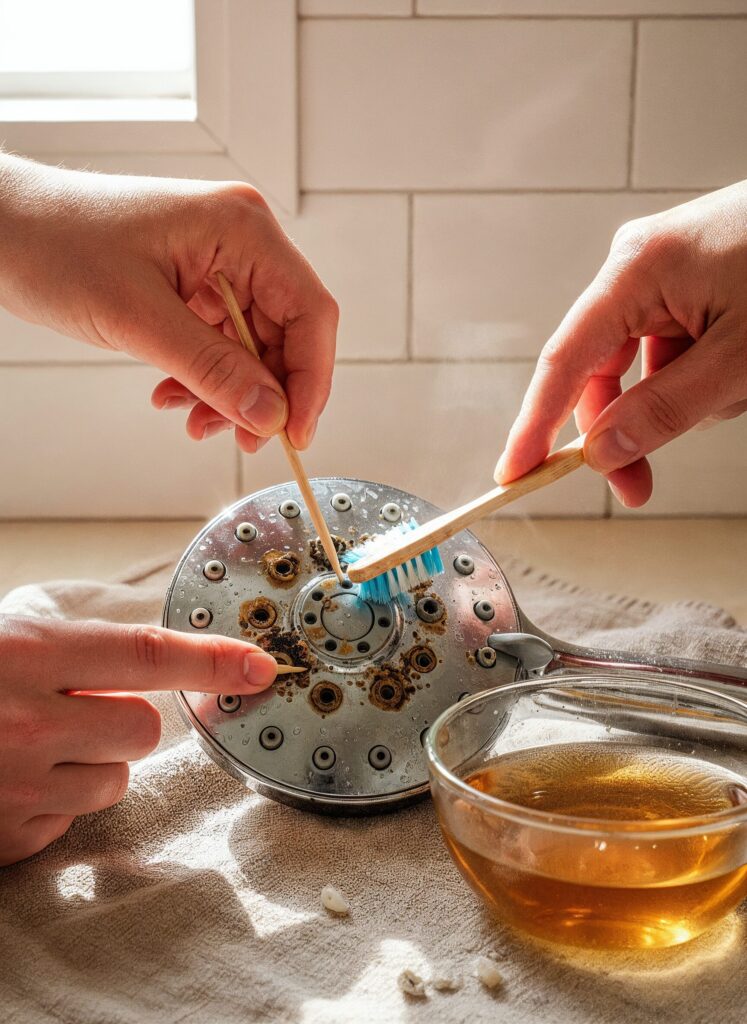
Before we jump into the hacks, it’s good to understand what’s really going on up there. Over time, water deposits (especially from hard water) accumulate in the little holes in your shower head. Those deposits – usually limescale, calcium or magnesium – restrict the flow of water and you’re going to shower with low water pressure. Then, add product residue from soaps, body wash, or steam, and you have a great recipe for gunk and microbial growth.
Take home message: Regular deep cleans stop the accumulation of deposits from becoming stubborn. Bonus, you don’t need strong chemicals to clean your shower head!
Shop: shower head cleaner
1. How does the classic vinegar soak method work so effectively?
This one deserves to be on the list, and it’s an old-school classic for a reason. If you’ve ever searched for “how to clean a showerhead naturally” on Pinterest, you may have seen others rave about the vinegar trick! You’ll need a plastic bag, two rubber bands, and some white vinegar. Fill a plastic bag with white vinegar, wrap the bag around your showerhead, and make sure it’s fully submerged. Leave it overnight (or at least a few hours).
Vinegar dissolves calcium and mineral deposits fast and safely. In the morning, remove the bag, give the shower head a quick scrub with an old toothbrush, and rinse with warm water. You’ll instantly notice cleaner streams and better water pressure.
Shop: white vinegar
2. Can you combine baking soda with vinegar for an extra boost?
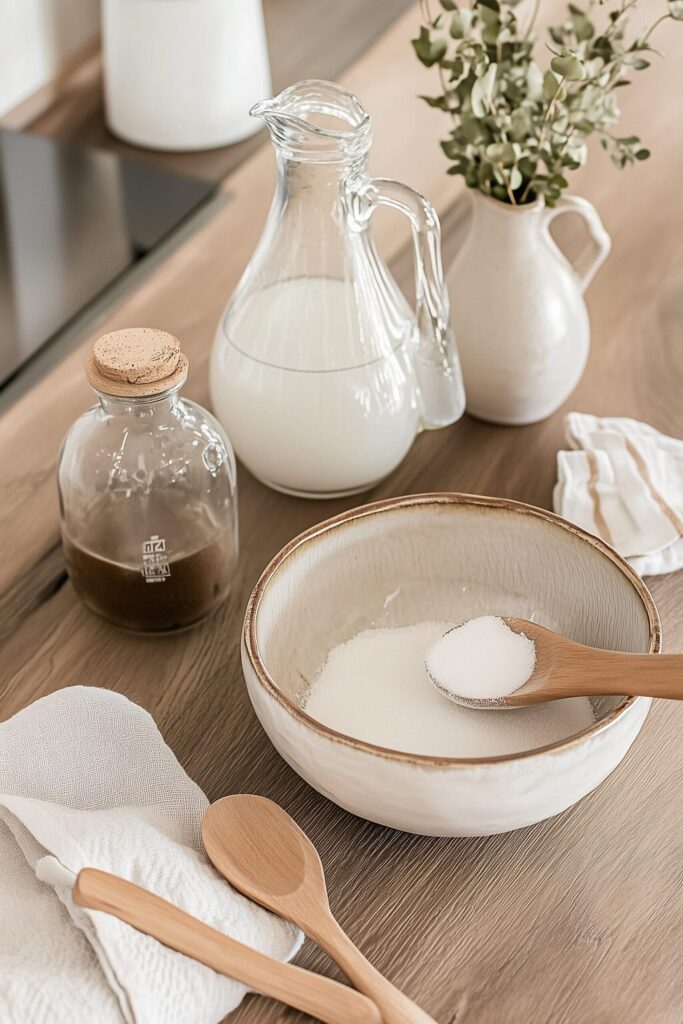
Yes! For really stubborn shower heads that are still gritty or slow to flow even after being rinsed with vinegar, sprinkle in a little baking soda. It’s safe and natural, plus the fizzing reaction helps to lift buildup from inside the nozzles. In a bag, combine about ½ cup baking soda with 1 cup vinegar, before sealing the bag into place around the shower head.
The fizzing action will loosen grime and further dissolve buildup deep in the nozzles. Allow the shower head to soak for a couple hours, then scrub with a small brush and rinse well. You will be amazed at how shiny it looks and how evenly it flows after all that scrubbing!
Shop: baking soda
3. What’s the best way to clean a handheld or detachable shower head?
If your shower head is removed, you’ve got it easy! Just take it off and soak it in a bowl of warm water and vinegar (1:1 ratio). This lets you clean every angle and gives you the chance to clean inside and out. Use a small cleaning brush set to scrub around the nozzles and threads for a perfect finish.
Soak for up to an hour, rinse, reseal and run warm water through it for 30 seconds to rinse out any vinegar. For added shine, wipe it down with a microfiber cloth and it will look like it came out of the showroom!
Shop: detachable shower head cleaner
4. Is lemon juice a gentler alternative for cleaning chrome shower heads?
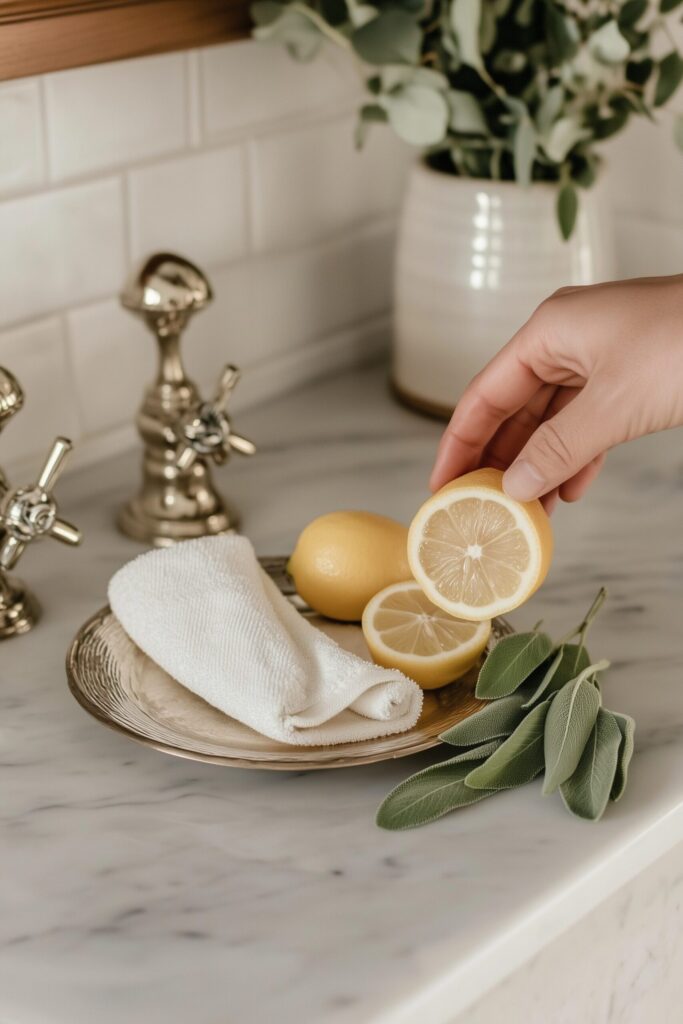
If you’re concerned about vinegar being too acidity for your chrome or brass finishes, you can use lemon juice as an alternative. Lemon is a natural citric acid and isn’t nearly as harsh but is still effective in breaking down calcium and limescale deposits. Cut a lemon in half and rub it directly on the shower head, or squeeze some juice into a small bowl, dip a microfiber cloth and gently polish.
The bonus? It leaves behind that bright, fresh scent that instantly makes your bathroom feel cleaner. For a full clean, follow with a quick rinse and dry with a microfiber towel to avoid water spots.
Shop: lemon juice
5. Can hydrogen peroxide sanitize your shower head?
Hydrogen peroxide is a great and completely underrated shower fixture cleaner. It not only kills bacteria and kills mold, but it is also a nice whitener for metal fixtures and won’t scratch. We like to cut it forty percent with equal parts hydrogen peroxide and water in a clean spray bottle and coat the whole head (make sure the container itself is clean too). After 10 – 15 minutes, give it a light scrub with a light-weight brush and rinse thoroughly.
This is especially great for households where mold loves to hide in damp, humid spaces. For a quick refresh between deep cleans, a hydrogen peroxide spritz keeps mildew and buildup away.
Shop: hydrogen peroxide
6. How do you clean clogged nozzles manually?
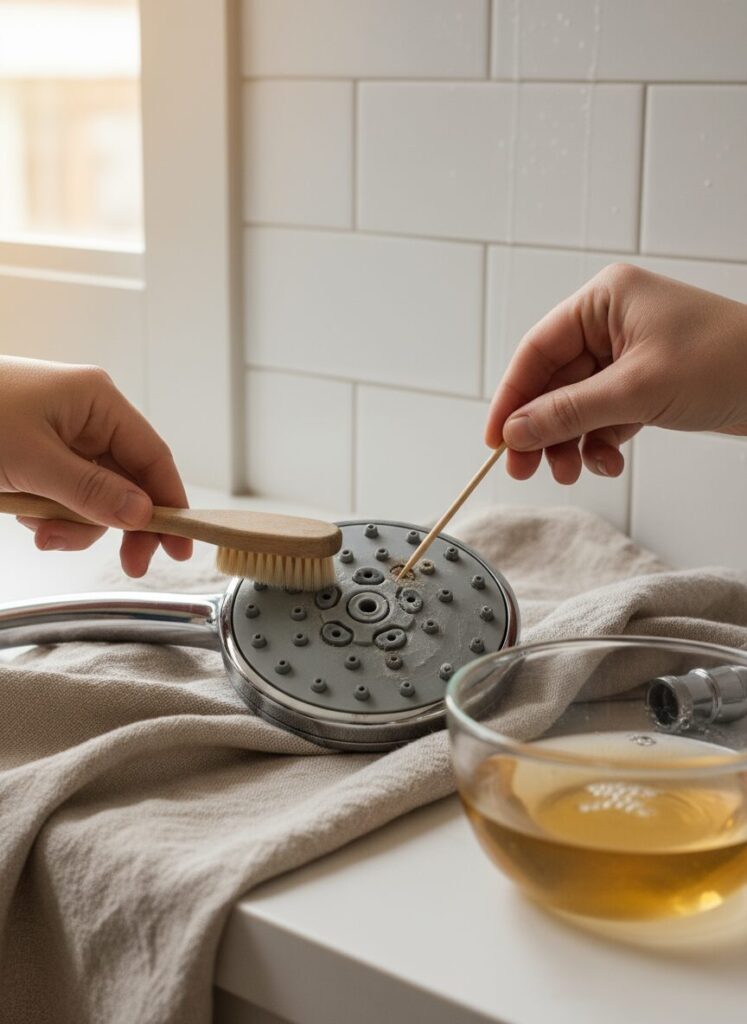
In some cases, buildup can be lodged in individual spray nozzles so tightly that soaking the nozzles will not completely clear them. In this case, you will need to use mechanical cleaning. Using a toothpick, sewing needle, or even a thin piece of wire, carefully poke through each hole to loosen and remove the clog. Ensure you do not make the nozzle holes wider.
Follow up with a vinegar rinse or a quick soak to wash away any loosened bits. This hack is especially useful for very old or decorative shower heads with fine spray holes.
Shop: toothpicks
7. How can you keep your shower head clean longer?
Now that you’ve cleaned your showerhead and restored shine and water pressure, how do you maintain this? The secret is to build little habits. Every few weeks, just spray the showerhead with equal parts vinegar and water when you are done showering, then wipe dry. Doing this should keep any new deposits from forming.
If your home has very hard water, consider installing a shower water filter. Filters trap minerals before they ever reach your shower, keeping both your skin and fixtures healthier. Trust me—this one small upgrade makes a huge difference in how fresh your entire bathroom stays.
Shop: shower water filter
What does your ongoing shower maintenance routine look like?
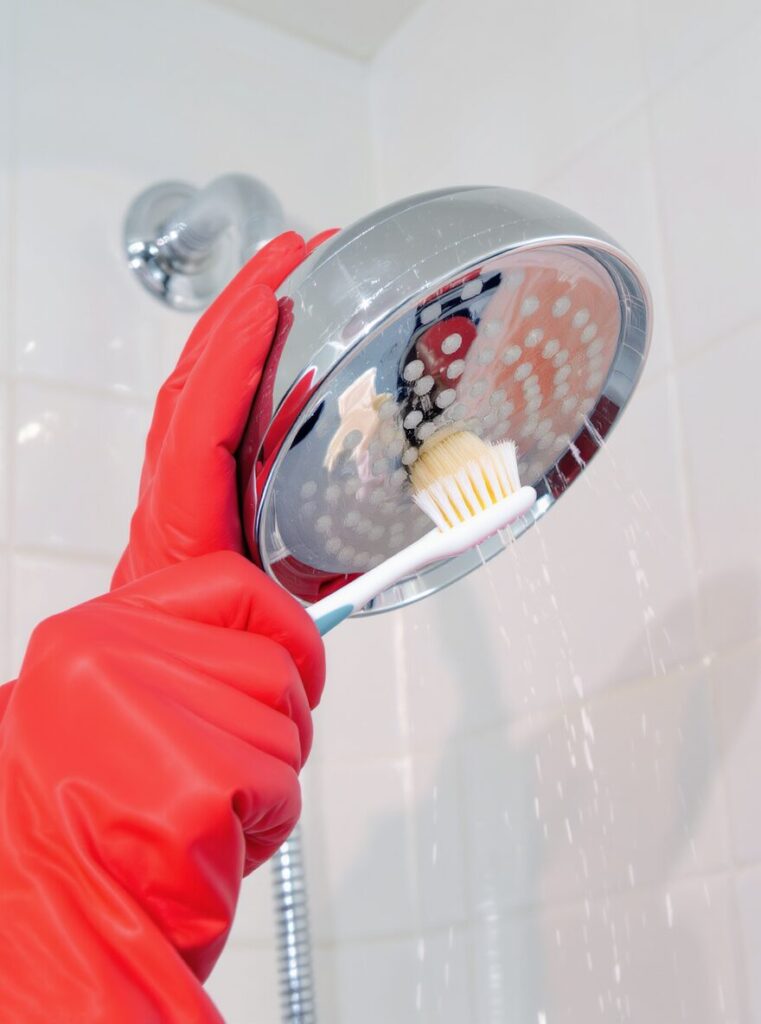
Here’s what I recommend: once a month, do a quick 10-minute vinegar soak, and once every few months, pair it with a baking soda refresh. Keep a microfiber towel handy to wipe down surfaces after each shower; that alone prevents new spots and streaks from forming. It’s those tiny, consistent routines that make your home look effortlessly well-maintained.
If you already have a deep-cleaning day on your calendar, consider adding the shower head to that checklist. It’s an often-overlooked task that pays back immediately in better water flow and a brighter bathroom aesthetic.
Shop: microfiber towel
How can you make your shower head sparkle like new?
After cleaning to your satisfaction, treat your shower to some shine. A few drops of mild dish soap is the last touch, followed by a good polishing with clean warm water and a microfiber cloth. You should avoid using abrasive scrubbing surfaces — they can scratch the finish. If you have a chrome or stainless steel shower head, finish with a dab of mineral oil to prevent future water spots and maintain its mirror-like finish!
These last few steps not only make your shower look its best, but it will also help repel the buildup for a longer period of time, which means less deep cleaning! It’s like the icing on the cake!
Shop: mineral oil
Final thoughts: are shower head cleaning hacks really worth the effort?
Absolutely. It’s one of those fast maintenance tasks that feels satisfying right away. You will see improved water flow, shinier fixtures, and an improvement that you just kept bacteria and buildup from spreading. The cost-benefit ratio for the time and effort put in for the maintenance of your bathroom is likely one of the best in all of routine bathroom caretaking — no questions asked.
On top of that, if you start to use natural cleaners (including cleaning with vinegar, lemon juice, and baking soda), then you are saving money, exposure to chemicals, and waste. That’s an instant value added to the home for your eco-conscious cleaning arsenal in a breeze.
This post was all about 7 Shower Head Cleaning Hacks That Actually Work
FAQ
How often should I clean my shower head?
Ideally, give it a deep clean every month to maintain flow and prevent buildup. A quick weekly wipe helps keep it sparkling longer.
What if my shower head is plastic?
Plastic models are safe to soak in vinegar, but limit exposure to six hours or less. Avoid boiling water or very strong acids to prevent damage.
Can I use commercial descalers instead?
Yes, commercial products work fast, but if you prefer natural methods that are safer and less abrasive, vinegar or lemon juice do the job well.
Does using a water filter make a difference?
Absolutely. A shower water filter reduces mineral buildup and extends the lifespan of your shower head significantly.
Will cleaning my shower head improve water pressure?
Yes! Most of the time, low water flow is caused by mineral blockages — cleaning restores your shower’s original pressure within minutes.



Leave a Reply