

I’ve lived in a small apartment where every inch matters. You can make a small space feel open, calm, and stylish! Start by choosing a focal point like a sunny window or a statement wall. Then, arrange your sofa and chairs to create a circle around the conversation area.
Choose furniture that looks light, like leggy chairs and slim side tables. An acrylic coffee table from CB2 or West Elm is a great choice. Keep the colors soft and neutral, like white, cream, tan, and gray. This makes the room feel airy and helps with space-saving design.
Use height to your advantage. Tall shelves and built-ins with hidden storage can make a big difference. Long drapery hung high also pulls the eye upwards. Area rugs can anchor seating without making the room feel closed off.
Make sure there are easy paths around the seating area. Add pieces that serve more than one purpose, like an ottoman that’s also a coffee table. With a few changes and lots of natural light, you’ll have a calm and flexible room.
Key Takeaways
- Plan around a clear focal point to guide layout and flow in a small apartment.
- Float furniture and keep pathways around the seating core for easy movement.
- Choose light, leggy pieces and neutral tones to open up a compact living space.
- Leverage verticals—tall shelves, high-hung drapery, and built-ins—for smart apartment organization.
- Use area rugs to define zones in urban living and open-plan rooms.
- Pick multifunctional pieces for true space-saving design in a furnished rental.
Maximize Space with Multi-Functional Furniture
When I replaced my big coffee table with an ottoman, it became a footrest, a table, and a seat. This is the essence of smart design for small spaces. If you prefer a simple lifestyle, choose furniture that adapts to your needs.
Think light and leggy. Furniture with open frames, thin arms, and clear tops keeps your space open. In a small home or rental, this look is key—it makes your space feel bigger.
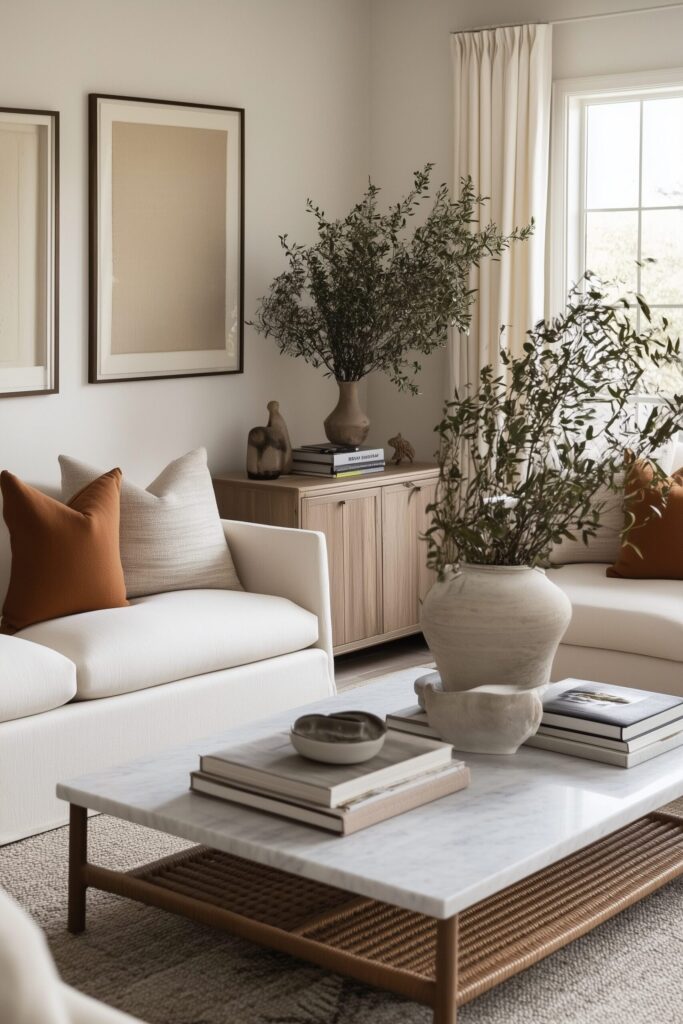
- Ottomans with hidden storage for blankets and remotes.
- Nesting tables that tuck away, then fan out for guests.
- A console or sofa table behind the couch to divide zones and hold a laptop.
- Vintage trunks as coffee tables—character plus storage.
- Modular sofas that reconfigure for movie night or work time.
Need quick changes? Choose furniture on wheels—like bar carts, slim shelves, or a side table. I use mine for snacks, then as a plant stand. It’s easy to keep your space clutter-free.
Fold-down Murphy desks are lifesavers in small apartments. Close it up after work and your living room feels bigger. Sofa beds are great for guests without taking up too much space—ideal for tiny homes or small rentals.
- Pick dual-purpose items first—every piece should earn its keep.
- Prioritize storage you can’t see—lift-top tables, banquettes with bins.
- Keep circulation clear with a console and lamps instead of bulky side tables.
Begin with small changes: replace one heavy item with a lighter, multi-use one. You’ll notice your space feels more open, and your life will be easier. That’s the beauty of space-saving design for a minimalist lifestyle.
Create Zones for Different Activities
I love a living room that changes with your day. Whether it’s movie night, coffee, or a quick stretch, it’s all good. In a small space, zones help keep things organized. Start with a rug that fits the sofa and chairs. It ties the room together and makes a clear spot for talking.
Float the sofa to make a living/dining area. Turn it to face the dining area to mark the space. Add a slim console and lamps to enhance the area without blocking light. This trick works well in both small and micro apartments.
Make a cozy chat area with armchairs and a round table. Place a TV zone across from the screen. Use swivel chairs to move between zones easily, perfect for busy days.
Soft boundaries help keep the room open while defining areas. Try:
- Open shelves for display and storage—double win for apartment organization.
- Tall plants as green “walls” that don’t feel heavy.
- Tiered or nesting tables that slide in and out on cue.
- Room dividers with slats to maintain sightlines.
In a micro apartment, a daybed can be both a lounge and a bed. Style it with pillows during the day and add a throw at night. Keep nesting tables nearby for snacks, laptops, and tea. Your small space stays calm, flexible, and ready for anything!
Utilize Vertical Space Effectively
I treat the walls like bonus square footage—instant wins for a small apartment! Hanging drapery high, right near the ceiling, pulls the eye up. This simple move makes a compact living space feel taller and lighter.
Built-ins are magic. Floor-to-ceiling shelves boost storage without taking up floor space. Desiree Burns Interiors paints built-ins to match the walls, making them sleek and calm. For flexible apartment organization, mix closed cabinets with open cubbies, like Werner Straube’s cabinet wall.

Look up and use the gaps! I add slim shelves above doorways and ladder-like bookcases. A sculptural sconce frees the floor where a lamp would sit, which is gold in a tiny home or studio.
- Mount a desk on the wall to keep traffic clear.
- Install peg boards for tools, bags, and craft gear.
- Add floating shelves for books and baskets.
- Place mirrors high to bounce light and stretch sightlines.
Repeat vertical lines to elongate the room. Think narrow wood paneling, a tall arched mirror, or an oversized lamp. A couple of statement plants, like a fiddle-leaf fig, also draw height while keeping a compact living space calm and stylish.
When storage climbs the wall, the floor breathes. That’s the secret to apartment organization that looks good and lives easy in a small apartment. Build up, not out, and let every inch work harder for you!
Consider Furniture Scale and Proportion
I quickly learned that scale is key in a small apartment. Light, leggy furniture makes a room feel airy. On the other hand, dark, boxy pieces can make a space feel cramped.
When I replaced a big sofa with two slim armchairs, the room felt more open. I could walk through without trouble!
Visual weight is important. I choose narrow coffee tables, acrylic side tables, and slim floor lamps. These pieces make the room feel lighter, perfect for a minimalist lifestyle.
Vintage midcentury furniture is great for small spaces. It’s often smaller, fitting perfectly in a micro apartment.
Comfort is essential. I make sure the furniture fits the people who use it. Sometimes, fewer, larger pieces work better. For example, a small sectional with a big table looks clean and calm.
Low-slung sofas can make ceilings seem taller. I always measure furniture before buying online. This helps avoid surprises in a small space.
- Pair armchairs instead of an oversized sectional to keep flow open.
- Choose leggy frames, glass or acrylic, and slim lamps to reduce visual weight.
- Measure doorways and hallways so pieces actually fit a micro apartment.
- Balance comfort and function—edit to essentials in a small apartment.
Quick tip: Keep three heights in the room—seating low, tables mid, lighting tall—so the eye moves up. It’s a quiet trick that supports a minimalist lifestyle and tidy, space-saving design.
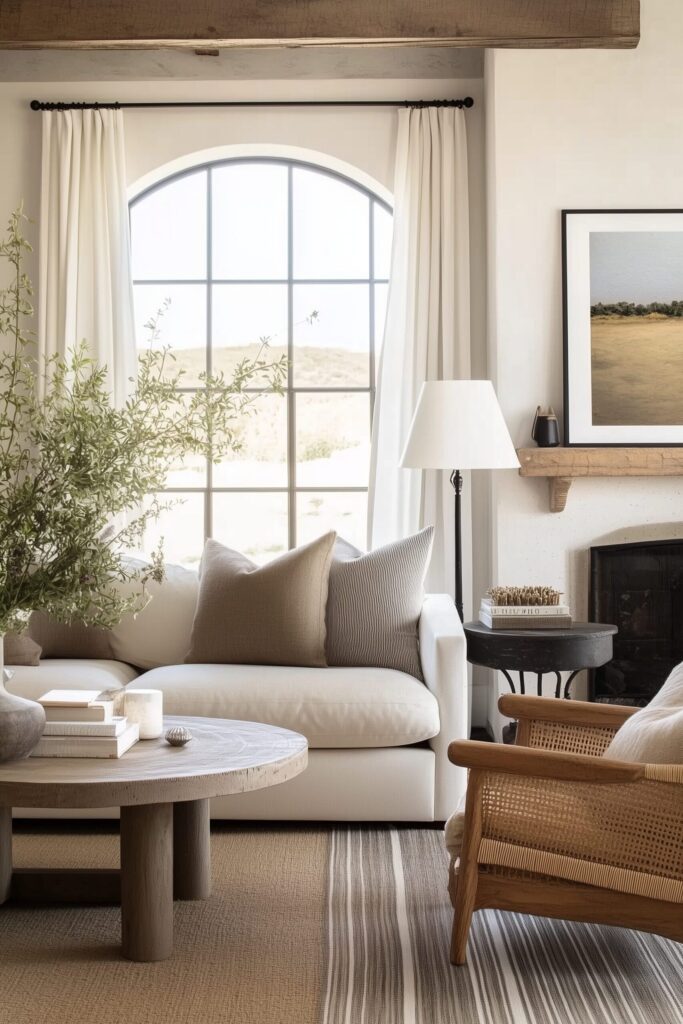
Embrace Open Spaces to Enhance Flow
I used to push every piece against the walls… big mistake. In a small apartment, that trick can shrink the room. I pull seating off the edges and group it tight to make a cozy chat zone—instant calm in a compact living space!
Float the sofa to define the living area inside an open plan. Then keep clear paths around, not through, the center. People won’t cut across your coffee table, and the room feels easier to move in during busy urban living.
I love a round coffee table because it guides traffic without sharp corners. A pair of chairs at the edge acts like gentle arrows, nudging movement around seating. It’s simple apartment organization that works.
The back of the sofa can serve as a soft divider between living and dining. Add a slim console table for storage and display—space-saving design without blocking flow or light.
Keep the center balanced. A few larger, well-chosen pieces often beat a jumble of tiny items that create visual noise. Avoid blocking windows so natural light can wash through and stretch the compact living space.
- Pull seating off walls to anchor a conversation core.
- Use round tables to smooth circulation in a small apartment.
- Let a sofa back define zones while keeping pathways open.
- Choose fewer, bigger pieces for clarity and better apartment organization.
Tip: Stand in each doorway and check sightlines. If your eye flows, your feet will too—classic space-saving design in action.

Use Color to Your Advantage
I choose light, neutral colors in my small apartment. They make the room feel airy and calm. Think white, cream, tan, and soft gray for walls, slipcovers, and decor.
For depth without bulk, add pops of color. Use navy, sky blue, or leafy green in pillows or a chair. In my space, a blue accent frames the view, adding snap without weight.
Moody tones can work well if used right. A dark wall behind the TV makes it less noticeable when off. Deep navy shiplap, like in Brexton Cole Interiors, is a great example. I’ve also painted built-ins to match my sofa for a sleek look.
Ceiling height tricks matter! Hang curtains from the ceiling to make the room seem bigger. Big art is better than many small frames in a tiny home. It looks bold and makes the space feel thoughtful.
For a cozy feel, try an accent ceiling in a soft mid-tone. Paint two parallel walls a bit darker than the rest to make the room feel wider. These simple changes can make a big difference without buying new items.
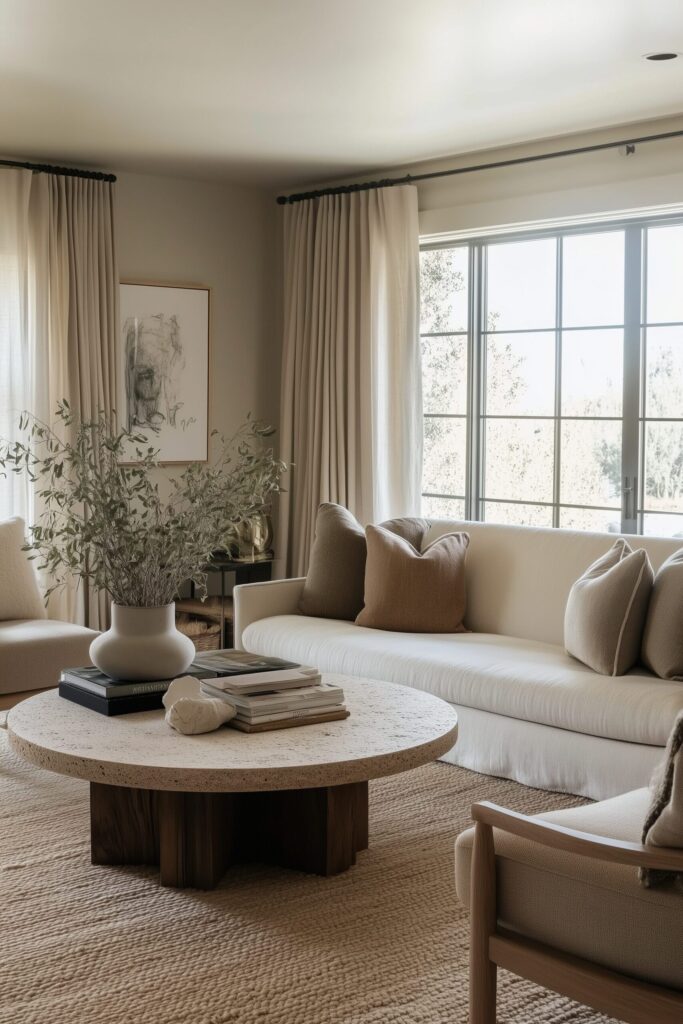
- Repeat light tones across textiles and lighting for cohesion.
- Add one bold hue in small doses for dimension.
- Match built-ins to key seating for a custom look.
Lighting as a Design Element
I see light as furniture, shaping a small apartment’s feel and flow. Daylight is precious in tight spaces, so I keep windows clear and walls light. Mirrors also help, reflecting light into dark areas.
At night, I layer light to make the room feel bigger. I use a mix of floor lamps, sconces, and table lamps. This way, the room doesn’t feel flat.
Triangular lamps and corner lighting highlight hidden spots without taking up too much space. A big, sculptural sconce adds style without blocking the view. I avoid big, bulky lights that get in the way.
Here’s a simple guide to follow:
- Keep windows open and airy; go sheer, not heavy.
- Place mirrors to bounce daylight into shadowy corners.
- Layer three kinds of light: ambient, task, and accent.
- Use arc and tripod lamps to mark seating zones.
- Choose wall sconces to free up floors in a compact living space.
When I plan the lighting, even small areas feel special. This is the secret to making small spaces feel big and welcoming.
Area Rugs to Define Spaces
I see rugs as soft walls that define areas without the need for physical barriers. In a small apartment, the size of the rug is key. I choose one that fits under my sofa and coffee table to create a clear space.
In a cozy studio or any compact living space, light or solid rugs add texture without overwhelming the senses. Desiree Burns Interiors used a rug to ground a living area over light wood floors. It’s a smart way to organize a space.
For a unified look, use one large rug to connect the room. For different areas, layer rugs: a calm one for sitting, a patterned one for watching TV, and a plush round for reading. Round rugs also make paths softer and help with traffic flow.
Color is your ally! A bright or patterned rug can highlight the living area from the dining space, showing off your style. Just make sure to leave edges clear to avoid tripping.
- Choose a rug big enough to anchor seating—no floating islands.
- For small rooms, pick light solids to reduce visual clutter.
- Mix shapes: rectangle for sofa zone, round for table or nook.
- Leave a clear border at doorways to guide movement.
Personal Touches to Make It Homey
I start with a bold statement. In a furnished rental, I choose a few key pieces for one wall. This creates a focal point and lets the room breathe. A large mirror or print can brighten a dark spot and make the room feel bigger.
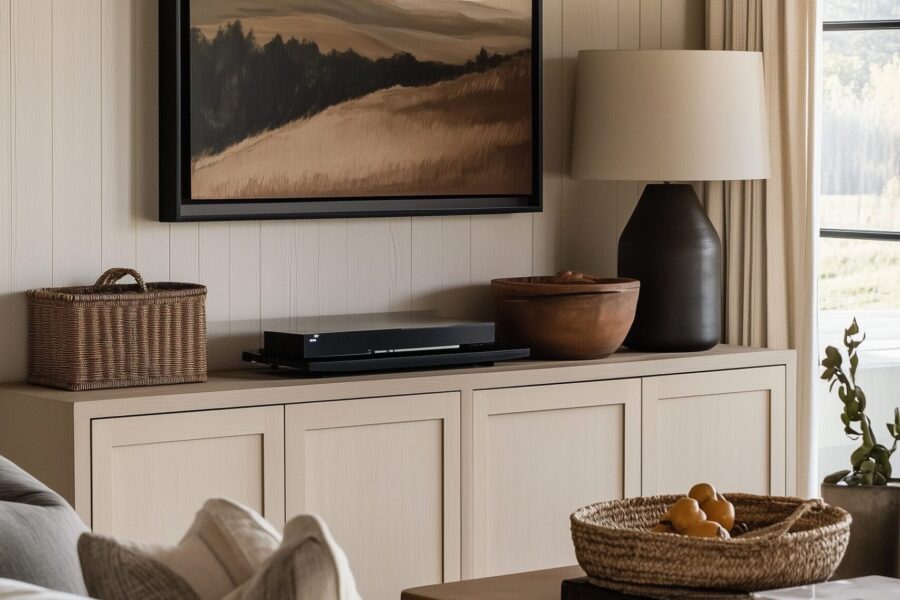
For TV setups, I go for a clean wall. Laura Brophy Interiors shows how to mix hidden and open storage. This keeps things tidy and lets me show off a few favorite items.
Comfort meets purpose is key in urban living. I use a mobile bar cart for style and function during movie nights. A daybed adds a cozy guest area. An ottoman with a tray keeps things organized without clutter.
Textiles add warmth quickly. I switch up linen pillow covers, throws, and rugs with the seasons. A few plants, like snake plants and pothos, bring life without being a hassle. A small apartment feels like home when your belongings tell a story.
- Make one wall your “moment” and keep the rest light.
- Mix open display with hidden storage for balance.
- Use mirrors to open sightlines and bounce light.
- Choose pieces that move: bar cart, nesting tables, tray.
These touches help me live easily while keeping the space open. It feels like me, but in a more streamlined way for city living.
Experiment with Layout Options
I see layouts as a fun puzzle to solve. In small spaces, I start by floating the sofa to create zones. This bold move opens up the area and improves flow. Next, I swap a big coffee table for a soft ottoman, keeping the function but adding a touch of softness.
Test what you think you know. I try different layouts, like an L-shaped sectional in a corner for more seating. Or, I use a daybed instead of a sofa in tight spots. Swivel chairs are great because they let you easily switch between watching TV and chatting.
Make the most of corners. Add a reading perch, nesting tables, or a corner lamp to bring corners to life. Use low-slung furniture to keep things calm, then add a few taller pieces for balance. This creates a space-saving design that feels natural.
- Try modular seating so you can flip the plan for guests or work-from-home days.
- Roll in shelves on wheels or a bar cart for movie night, then tuck them away.
- Pop in a slim divider screen to create a quiet nook without closing the room.
Walk around your space to see how it feels. If you’re bumping into things, it’s time to change it up. Don’t push everything to the walls; a few floating pieces can make a big difference in any small space.
When unsure, draw out a few layout ideas and give each one a week. Your small apartment will show you what works best. You’ll see better flow, more natural light, and a design that feels right.
Regular Updates for a Fresh Look
I refresh my small apartment with each season to avoid feeling stuck. In the cold, I move seating for cozy talks. In the heat, I open it up for better air flow. Simple changes like a new rug or throw can make a big difference without spending much.
Art is my go-to for a quick update. One big piece can replace many small ones, cutting down on clutter. I also keep surfaces clean by removing items that make them look busy. This makes my apartment feel more open and organized.
Storage needs regular checks, too. I use slim cabinets for hidden storage and open cubbies for seasonal decor. Keeping windows clear and adjusting lamps helps maintain a bright, welcoming atmosphere. Your apartment should feel welcoming, not cluttered.
Don’t be afraid to try new things! Move furniture, change the focus, or adjust the sofa slightly. Small changes can make a big difference, making your apartment stylish and calm. With regular updates and smart organization, your space will always be ready for the season.


Leave a Reply