Have you ever found yourself standing in front of the plant wall at a nursery, overwhelmed, and thinking to yourself which plants to buy vs. soil vs. pot vs. mister? If so, this is the guide for you. I have killed more plants than I’d like to admit… and then learned exactly which tools, soils, and, yes, fool-proof varieties to buy to get you beyond limp leaves and into luscious greens in your window. For a purpose of reorganizing and breaking down the first steps, think of this as the “day one” houseplant system. It’s simple, it’s inexpensive, and it’s intended to be enjoyable.
Here’s the short answer to what you came for; a beginner houseplant starter kit should include: (1) two or three easy plants (for example, pothos/snake plant/ZZ plant); (2) a quality indoor potting mix PLUS perlite; (3) terra-cotta pots with drainage AND a matching saucer; (4) a narrow (think coffee pot) spout watering can; (5) gentle liquid fertilizer; (6) pruning shears; (7) sticky traps + neem oil to handle pests, and (8) optional clip-on grow light (if your space has low light). With those few items you can handle 90% of issues faced by beginners to houseplants: repotting, watering correctly, feeding, trimming, and handling gnats. Within the first week you will already have your plants potted, placed, watered, and settled into a simple care rhythm.
If you are coming to this post from Pinterest searching “beginner houseplant starter kit,” “low light indoor plants for apartments,” or “earthy modern living room plant styling,” this post is your step-by-step. I aim to show you exactly what to buy first, why it matters, and how to set up a living room corner that feels like it came from a magazine but also feels alive in real life.
Shop Beginner Houseplant Starter Kit Essentials
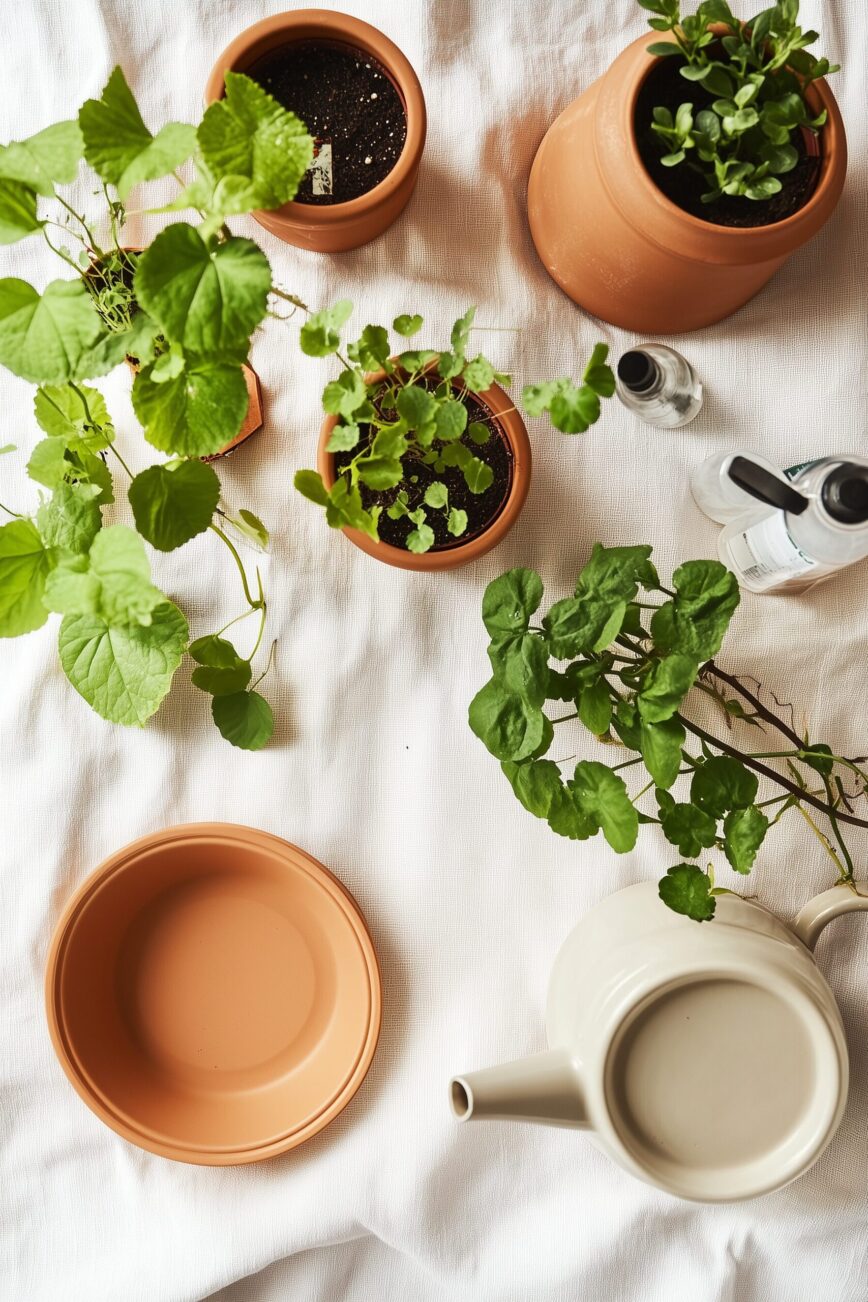
The 10-Piece Starter Kit (What to Buy First)
- Two 6″ terra-cotta pots with drainage + saucers: Terra-cotta “breathes,” drying the soil faster so beginners are less likely to overwater. Saucers protect your shelves.
- Indoor potting mix (not garden soil): Indoor mixes are lighter and drain well, keeping roots aerated in pots without outdoor microbes hitchhiking in.
- Perlite: Mix 1–2 handfuls into your soil for extra drainage. You’ll see fewer soggy roots, more new growth.
- Narrow-spout watering can: Control is everything; a slim spout prevents flooding and keeps water off leaves.
- Gentle liquid fertilizer (balanced, half strength): Feed every 2–4 weeks during the growing season. It’s like giving your plant coffee—without the crash.
- Precision pruning shears: Clean trims equal faster healing; you’ll also use these for propagation.
- Yellow sticky traps: Fungus gnats are normal indoors. Traps catch adults so populations drop quickly.
- Neem oil: Your “in case of pests” spray. It’s a mild fix for soft-bodied pests and a decent leaf shine booster when diluted.
- Clip-on LED grow light (optional but clutch for north-facing rooms): Choose a full-spectrum, dimmable model on a timer. It removes guesswork.
- Propagation jar or test tubes: For pothos/philodendron cuttings. Prop is free plants—truly addicting.
Shop Houseplant Starter Kit Bundle
5 Foolproof First Plants (Start Here)

- Golden Pothos (Epipremnum aureum): The beginner’s best friend. Tolerates low/medium light, forgives missed waterings, trails beautifully. Makes any “earthy modern living room ideas” board look intentional.
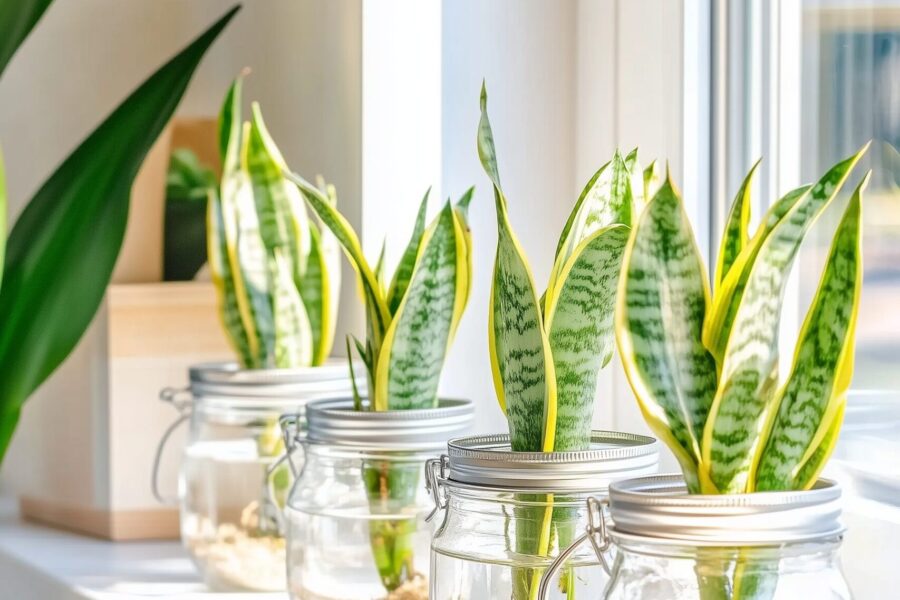
- Snake Plant (Sansevieria/Dracaena): Thrives in neglect. Upright, architectural, fantastic in bedrooms and offices.
- ZZ Plant (Zamioculcas zamiifolia): Thick rhizomes store water. Shiny leaves, low light friendly, practically indestructible.
- Heartleaf Philodendron (Philodendron hederaceum): Soft trailing heart leaves, fast grower, easy to propagate.
- Spider Plant (Chlorophytum comosum): Adaptable, launches baby “spiderettes” to pot up and gift. Great for “easy-care indoor plant list” folks.
Grab 2–3 of these and learn their rhythm before you branch out into ferns or calatheas.
Shop Beginner-Friendly Indoor Plants
Light: The Make-or-Break Factor
Guideline: Bright, indirect light = Room is bright enough to read comfortably without lamps, and no midday direct sun hits leaves. East-facing windows = indirect light with weaker morning sun. West-facing = hotter afternoon sun. North-facing = indirect light often too dim. South-facing = bright, direct light (move plants back from the window). In apartments with little natural daylight, set a clip-on grow light for 8-12 hours per day, medium intensity. The grow light will mimic spring light and will keep plants growing steadily through winter.
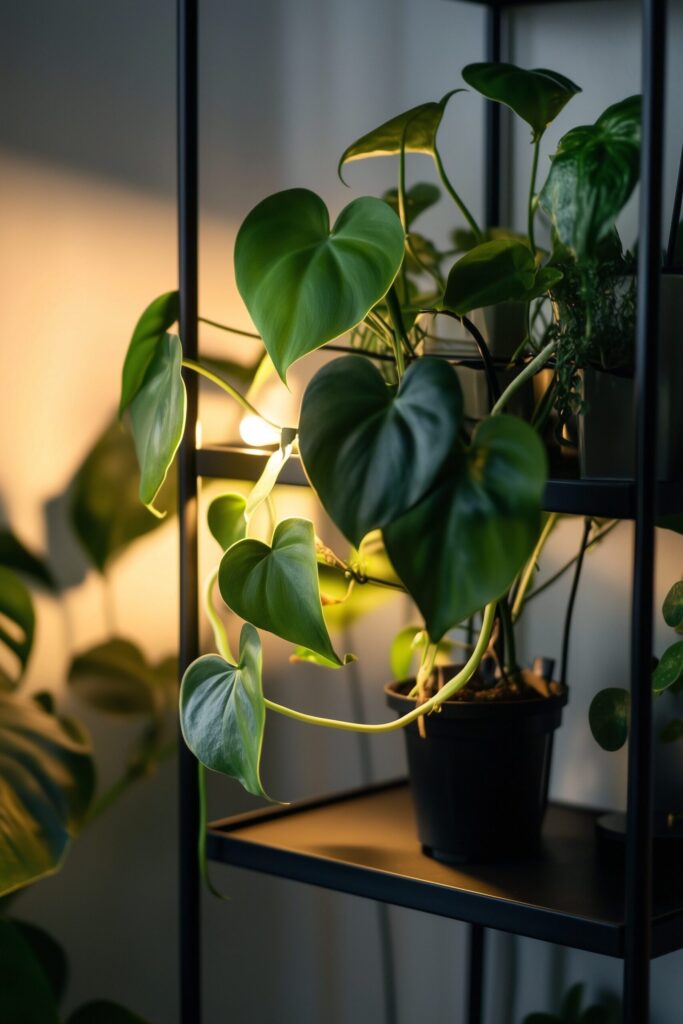
Placement: pothos/philodendron on bookshelves 3-5 feet from a window; snake plant on the floor next to a bright wall; ZZ plant on a console table in a north-facing room; spider plant in a hanging pot near an east window. Rotate pots 1/4 turn weekly, to avoid lopsided growth.
Shop Full-Spectrum Clip-On Grow Light
Soil & Potting: Your No-Fail Mix
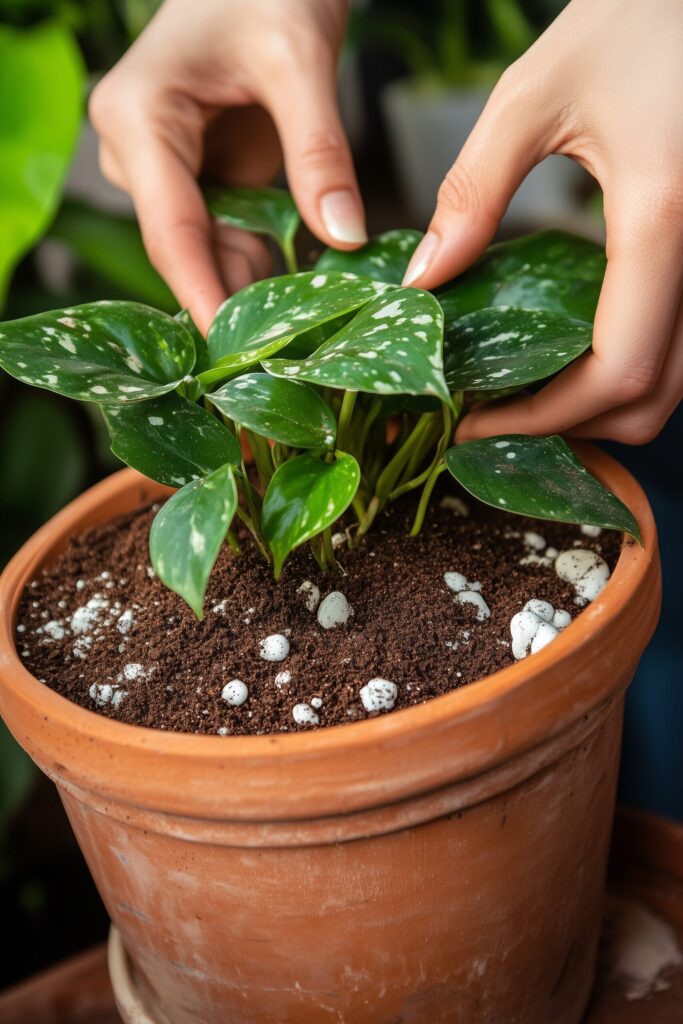
Use a premade indoor potting mix and lighten it even further: 3 parts indoor mix + 1 part perlite. This ratio works great for pothos, philodendron, spider plant, ZZ, and snake plant. If you are a chronic over waterer, then add .5 parts perlite. Always pot your plant in a container that has drainage holes; that one detail will save your plants.
How to pot (day 1): Add a coffee filter or mesh over the hole to minimize soil loss. Fill container with base layer, tease roots gently, set plant at the same depth it was in the nursery container (i.e. if you see soil on the top, pot it at that depth), backfill and tap to settle (do not crush down). Water plant thoroughly until it drains out the bottom. After 10 minutes, empty the saucer of any water that still remains.
Shop Indoor Potting Mix + Perlite
Watering: Exactly How Much and When
Forget about your watering schedule; watering plants should depend on the soil dampness. Here is your starter set of a few house plants:
- Pothos/philodendron/spider plant: Water when the top of the soil feels dry, at least an inch or two dry.
- Snake plant/ZZ: Water when that first half (or more) of the soil is dry.
Use your finger or a wooden chopstick to test it: stick it in, pull it back out—if mostly clean and dry, it is time to water. When you water them, take them to the sink and flush until water runs out the bottom of the pot. Make sure to let them fully drain, too! This will prevent any nasty salt buildup and prevent root rot.
If you really want a fail-safe option, look for terra-cotta pots. This can help soak up and break down moisture that can help the soil to continue to evenly dry. And remember, a little underwatering is better than wet soil… it is safer that way.
Shop Narrow-Spout Watering Can
Feeding: Low-Stress Fertilizer Plan
During spring and summer, use a balanced liquid fertilizer like (e.g., 3-1-2 or 10-10-10) at half strength every 2 – 4 weeks. In fall and winter, back off to monthly application, or stop, if your plant’s growth has slowed. You want to feed your plant on wet soil – never bone dry! You will see it’s working by noticing new brighter leaves and how much faster pothos and philodendron vine.
Shop Gentle Liquid Houseplant Fertilizer
Trim, Tidy, Propagate
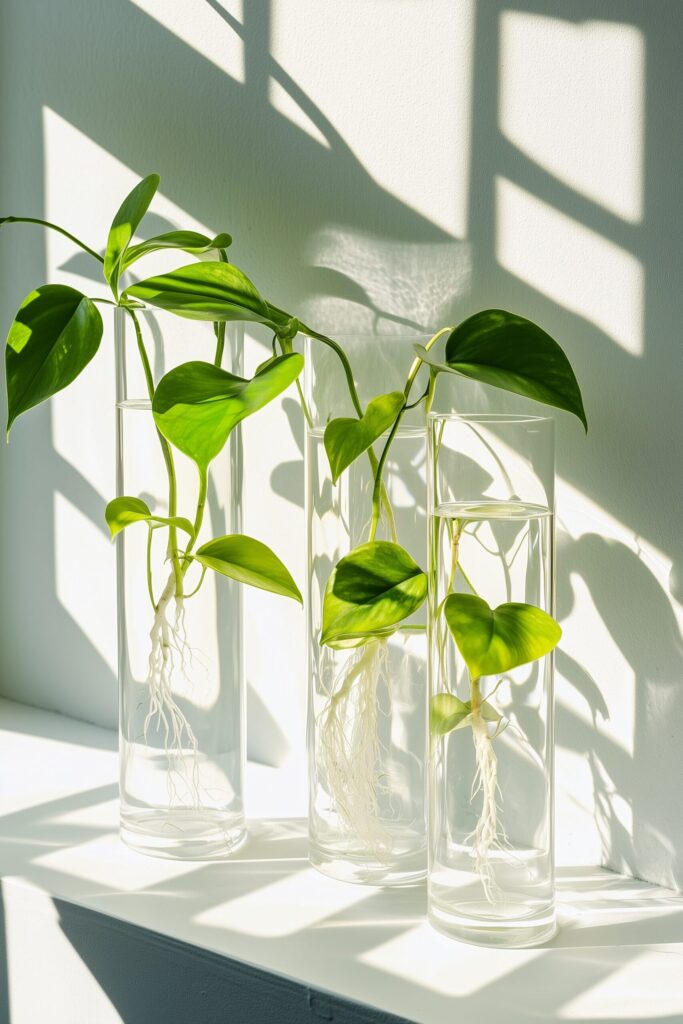
Consistent trimming helps your pothos and philodendron grow a bushier plant. Use scissors, cleaned with alcohol, cut at a node (the little bump where leaves grow). Stick cuttings into water, pothos and philodendron root in 2-4 weeks if they are sitting on a shelf with bright light. Once the roots are 2-3 inches, pot into your regular potting mix. Free plants!
Remove yellowing leaves too. Often they are part of a normal growth cycle – plants are just using the energy to create new growth and are not putting it into producing new leaves.
Pest Prevention (and What to Do If They Show Up)
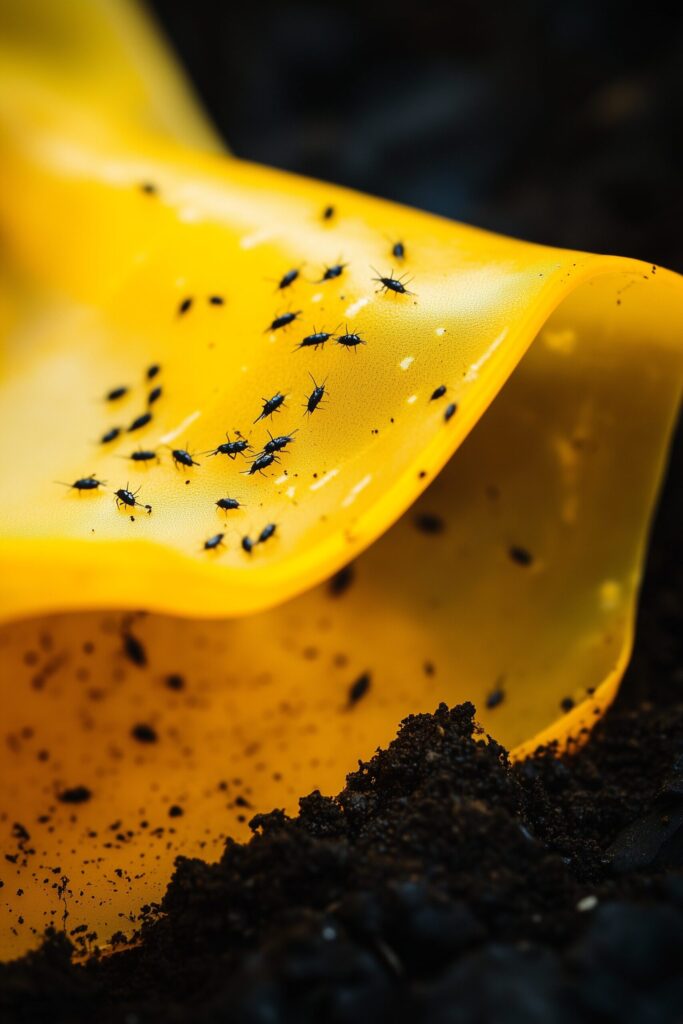
The most common nuisance that we see in beginner plants are fungus gnats. Fungus gnats are sustainable in damp soil conditions, and drying the soil out properly, along with sticky traps should keep them in check. For a mild infestation, place traps near the surface of the soil and water less for two weeks. For soft-bodied bugs such as aphids or mealybugs use a diluted neem oil mixture (per the label) and spray every 7 days until clear.
Pro tip: If you bring a new plant in, you should keep it quarantined for 7–10 days on a different shelf, a once a week leaf check will quickly become a 5 minute habit that you will be thankful for.
Shop Yellow Sticky Traps + Neem Oil
Styling a Pinterest-Worthy Plant Corner (Without Overbuying)
For that look you saved of “earthy modern living room ideas,” begin with three plants: one large sculptural plant—snake plant; one trailing plant—pothos or philodendron; and one medium plant like a ZZ plant atop a riser or a stack of books for height variation. Create cohesion by repeating materials (terra-cotta and a light wood). Add one neutral basket cachepot so you can hide the plastic nursery when you’re not ready to repot.
Maintain sightlines: the tallest at the back, medium at one side, and trailing up high to create a cascade that frames the scene (think the art of stacking). You can also add a small task lamp or grow light to be an accent light in the evenings.
Shop Minimal Plant Stands + Hanging Planters

Your First 30 Days: Easy Care Calendar
- Day 1: Pot your plants into terra-cotta with the 3:1 mix. Water thoroughly. Place by their best light. Add sticky traps as prevention, not just cure.
- Day 7: Check soil. Likely the pothos/philodendron/spider plant need water now; snake/ZZ probably do not. Rotate all plants a quarter turn.
- Day 14: Lightly feed with half-strength fertilizer if you see new growth or if it’s spring/summer. Trim any leggy vine tips to encourage branching. Wipe leaves with a damp cloth to remove dust.
- Day 21: Water as needed based on soil dryness. Inspect for pests (top and bottom of leaves). Adjust placement if stems are leaning toward light.
- Day 30: Evaluate growth. If a plant looks cramped (roots circling), go up one pot size only. If everything looks happy, keep the rhythm going.
Shop Houseplant Care Calendar + Planner
Budget Breakdown & Smart Shopping List
If you’re building your beginner houseplant starter kit on a budget, prioritize like this:
• Musts: two plants ($10–$20 each), two terra-cotta pots + saucers ($5–$10 each), indoor mix + perlite ($15–$20 total), watering can ($10–$20).
• Nice-to-haves: pruning shears ($10–$15), fertilizer ($10–$15), sticky traps + neem ($10–$15).
• Bonus: clip-on grow light ($20–$40), propagation tubes ($10–$15), a plant stand or hanging planter ($15–$30).
Start with two plants and the soil/pot basics. Add the rest over the next month. The only splurge I recommend early is a small grow light if your home is truly dim; it pays for itself in saved plants.
Shop Beginner Plant Budget Bundle
Troubleshooting: Quick Fixes to Common Beginner Issues
- Yellow leaves: Often normal older leaf drop. If it’s many at once, you’re likely overwatering. Let soil dry deeper, check for drainage, and consider more perlite.
- Brown crispy tips: Low humidity or inconsistent watering. For spider plant, leach salts monthly by flushing the pot thoroughly.
- Droopy pothos: Usually thirst. Water deeply and it perks up within hours.
- No growth for months: Light is the limiting factor indoors. Move closer to a window or use a grow light.
- Gnats hovering: Let soil dry more between waterings and set sticky traps.
Shop Houseplant Problem-Solver Kit
How to Expand After Your Starter Kit
Once your first three plants are established and happy, it’s time to introduce a few layers of texture and color: a satin pothos (Scindapsus pictus) is an excellent selection for velvety silver variegation, while a pepperomia will add density in a compact form-factor. You can only upgrade to a decorative cachepot after you understand the basics of drainage! And once you’re comfortable, you may want to incorporate one “statement” planter to help anchor the corner space— use a planter with a nest for a nursery pot so you can lift out the whole plant when watering.
Shop Decorative Cachepots with Drainage
Your Starter Kit, Summed Up
• Plants: pothos, snake, ZZ (any two)
• Pots: terra-cotta with saucers
• Soil: indoor mix + perlite (3:1)
• Tools: narrow-spout watering can, pruning shears
• Care: half-strength liquid fertilizer, sticky traps, neem oil
• Optional: clip-on LED grow light, propagation tubes
Set this up once, follow the 30-day rhythm, and you’ll be “that person” whose apartment looks calm, green, and pulled together.
—
Q&A
Q: Do I really need a grow light in a north-facing apartment?
A: Not always, but it helps tremendously from October–March. Set a clip-on full-spectrum light to 10 hours daily and you’ll see steady growth instead of leaf drop.
Q: My snake plant’s leaves are wrinkling. What did I do wrong?
A: It’s thirsty or rootbound. Check if the pot feels light and soil is dry almost to the bottom. Water thoroughly; if it dries out quickly again, move up one pot size.
Q: Are moisture meters worth it?
A: Your finger/chopstick test is free and reliable. Meters can be helpful in deep pots, but learn the feel of the soil first.
Q: When should I repot new plants from the nursery?
A: If they’re healthy, wait 2–3 weeks to let them acclimate. If roots are exploding from the bottom or soil is hydrophobic, repot sooner into your 3:1 mix.
Q: Can I keep plants in bathrooms for “humidity”?
A: If there’s a window with bright, indirect light, yes. If it’s dark most of the day, skip it or add a grow light; humidity alone won’t make up for low light.