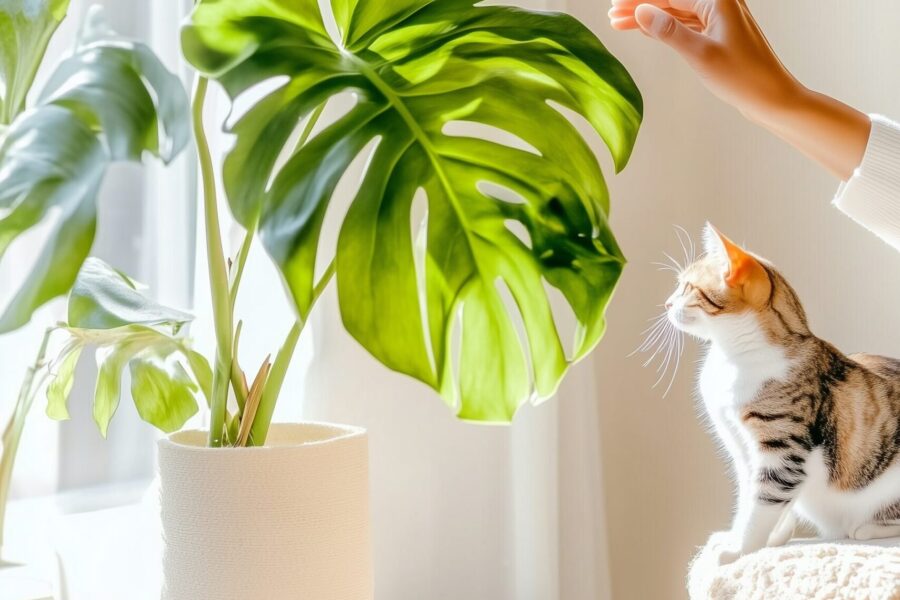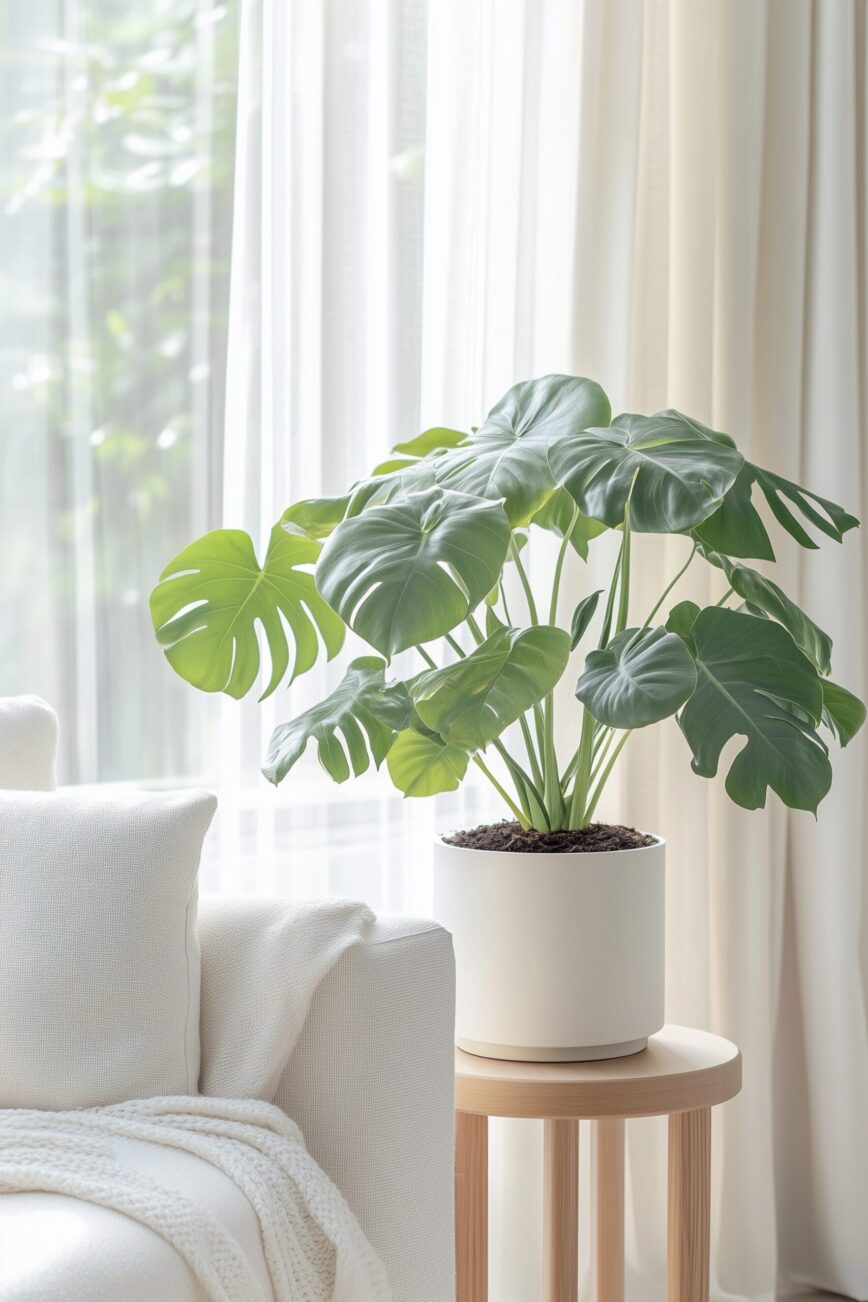
There’s something uniquely soothing about Monstera leaves – the glossy split greenery shimmers in the light, and suddenly your living room looks like it was designed with intention. But if you’ve ever watched a monstera go from lush to limp overnight, you likely understand the culprit of almost all heartbreak: overwatering. I’ve done it. You’ve probably done it too. Good news? Keeping an indoor monstera hydrated without sinking it in water is less complicated than it appears once you optimize for light, soil, pot, and a watering setup that is rooted in science.
Here’s the quick answer (so you can revive your plant today!): Water when the top 2-3 inches of the mix is dry, confirm with a moisture meter if you’re uncertain, and make sure your pot drains freely into a dish you actually dump out. Simple, right? When you pair that with a chunky aroid mix, bright indirect light, and a pot that’s not two sizes too large, your monstera will flourish. It’s dramatic, but within the first week of converting to “dry-down, then deep drink,” you’d notice perkier leaves and less unknown yellow spots.
Continue reading for the exact indoor monstera watering routine, how to detect when the monstera really thirsts, and whether bottom watering is better than top watering. I’ll weave in Pinterest-friendly tips as well for you like “how often to water monstera indoors,” “bottom watering monstera,” “best soil for monstera deliciosa,” and “moss pole monstera watering,” so you can quickly find what you need without the fluff.
How often should you water an indoor monstera to avoid overwatering?
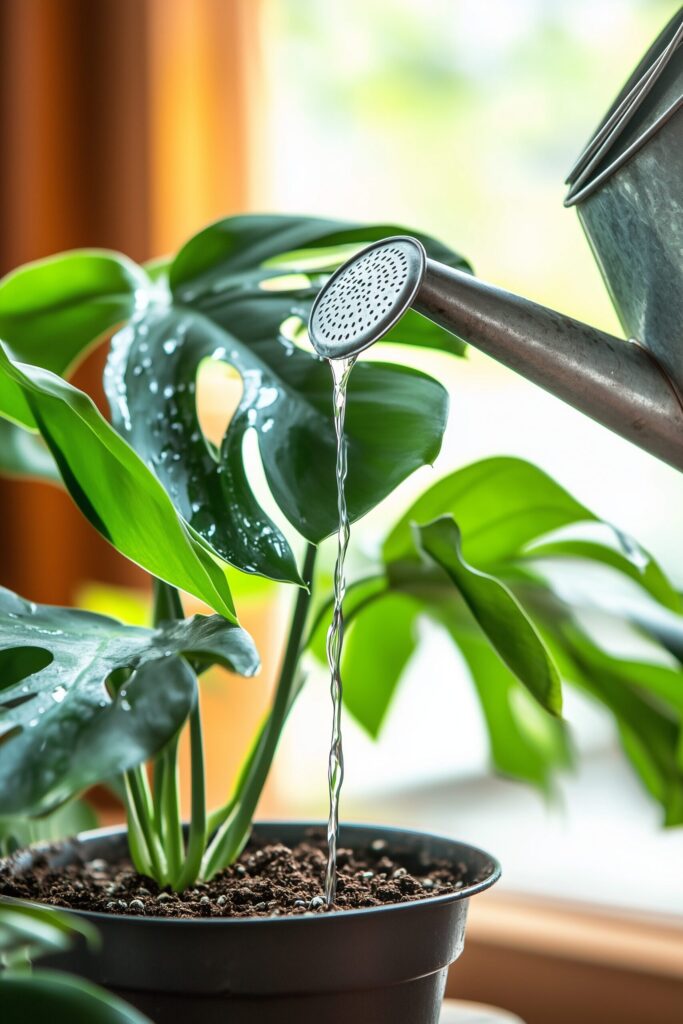
Instead of thinking in dates, think in ranges. The frequency your plant need varies with the season, amount of light, size of pot, and soil it is growing in. A healthy indoor monstera deliciosa, provided it is getting bright indirect light, usually wants to be watered about every 7-10 days in the spring/summer; and every 14-21 days in the fall/winter. Rather than using a calendar, create a two step habit:
- Finger check: Press your finger 2–3 inches into the soil. If it’s dry to your second knuckle, you’re close.
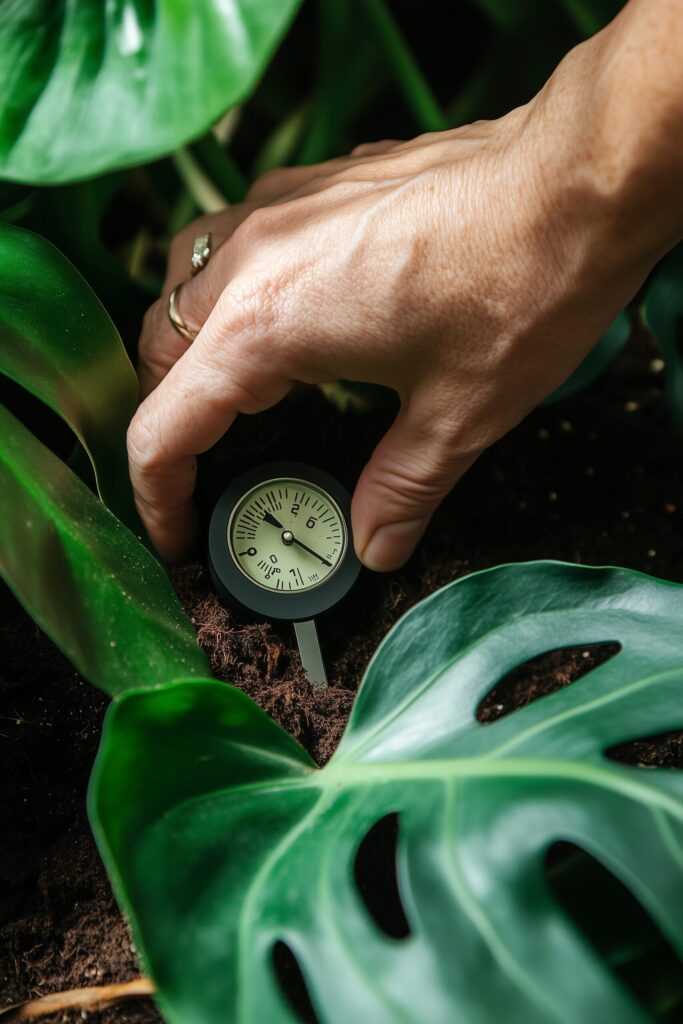
- Proof with a meter: If you’re unsure, insert a simple analog moisture meter. Aim to water when the gauge reads in the “dry” zone (around 2–3).
I like the XLUX soil moisture meter for quick reads—no batteries, simple dial. When it’s time, water thoroughly until excess drains from the bottom, then empty the saucer within 10 minutes.
Shop: monstera watering schedule indoor
How do you know your monstera really needs water today?
Use a three-signal checklist:
- Soil dryness: Top few inches feel dry; meter reads dry.
- Pot weight: Pick up the pot—if it feels surprisingly light compared to post-watering, it’s ready.
- Leaf language: Slight droop with firm leaves = thirsty. Limp leaves plus wet, cold soil = overwatered.
If you struggle reading droop, rely on the meter and pot weight. Consistency beats guesswork.
Shop: soil moisture meter for plants
What soil and pot keep monsteras from staying soggy?
Monsteras are aroids; they love a chunky, airy medium that drains fast but still holds brief moisture around the roots. Think: orchid bark + perlite + coco chips + a little peat or compost. You can mix your own or grab a ready blend.
- Ready-made option: Gardenera Aroid Potting Mix—chunky and easy for beginners.
- Choose a nursery pot with drainage inside a pretty cachepot. Size up only when roots circle the pot; going too big leaves extra, unused soil wet for too long.
Shop: aroid potting mix chunky
Is bottom watering or top watering better for monsteras?
In your daily care routine, top watering is the best method. With top watering, you can consistently flush away salts and rehydrate the mix evenly. You can get a good watering by applying water at a slow glug, slowly tracing circles around the top of the container, until you see runoff from the bottom of the pot. Bottom watering (placing the nursery pot in a tray of water for ~15 minutes) is a great technique to occasionally employ if the mix has become too hydrophobic from drying out, but try to limit bottom watering and continue flushing from the top every few waterings to avoid mineral buildup.
Pro tip: Use a narrow-spout watering can so you can aim at the soil, not the stem base—less mess, better soak.
Shop: watering can narrow spout indoor
How much light does a monstera need so it dries out on time?
Getting bright, indirect light is best practice. Think several feet back from a bright south/west exposure or one or two feet away from an east facing window. In a low-light room, add a grow light on a 10-12 hour timer. More light = faster dry down = less risk of overwatering.
Reliable, budget grow options: LBW dual-head grow light with tripod or a simple GE Grow LED bulb in a clamp lamp.
Shop: grow light for monstera
Should you use a moss pole—and does it change watering?
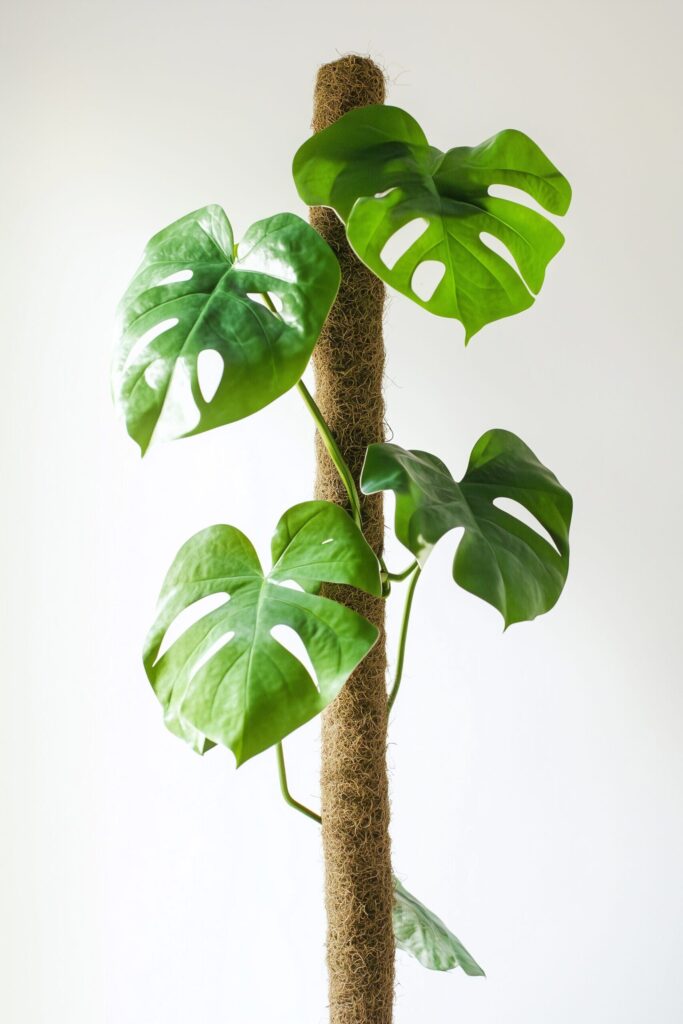
Absolutely! More so as your monstera develops over time. In their natural habitat, monsteras climb—so attaching a pole, either coir or moss, will support larger, fenestrated leaves, while keeping the footprint neat. The pole also absorbs some ambient moisture when misted (not the leaves), allowing aerial roots to cling on…great for growth, but again, not a replacement for dry down. Your dry down rules still apply.
I like stackable coir poles that “grow” with the plant, like this CHIAFFI stackable moss pole.
Shop: moss pole monstera
What are the signs of overwatering vs. underwatering monsteras?
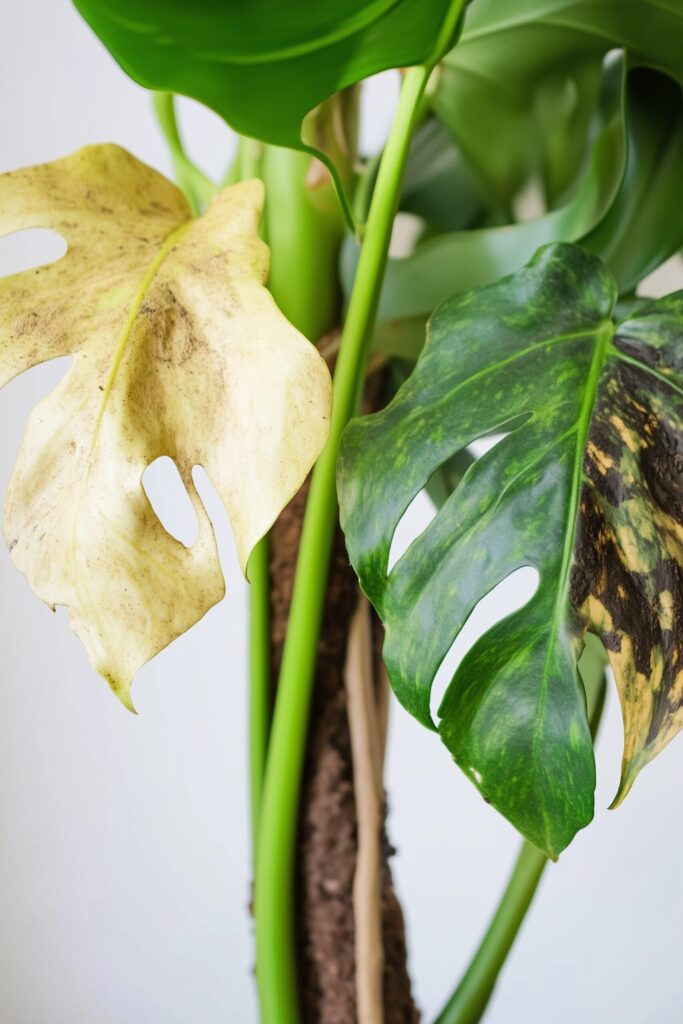
Overwatering
- Yellowing leaves starting with the lower, older ones
- Soft, mushy petioles or a faint sour smell in the soil
- Constantly damp, cold mix; gnats love this environment
Underwatering
- Crisping brown edges, especially on newer leaves
- Soil pulling away from pot edges; water runs straight through
- Leaves droop but perk up quickly after a thorough drink
If the soil is wet and leaves are yellowing, resist the urge to water “for comfort.” Instead, aerate the top layer gently with a chopstick for airflow and wait for that true dry-down.
Shop: plant saucers drainage
Does humidity and airflow change how often you water monsteras?
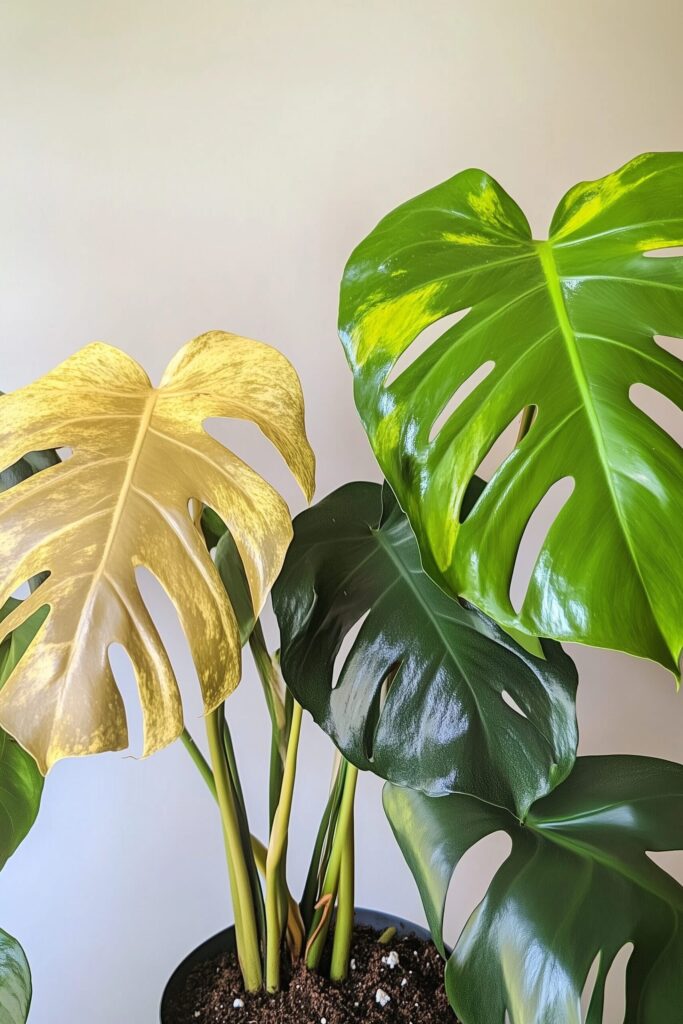
Absolutely! Monsteras love humidity around 50-60%, but increased humidity does not mean that you will need to “water more.” In fact, higher humidity reduces the evaporation, so the soil may stay wetter for a longer period of time due to drier air. Add in some airflow to the equation, by running the ceiling fan on low, or having a small desk fan across the room! If your home is dry in the winter, a quality humidifier helps leaf health without saturating your soil.
Set-and-forget pick: LEVOIT 2.5L Top-Fill Humidifier—quiet, easy, and plant-friendly.
Shop: humidifier for plants
What fertilizer routine supports growth without inviting rot?
Feed lightly at growth time (Spring–summer), about every 4–6 weeks, use a balanced, diluted liquid plant food at half strength, and thoroughly soak previously wet soil. Do not feed fully dry mix- this will burn roots and create tissue damage that looks like rot. In the fall/winter, when growth slows, stop or reduce feeding and water less.
If you see a white crust on the soil, you’re likely overfeeding, or not flushing- treat your plant with a gentle top-flush with clean water the next time you water.
Shop: indoor plant fertilizer monstera
How and when should you repot to prevent overwatering?
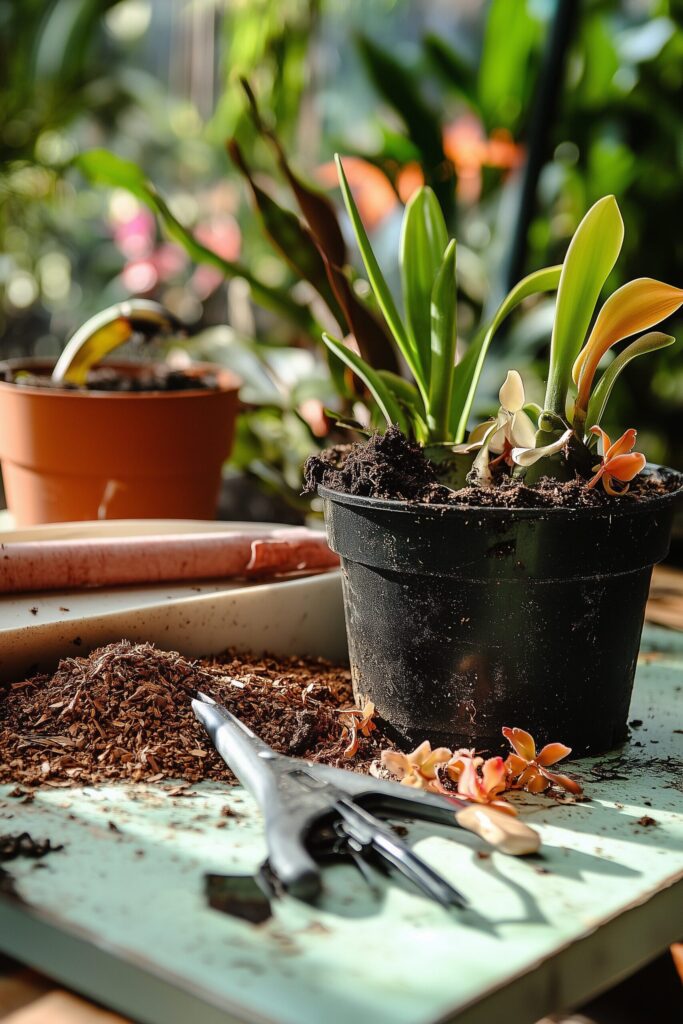
Repot every 12–24 months, or sooner if: roots swirl the surface, water races straight through without wetting, or the plant dries out in under 3 days in summer. Choose a pot 1–2 inches wider than the old one with ample drainage holes. Gently loosen circling roots, trim any brown/mushy bits with clean Fiskars bypass pruners, and reset in fresh, chunky aroid mix.
After repotting, water thoroughly once, then let it dry to your usual benchmark before watering again. Resist the urge for “just a sip” in between.
Shop: planter with drainage monstera
Can you rescue a mushy, overwatered monstera?
Yes—act fast:
- Unpot and inspect. Rinse roots; healthy = firm, white/tan.
- Trim rot. Sterilize shears and remove anything mushy or black. (Use those Fiskars pruners for clean cuts.)
- Repot smaller. Choose a slightly smaller nursery pot if you removed significant roots; refill with fresh aroid mix.
- Reset care. Bright, indirect light; water only after true dry-down.
- Pest-check. Stressed plants are magnets—keep Captain Jack’s Neem Oil on hand for gentle, broad-use treatment if needed (always test on a leaf first).
Shop: root rot treatment houseplants
Is top watering or bottom watering better for baby monsteras in small pots?
Either watering style will do for smaller nursery pots (4–6″). What matters more with smaller pots is consistency and making sure the soil is thoroughly saturated. If your mix is fresh and chunky, watering from above is easier and will help rinse salts away. If your mix is older and water is running down the sides of the pot, bottom watering can help rehydrate the mix more evenly. In any case, make sure to finish the watering process by picking up the pot; if it still feels heavy after 7 to 10 days go longer next time.
Shop: self watering spikes indoor plants
What about styling—can I keep a monstera in a low-light and still avoid overwatering?
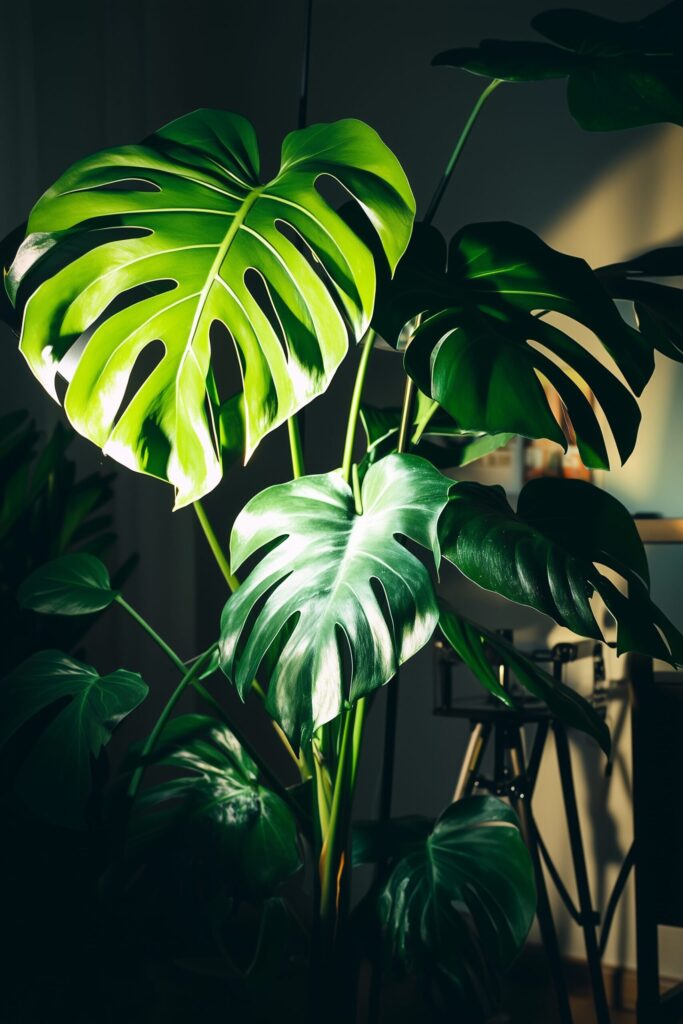
You can, but give it a little tech assist. Use a minimalist grow bulb in a floor lamp to maintain that earthy modern living room vibe and keep the plant’s dry-down on track. A subtle bulb like the GE Grow LED disappears visually yet provides the spectrum Monsteras love.
Shop: earthy modern plant decor
Quick monstera care cheat sheet to prevent overwatering?
- Light: Bright, indirect (add a grow light if needed).
- Soil: Chunky aroid mix that drains fast.
- Pot: Snug nursery pot with drainage; decorative cachepot outside.
- Water: Only after top 2–3″ are dry; confirm with a meter; deep soak; dump saucer.
- Humidity: 50–60% with gentle airflow.
- Support: Add a moss pole as it matures.
- Fertilizer: Half-strength every 4–6 weeks during growth.
- Watch-outs: Yellow + wet = wait; crisp edges + dry = water thoroughly.
Shop: monstera care kit
Handy tools I actually use for monstera care (and why)
- Moisture meter: The fastest way to train your brain to water by the plant, not the calendar. Try XLUX.
- Aroid mix: Consistent texture = consistent dry-down. Love Gardenera Aroid Mix.
- Moss pole: Cleaner shape, bigger leaves—CHIAFFI stackable pole grows with your plant.
- Humidifier: Winter insurance—LEVOIT 2.5L Top-Fill.
- Grow light: Keep that “bright” box checked—LBW dual-head tripod.
- Pruners: Clean cuts prevent stress—Fiskars SoftGrip bypass.
- Neem oil: Gentle, go-to leaf care—Captain Jack’s Neem Oil.
Shop: monstera plant accessories
Reader Q&A
Is top watering or bottom watering better for monsteras?
Top watering most of the time; bottom watering occasionally to rehydrate a stubborn mix. Always flush from the top every few waterings to prevent salt build-up.
How often should I water my monstera indoors in winter?
Usually every 14–21 days—sometimes even less. Let light and a moisture meter lead you, not the calendar.
Why are my monstera’s lower leaves yellowing even though I “only water weekly”?
“Weekly” might be too often for your light/soil/pot. Check the soil: if it’s still cool and damp, wait—yellowing plus wet soil = classic overwatering.
Do I need a humidifier for a monstera?
Not mandatory, but helpful in dry homes. Aim for 50–60% humidity with gentle airflow so your soil still dries between waterings.
Will a moss pole change how I water?
Not really. It helps growth and shape, but your soil dry-down test remains the signal to water.