
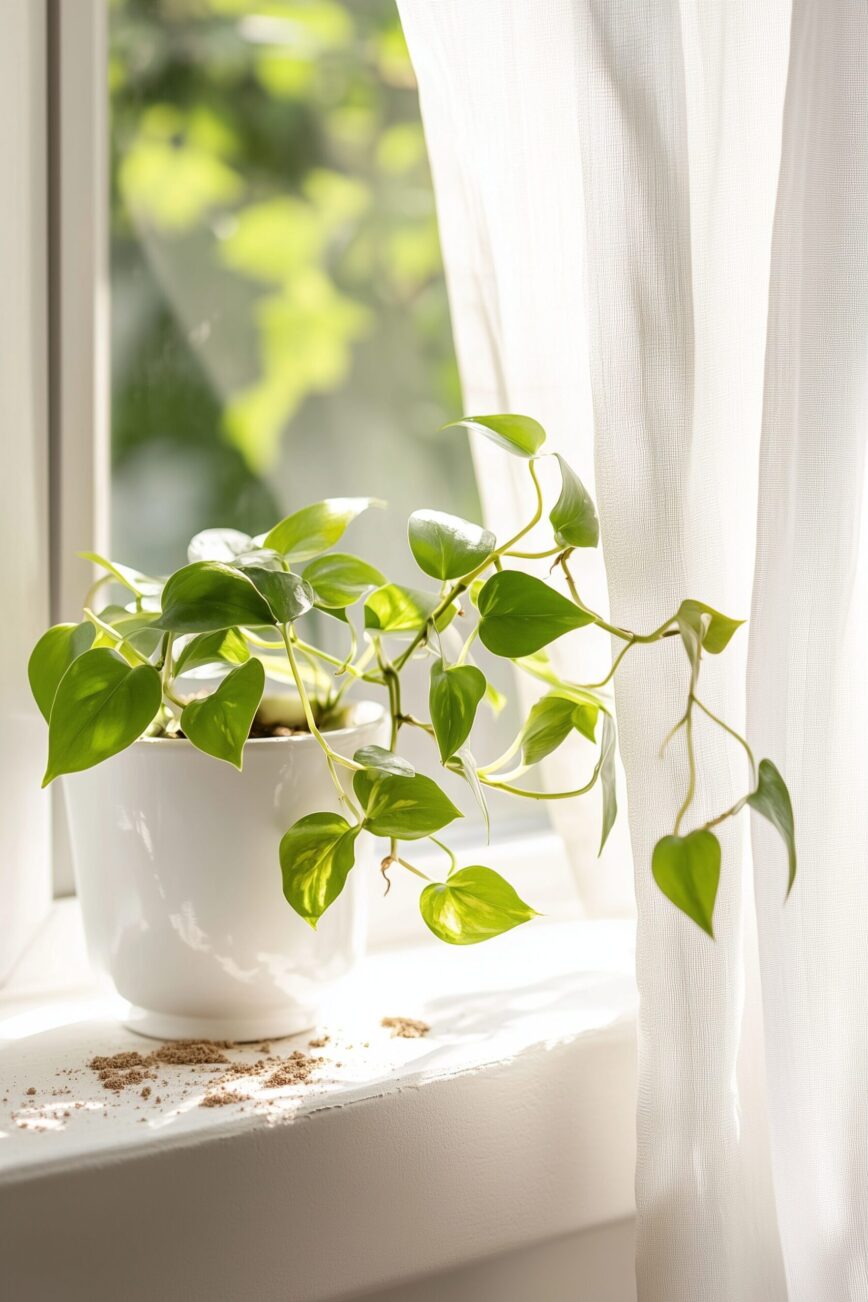
So you’re going to start taking care of houseplants. I’m all about it. The problem is, “houseplants for beginners” can feel overwhelming, which it doesn’t have to be. This is the easy, quick, realistic guide that I wish I had when I woke up at 11:42 pm one night after seeing a beautiful Monstera on Pinterest and convincing myself I could be a plant mom by morning. You’ll get houseplant care suggestions you’ll actually do in apartments, low-lit rooms, and with a busy schedule. Easy steps. No guilt. We’re thinking pothos, snake plants, ZZ plants – the best low-maintenance houseplants that won’t throw a fit if you forget to water them. No weird Latin definitions. Practical steps and a weekly plant care system you will actually do because it takes less than twenty minutes, and you’ll find it oddly relaxing.
Are you ready? Let’s make your space a calm, green, dragged-out, cute situation that looks expensive and smells fresh, but doesn’t require the work or stress of being a science fair project. Just as an FYI: this starter setup is affordable, renter-friendly, and looks super cute on bookshelves. I’m obsessed.
Why Houseplants Are Worth It
I promise you, plants change the whole vibe. Rooms feel softer. Mornings feel a little slower in the best way. You’ll find yourself opening the blinds, dusting the leaves, having a cup of coffee while staring at the new growth as if it’s a new TV show. It feels grounding and simple and slightly addicting. Plus, I think your space looks better in photos. And yes, that may sound shallow and casual, but it is still true.
The Beginner’s Plant Collection with No Fail Plants
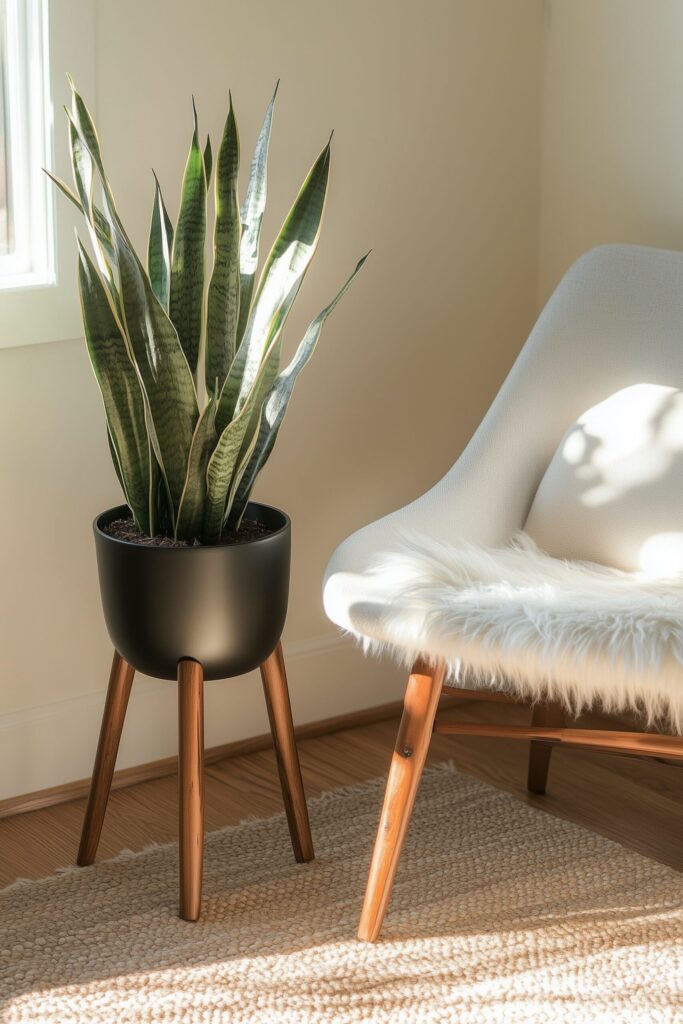
Start with three plants – not ten. If we want you to learn fast and without feeling overwhelmed, three is the ideal number.
Golden pothos (Epipremnum aureum). Iconic! A fast-growing vine-succulent hybrid. It grows in low-light to bright-light. It’s hard to kill.
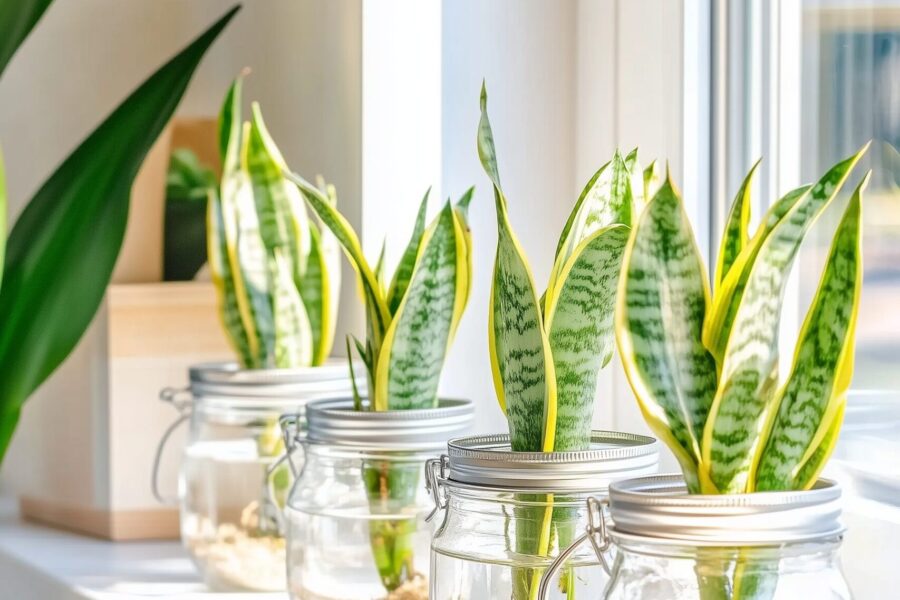
Snake plant ‘Laurentii’ (Sansevieria). Vertical with an architectural quality. Fantastic for bedroom spaces, low-maintenance and good in neglect.
ZZ plant (Zamioculcas zamiifolia). All leaves are shiny, drought-tolerant, and stays cute if you completely forget about it.
If you want to start with a fourth plant because you need extras: Monstera deliciosa for large leaves and an “I live well” tropical aesthetic.
Light 101 You Can Actually Use
Light is everything! Don’t over complicate it.
Bright indirect light = a spot where you could read a book in a short duration of time without turning on a lamp (like when the sun is shining into the room through an East or West window).
Low light = you can see the room but it feels a bit dark in there (like your long hall or far corner of the room).
Direct sun = a beam of sunlight hitting the plant for a long period of time. Makes for a good spot to put your succulent in; too much direct sun could burn many tropical plants.
If you have a darker space, and I mean really dark (think ‘big bad wolf’ blowing out your light-source) take a trip to the hardware store and grab a GE Grow Light bulb. Use that instead of a lightbulb in a lamp next to your plants. It even looks like a normal light bulb. Promise.
Watering without panic
This is the point where most people take off onto a spiral. Keep it simple.
Just remember the rule: water deep, and infrequently.
To check if a plant needs watering: stick your finger 2 inches into the soil. If the soil is dry, you need to water. If the soil feels cool or damp, wait a day before watering.
A really cheap and best tool of all – The XLUX moisture meter is maybe the best, and easiest starter hack for beginners. It feels like cheating.
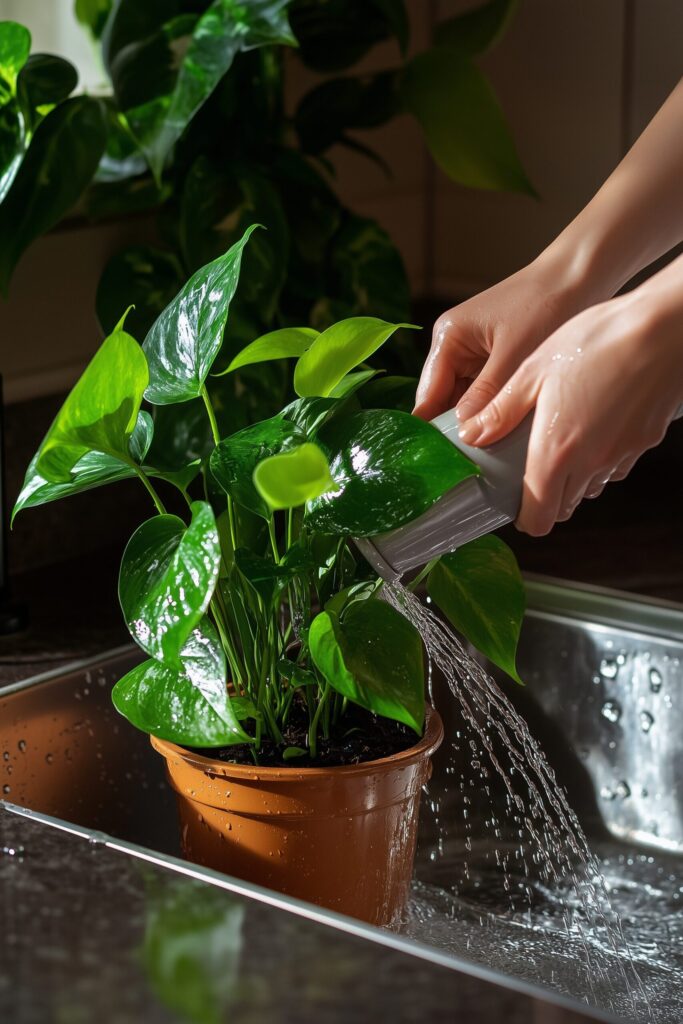
If you aren’t sure of how much water you should use in order to water deeply, here is my favorite watering hack: take the plant to the sink.Water until it is flowing out of the drainage hole. After you have let it drain for a minute, plug it back into the pot sleeve. Done.
Pothos likes a drink when the soil is dry 1-2 inches down. The Snake plant and ZZ plants like to dry almost completely. In my experience, the problem is almost always over-watering and not under-watering.
Pots + Potting Mix That Won’t Fail You
Make sure your pot has drainage holes. Non-negotiable.
A nursery pot inside a cute pot is the best setup for a beginner! Cute and functional.
Terra cotta pots are breathable and look nice. They will help with keeping the soil from getting soggy.
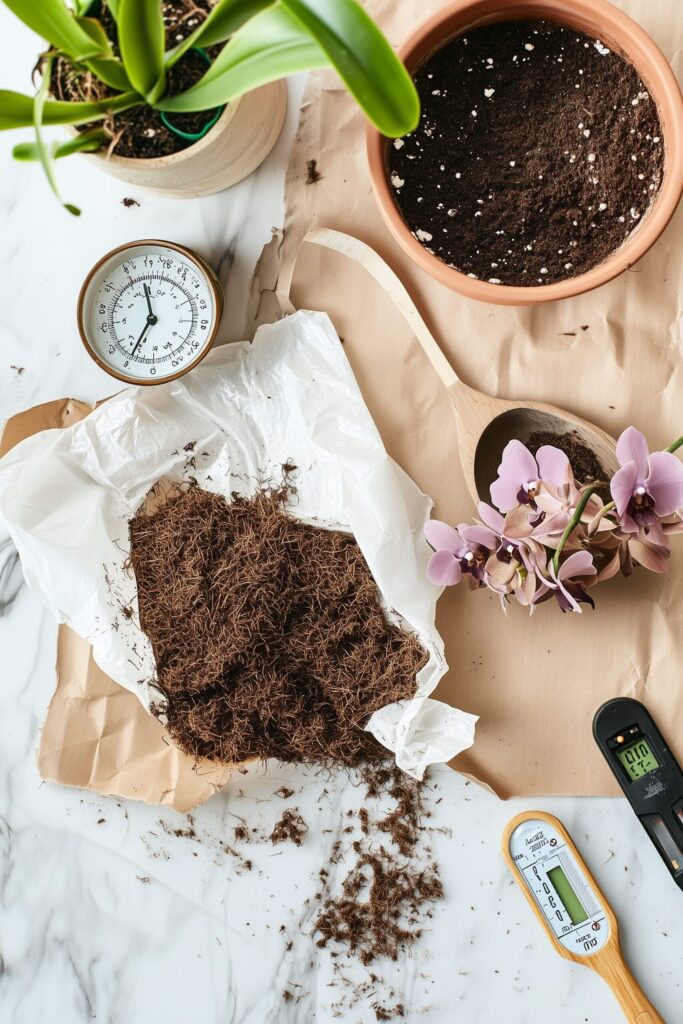
For potting mix, a high quality indoor potting soil like FoxFarm Happy Frog or Miracle-Gro Indoor Potting Mix is the start. Once you have your potting mix, fluff it up a bit with some perlite and a little orchid bark for better air flow. Mix ratio should be 3 parts potting mix : 1 part perlite : 1 part orchid bark. Think of it as giving the roots room to breathe.
Fertilizer, Without A Spreadsheet
Spring to early fall is the growing season. Fertilize lightly.
I recommend using Miracle-Gro Indoor Plant Food or Dyna-Gro Foliage-Pro and using it at half strength about every 2-4 weeks.
During the winter, when growth starts to taper off, do not fertilize. Basically, your plants will do what we all wish we could do at that time of year…cozy up and then hibernate.
Repotting: When And How
Signs that repotting is needed: roots are circling the bottom of the pot, water runs straight through, or the plant looks cramped – generally all signs that the plant is ready to be repotted.
For repotting, change to one size larger pot only for potted plants.
When repotting make sure to loosen the roots as gently as possible. Tuck the fresh mix around the sides of the plant.
Water – one good time. Leave it be, and let it settle.
Pests Happen to Everyone, It’s Okay
You are not dirty. It is simply nature invading indoor (in) space.
Fungus gnats are about the size of fruit flies and look the same. Just work on letting the soil surface dry between waterings. Most plant stores carry yellow sticky traps (Safer Brand).
Water from the bottom up for a couple of weeks.
Spider mites/aphids/mealybugs: Wipe off the leaves with neem oil or Bonide Insecticidal Soap once a week for 3 to 4 weeks. Consistency beats panic.
Quarantine new plants away from the others for a week. I’ve learned this the hard way!
Humidity + Temperature: Chill, You’re Fine
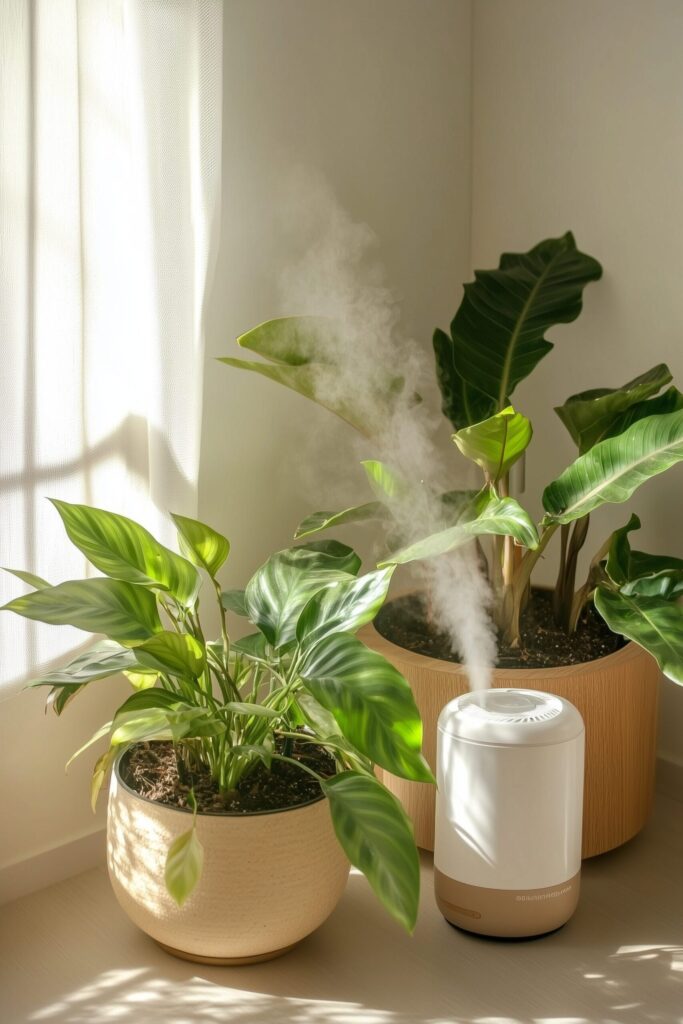
Most beginner plants are happy just fine with moderate home humidity (35-51%). If you have a dry desert in the winter, group plants together and place a tray with pebbles & water under the plants, but do NOT soak the pots. Fancy humidifiers are great, but not necessary. Just be mindful to keep plants away from blasting vents and very cold windows.
Clean Leaves = Fast Growth
Dust blocks light. Wipe on down with a damp microfiber cloth every few weeks. For grimy leaves, I take a drop of unscented soap in a bowl of water and lightly wipe the leaves and then wipe it off again with plain water afterwards. That’s it. Clean figuratively, and literally, no weird leaf shine sprays.
The 60-Minute Weekly Plant Routine
I run this on Sundays. It is quick, easy, and makes you feel so much better!
Walkthrough + pick up dead leaves. Little tidy up for the plant.
Check moisture. Finger test or meter of some kind; only water what’s dry.
Turn the plant a quarter-turn at a time. Will keep growth at build height, and will look cute.
Wipe leave on plant #1 and #2. Not all of them, just two leaves. It adds up.
Only fertilize if it’s your week. Lightly.
Scan for pests. Under the leaves, new growth, stems.
Style refresh. If you’re feeling fancy, propagate a cutting of pothos in water. They look adorable on a windowsill.
Styling Your Plants for a Designer Look
You can relax and plan
Heights- Combine methods. Floor plant + shelf plants + trailing plants.
Oddly Numbers- Group in 3s for a vignette that still looks deliberate.
Textured pots – Matte ceramic, terra cotta (and soon). Neutral pot with one splash of color.
Trailing for magic – If you have a pothus, allow it to spill off the back of your bookcase. Boutique hotel lobby.
Plant stands- IKEA (or your favorite Amazon basics)! Get everything up, sit it up when you can.
Beginner-Friendly Watering Schedule Example
This is a template, it is not a law for you to stress about.
Weekly: Check your pothus and Monstera, water when the top 1-2″ of soil is dry.
Every 2-3 weeks: Check snake and ZZ. Water when your moisture meter reads “dry” AND your soil feels dusty when you touch it.
Fertilizer: Once every other Sunday morning from March-September. April-September, half dose.
Common Problems + Quick Fix:
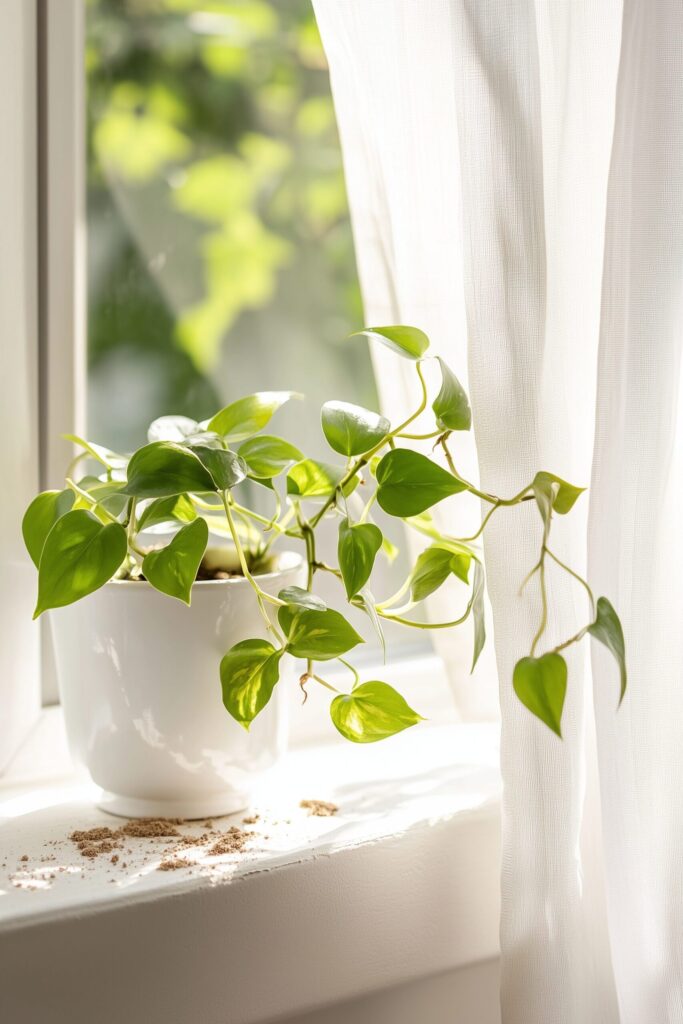
Yellow leaves on pothus plant: You are over-watering the plant, you want to give it time to dry out at least a little longer between watering- trim the yellow as it happens…
Crispy tips on your plant: You are under-watering or lack humidity. One deep soak and then come back and check your schedule to water as normally.
Droopy Montera: Thirsty? Rooted bound? Check moisture, it may be normal; It may rebound; Once it rebounds and droops down again, need to re-pot.
Regardless of growth: It isn’t getting enough light; scoot it closer to a window or get that GE grow bulb. Life changing!
Brown mushy stems on ZZ plant: You’ve watered it too much. Back off for a little while on the watering, try a new drainage-based soil I am working on, or try a terracotta pot.
Budget Tips so this stays fun
Buy small. The little 4″ plants are cheaper and they will grow!
Propagate!Propagating pothos means you could gift your friends free plants, or maybe you want to fill another area with greenery, like your entry table.
Consider thrift pots. Search for a nice cachepot, one without a hole, and grow your plants in their nursery pots inside.
DIY the soil. One big bag of an indoor potting mix and then go get a bag or two of perlite and some bark. One bag will last for so long!
Use grow light bulbs instead of a large grow light panel. They are inexpensive and look a lot better!
A Mini-Plant Glossary You Will Use
Node: That bump on the vine where roots and/or leaves grow from. To propagate, you want to cut under this.
Propagate: When you make a new baby plant out of cuttings. Free serotonin.
Drainage: A hole in the pot, or under the pot, that allows excess water to exit. We love it.
LECA: Little clay balls that some people grow plants in. Neat, but just a fun bonus—don’t bother if you are a beginner!
Your 14-Day Jumpstart Plan
- Day 1: Buy your pothos, snake plant, or ZZ plant. Grab one bag of indoor potting mix, one bag of perlite, a moisture meter, and two terra cotta pots.
- Day 2: Pot everything up in the terra cotta pots with drainage. Find a nice place for these pots to live near bright windows.
- Day 3: Water your pothos very well. Don’t water snake/ZZ plants unless they are completely bone dry.
- Day 4: Turn your pots—rotating them helps balance growth. A quick scan of your plants for pests.
- Day 5: Clean off pothos leaves.
- Day 6: Chill and let your plants adjust to their new homes.
- Day 7: Moisture check—pothos will probably be ready for a drink, the other may not.
- Day 8: If your pot light or natural light isn’t good, consider adding the GE grow bulb.
- Day 9: Do a propagating cuttings in a glass jar from one of the pothos. They look cute in the jar, too.
- Day 10: Wipe leaves off the ZZ plant.
- Day 11: A very quick adjustment in your style—stack a book under the snake plant for raised height.
- Day 12: Moisture check—in case you added a Monstera and need to water it.
- Day 13: If your pothos or Monstera is growing—give it a light feeding at half strength.
- Day 14: Take a photo. After a month you will blink and wonder, “How did the pothos grow three feet so quickly?” After your friends ask, you’ll laugh and say, “I just water it when it’s dry.” Because really, that’s the secret.
Two of My Favorite Tiny Extras (Not Required of Course, but Nice)
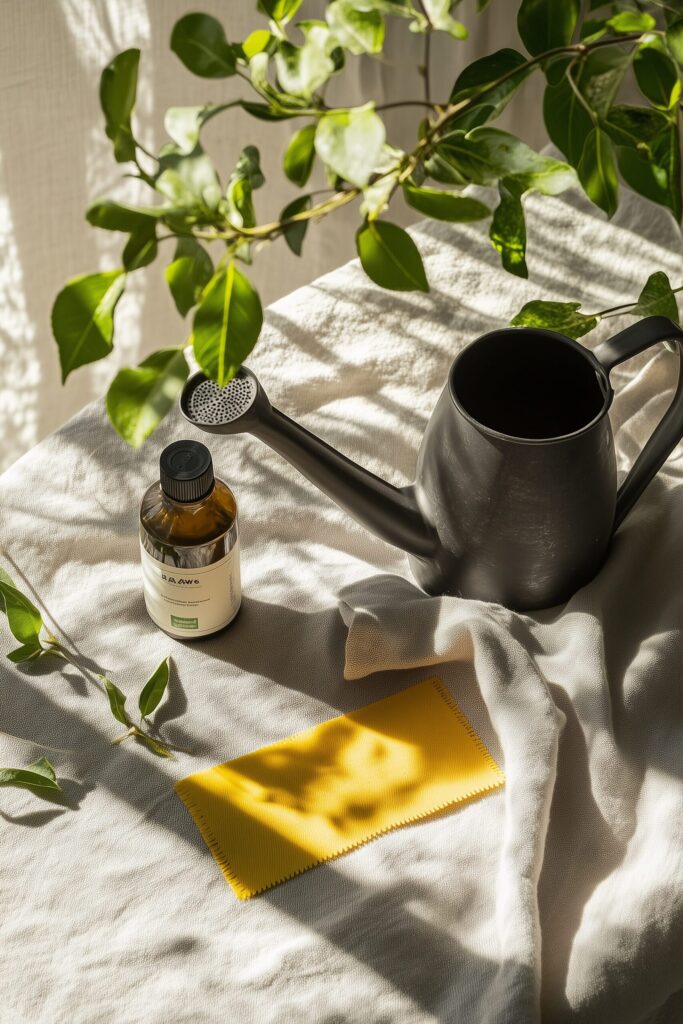
Haws watering can in plastic with a small spout means you can be accurate with watering. Plus, it’s pretty!
Neem Oil is good for routine care of the leaves and for making sure bugs stay away.
Mosser Lee soil cover stones to keep those gnats away plus they finish the pot look.
And sticky traps for a kid in the back, because we are doing this together.
Last Pep Up Talk
You do NOT need a greenhouse. You do NOT need to mist your plants seven times a day. You NEED light, drainage, and to check at least once a week. That is it. Start small, learn the rhythm, let this be easy. You will blink and that pothos will be trailing three feet and your friends will ask you how it is so huge. Then you will laugh and say, “I just water when it’s dry.” Because really, that’s the secret.



Leave a Reply