
Let’s face it, there aren’t many things that can make a morning routine feel more luxurious than walking into a well-lit bathroom. You turn the light on, and it perfectly hits your face—there are no harsh shadows, no unflattering dim spots; it’s an ideal diffuse which makes everything look clean and calm. The opposite situation? Lighting that is too dim, too yellow, or so bright you feel like you have stepped onto a movie set. This is why learning how to choose bathroom vanity lights is one of the easiest and most delightful home improvements you can do—not only is it about the look; it’s about creating a balance between a functional lighting solution, and a design that reflects your personal taste.
The reality is, however, the bathroom is one of the most precision-based rooms in your entire household; you need light that is helpful for applying make-up, shaving, skin care, and those essential last looks you need before heading out the door. So within the first 300 words (which we are right at now), here’s your best quick answer, which is your vanity light should lead with brightness (measured in lumens), color temperature (choosing from 2700K–3000K for warm and flattering light, or 3500K–4000K for bright energizing light), and placement (the ideal is one light on each side of your mirror or a fixture above it). From there it is a matter of which style, shape and finish best suit your space.
Whether plan and design call for a cozy powder room, or a contemporary sleek master bath, the right light will change the entire feeling in your space. Modern sconces and classic bar lighting gives functional light, and add signature aesthetics to the space as well. So we plan for absolute clarity on how to choose vanity lights that fit your space, your style, and your application need—without getting lost in too many options.
What Style of Vanity Light Works Best in Your Bathroom?
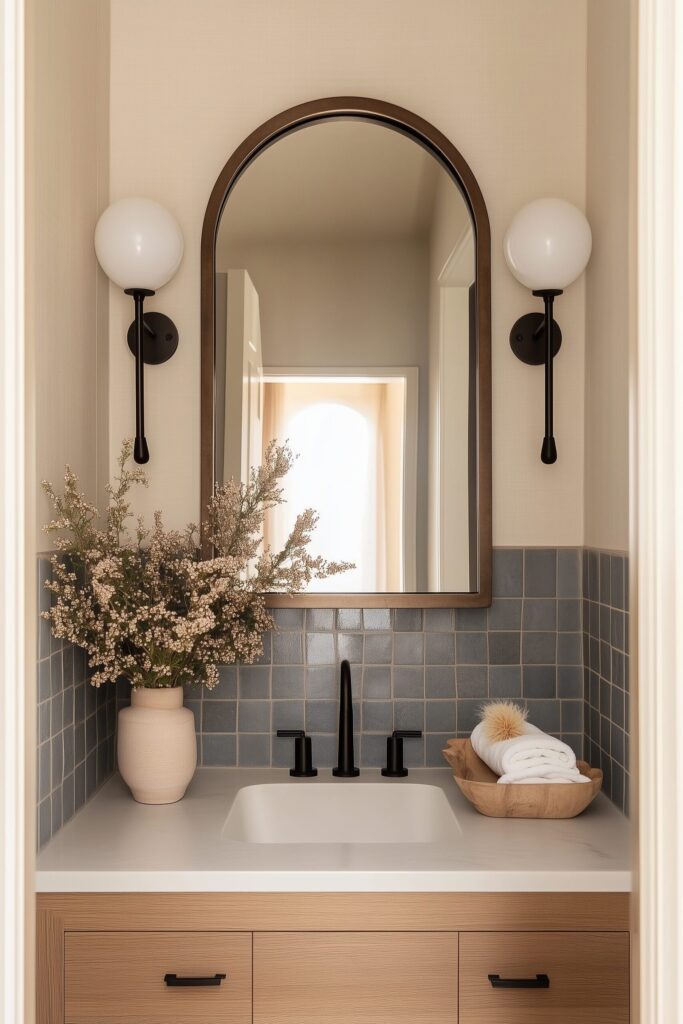
The primary consideration is the overall style of the bathroom. You want lighting to accentuate, rather than compromise, the overall design. For example, if your bathroom has farmhouse vibes, with shiplap and rustic mirrors, you’ll find that fixtures in weathered brass or matte black feel fitting. If your bathroom has the more common contemporary or minimalist style, look for clean lines, chrome finishes and frosted glass shades that soften and diffuse lights evenly.
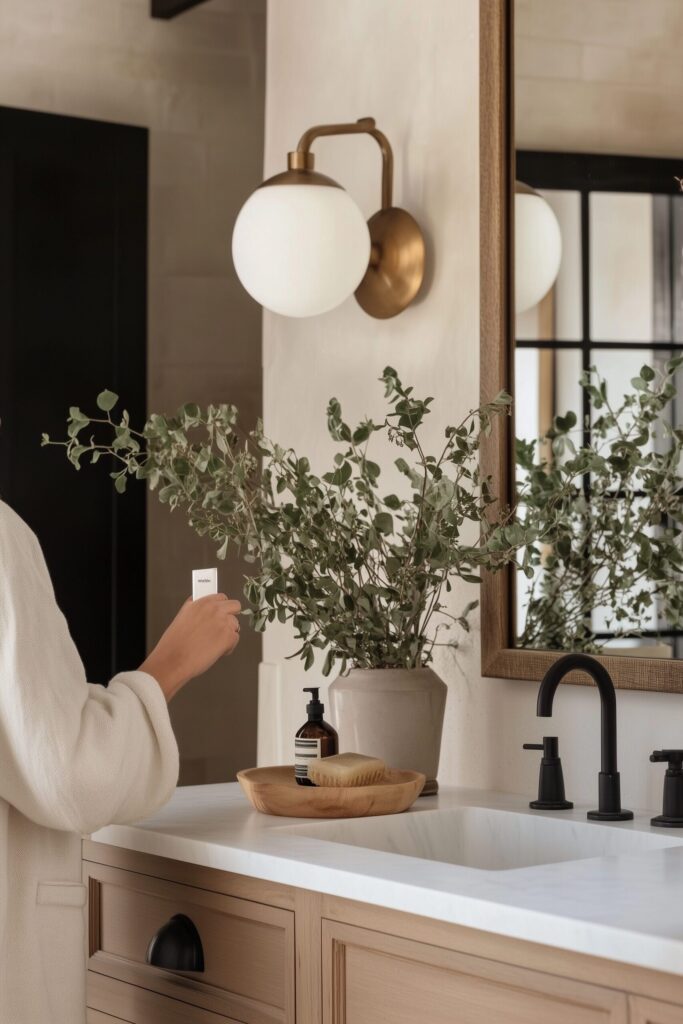
Also, don’t forget that vanity lighting is as much about personality as it is to practical with task functionality. If your bathroom mirror is the star, then your lights can be subtle jewelry around it. Look for materials that mimic your hardware; often matching the finish of your faucet or cabinet pulls helps bring the look together.
Of course, long-tail phrases accounting for things like “modern vanity lighting ideas”, “bathroom light fixture styles”, “best vanity lights for small bathrooms” are among Pinterest’s most common searches that lead to thousands of remodels every year. As you search for inspiration, you should also take note of the different styles of lighting and how their effects create an ambiance: sconces provide a gentle spa like feel, while integrated light bars provide razor sharp clarity.
Shop: modern vanity lights
How Do You Choose the Right Size Bathroom Vanity Light?
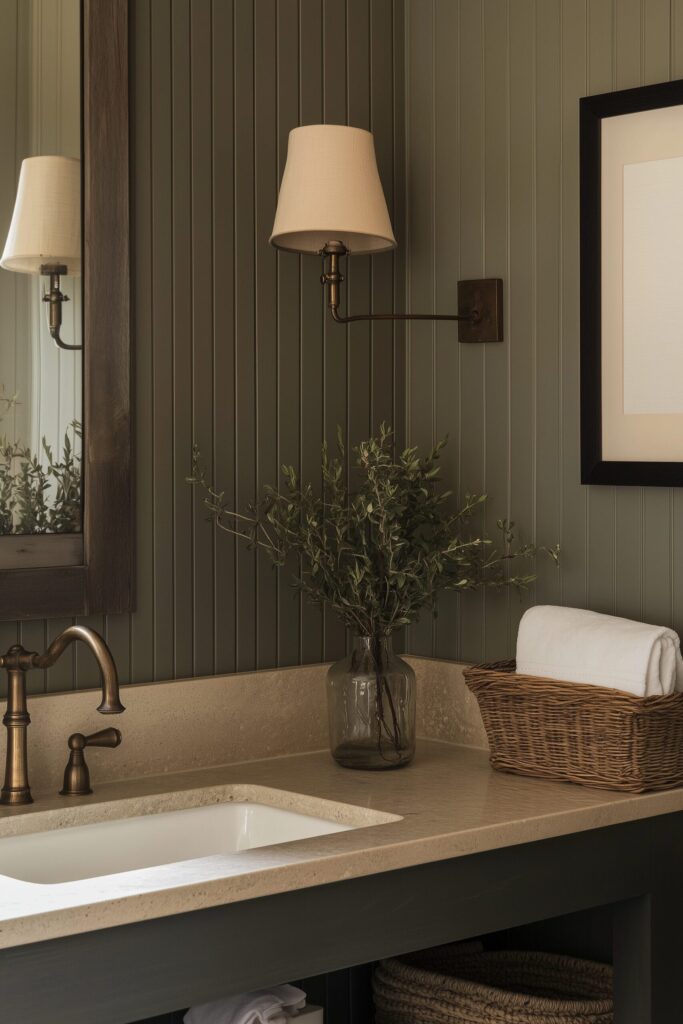
When it comes to bathroom lighting, proportion really matters. If your light is too small, your mirror may look oversized and awkward, and if the light is too large it can overpower your entire vanity. A good rule of thumb is to select a light fixture that is about 75% the width of your vanity mirror. By the way, if you are installing two sconces they should be around 28-30 inches apart, generally at eye level, which is around 65-70 inches from the floor for most people.
For a single vanity mirror, horizontally mounted lights above the mirror should ideally be installed 75-80 inches from the floor, perfectly centered. However, if you are using two smaller sconces on each side of the mirror, the sconces will give you a flattering effect while at the same time, casting no shadows on your face, for grooming or applying makeup. If your mirror is large, (or is across a long wall), consider multiple fixtures to help evenly distribute the light especially if you’re installing the mirror over a vanity.
The right size will help you when it comes to proportion so that your lighting looks intentional and the morning lighting is flattering, not highlighted in oddly extreme manners. Where I see people going the biggest astray with design is when they select small light fixtures in fear of them, “overwhelming” the bathroom. Ironically, the fleecy little small light fixtures will creates a visually underwhelming situation, as to align to the visual ordering you desire.
Shop: bathroom vanity light fixtures
Should Vanity Lights Be Placed Above or Beside the Mirror?
This is one of the most common questions I hear when consulting on bath remodels. The easiest answer is both can work—but your positioning choice depends on your space, ceiling height, and mirror shape.
- Side-mounted lights: Ideal for single mirrors and personal grooming tasks. They produce soft, even lighting across your face, minimizing unflattering shadows. Sconces are the most common type for this placement.
- Above-mirror lights: Great for narrow or compact spaces. These fixtures bathe the entire area in light without crowding the mirror sides.
- Combination setup: If you have a double vanity or a large bathroom, using both above and side lights ensures total evenness and lets you customize light levels with dimmers.
If you can, avoid placing lights only above the mirror if shadows are a problem in your setup. Side sconces at face height are still widely considered the most flattering—and they happen to feel like a high-end spa hotel feature too.
Shop: bathroom sconces
What Color Temperature and Brightness Are Best for Bathroom Vanity Lights?

Your goal is flattering, functional light that mimics natural daylight. That’s measured using color temperature (Kelvin) and brightness (lumens).
- Warm white (2700K–3000K): Cozy and inviting; best for relaxing baths or powder rooms.
- Neutral white (3500K): Closest to true daylight; excellent for tasks like makeup or skincare.
- Cool white (4000K–5000K): Crisp and energizing; good for spaces that double as laundry or dressing areas.
Another factor to consider is brightness. You should aim for around 1500-3000 lumens total for an average vanity area. If you are working with a larger mirror, or if your bathroom has dark walls, then you will want to develop a higher total lumen count. I prefer LEDs for this, since they last years, stay cool to the touch, and are energy efficient. And remember to choose 95+ CRI (Color Rendering Index) bulbs to have an accurate rendering of skin tones.
If you feel your lighting is too harsh or too soft, it may not always be the fixture. Sometimes changing the bulb can remove unwanted yellow tones or blue tones.
Shop: LED vanity light bulbs
What Materials and Finishes Are Most Durable for Bathroom Lighting?
Because bathrooms are wet areas involving moisture, condensation and temperature shifts, basically, the materials of your fixtures really matter. Not every stylish light will be able to handle heightened humidity long-term.
For bathrooms, chrome, brushed nickel, stainless steel and powder-coated black or brass are the best finishes. Avoid cheap quality metals that can corrode or discolor. Glass shades are nice too—especially frosted or opal glass they diffuse light beautifully while minimizing glare. Clear glass is pretty trendy and looks stylish, but it doesn’t hide a bright bulb very well.
And don’t forget to check to see if the light fixture is UL (Underwriters Laboratories) damp-rated or wet-rated. “Damp-rated” is just fine for most bathrooms, but if they are literally in the splash zone like above a freestanding tub, then it’s best to go with wet-rated fixtures. That little detail is everything that will ensure your light fixtures look amazing and stay beautiful year after year, whether they are momentarily exposed to a hot, steamy shower or not.
Shop: brushed nickel vanity light
How Can You Layer Bathroom Lighting for a Designer Look?
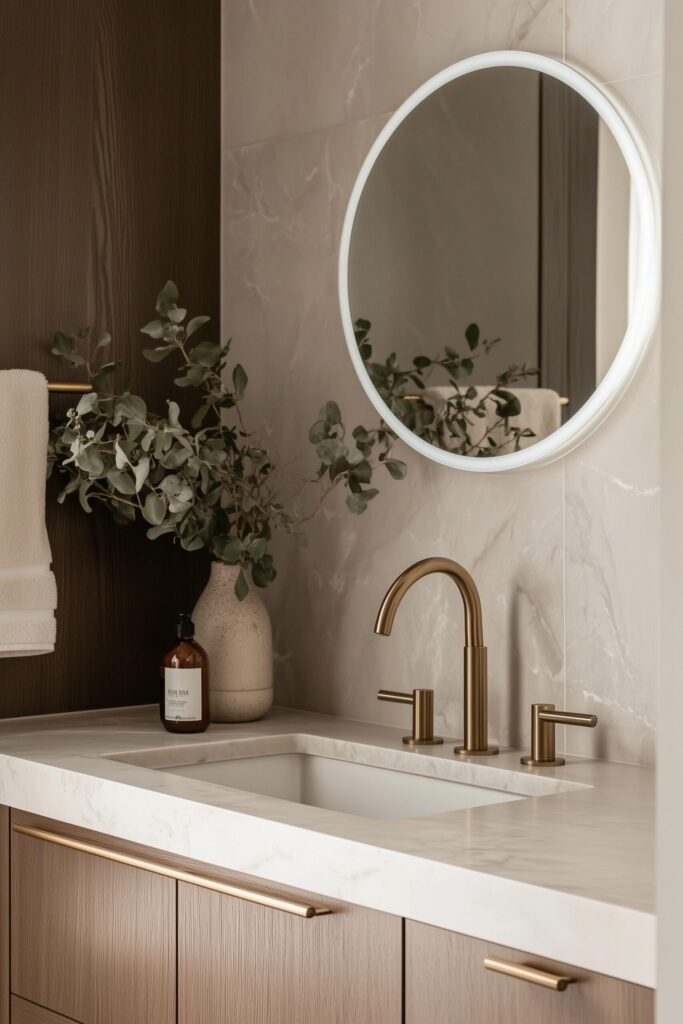
Installing a dimmer switch for your vanity lights gives you control over mood—bright for tasks, softer for nighttime. Just like how professional designers think about lighting as a layered situation vs. a source of light, think about it like your vanity lights are the stars of the show, and there are supporting “cast members” adding to the overall brilliance of the room.
You start with task lighting around mirrors (your vanity lighting). Then you also have ambient lighting from a flush mount or recessed ceiling lighting. The you take it to the next level with accent lighting (think LED strips under floating vanities or in recessed shelves) to get those resort-level vibes and ambiance.
This layered lighting plan solves two issues: glare and shadow. It also allows you to create bigger dimensions and textures to your bathroom–even with simple layouts, feel curated and warm. Finally dimmers [affecting overall light level] will be your secret weapon.
Shop: LED bathroom mirror lights
What Are the Most Popular Vanity Light Designs Right Now?
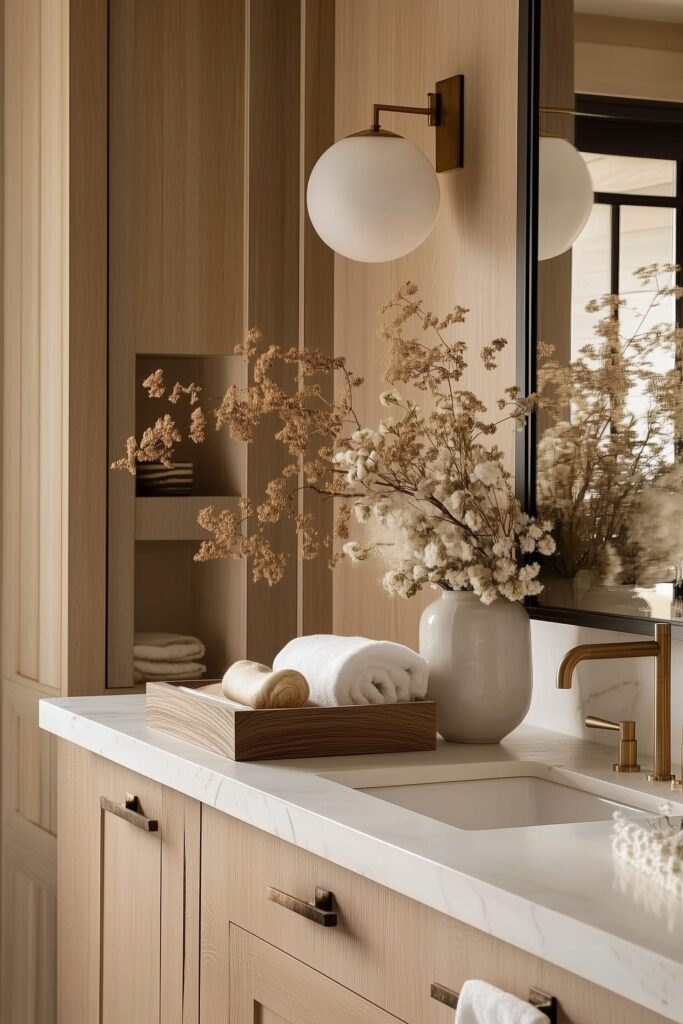
Current trends lean toward blends of natural and modern elements. Some timeless favorites to consider:
- Globe sconces: Chic and minimal; pair beautifully with round or oval mirrors.
- Industrial vanity bars: Perfect for loft-style or farmhouse bathrooms.
- Integrated LED light bars: Give ultra-clean lines for modern decor.
- Mixed-metal finishes: Combine polished nickel with black or gold for on-trend sophistication.
- Art Deco-inspired fixtures: Glamorous symmetry and frosted glass make a bold statement.
Remember, trend doesn’t mean temporary. Choose a style that complements your lasting taste rather than something purely fashionable. Lighting can be a long-term investment—especially if you opt for energy-efficient options that stay stylish for years.
Shop: globe vanity sconces
How Do You Match Vanity Lights with Mirrors and Hardware?
Having consistency brings an element of calm. Whenever your mirror, lighting, and hardware are coordinated in tone and proportion, your bathroom looks decidedly more expensive. It does not need to match exactly – think more of trends than lookalikes. For example, if your faucet is brushed gold, you can also use soft brass sconces in lieu of yellow brass. If your mirror is framed in matte black, it works if you choose a compatible finish for your fixtures.
An insider tip: If your vanity mirror is frameless, framed in a modern style really allows you to have freedom of mixing and matching materials. Just be sure to keep one element consistent – color temperature, shape, or texture so no one element looks out of place.
Shop: brass bathroom sconces
Can You DIY Install Bathroom Vanity Lights?
If you’re comfortable with some fundamental electrical work, then installing vanity lights can certainly be an under-taken you can take on as a DIY project. First, and most importantly turn off the power at the breaker box, then unhook an old fixture to get it out of the way. In doing so, be sure to follow the manufacturer’s wired diagram to align your black (hot), white (neutral), and green or copper (ground) wires together. Once this is done, simply secure the new light base to your electrical box, attach the decorative fixture, then add the bulbs back to the fixture again.
That being said, lighting is one are of products where if you are uncertain of your work, a licensed electrician is a good hire. It can also be a good hire if your lighting is wet rated, or if you have a home with older wiring. Either situation would create more assurance of safety and code compliance if contracted and supervised by an electrician.
A good middle option here is to do the wall prep, and procure a light fixture, then have an electrician handle the wiring. This will save you time, effort, and possibly headaches in the future.
Shop: bathroom light installation kit
What Are Common Mistakes People Make When Choosing Vanity Lights?
- Choosing fixtures that are too small for the space.
- Ignoring color temperature and ending up with unflattering tones.
- Mounting lights too high above the mirror (creating under-eye shadows).
- Using clear glass with very bright bulbs that cause glare.
- Not layering lighting or skipping dimmers entirely.
The best bathroom lighting looks effortless—but it’s usually the result of decisions measured in inches and Kelvins. If you get the proportion, placement, and brightness right, your bathroom will feel balanced, bright, and flattering every single day.
Shop: dimmable bathroom vanity lights
Shop My Faves From
Final Thoughts: How Do You Bring It All Together?
Both your bathroom can either be your wake-up command center or your unwind spa, but lighting is what sets the whole mood. When you choose flattering light, your bathroom not only looks better, but it performs better, as well. You will be able to see your real skin tone, your makeup will be consistent with daylight, and your daily mirror check will be something you look forward to vs. squint through.
So the number one truth to take away from this guide is that choosing the best vanity lights is less about finding the prettiest fixture, and more about creating a consistent glow throughout the space that helps the whole bathroom feel intentional. After you create balance that works for you with the function, proportion, material, and warmth, your bathroom can be a little piece of everyday luxury!
This post was all about How to Choose the Right Bathroom Vanity Lights for Your Space
Frequently Asked Questions
How bright should my bathroom vanity lights be?
Aim for a total of about 1500–3000 lumens depending on the size of your vanity and how much natural light you have.
Are LED lights better for bathroom vanities?
Yes! They’re energy-efficient, long-lasting, and available in various color temperatures that mimic natural daylight.
How high should I install my bathroom vanity lights?
Install wall sconces around 65–70 inches from the floor, or place an above-mirror light 75–80 inches high for the best illumination.
What’s the difference between damp-rated and wet-rated fixtures?
Damp-rated lights handle humidity; wet-rated are safe for areas that may get direct water exposure, like above a tub.
How can I make my bathroom lighting look more high-end?
Layer light sources, add dimmers, and coordinate finishes between fixtures, hardware, and mirrors.




Leave a Reply