
I once thought I had a clutter problem. I did not; I had a decision problem. I had too many “maybes” lying around, on shelves, in drawers, behind pillows. The shift happened when I committed to nimble rule with power potential: 1 in, 1 out. Whenever you bring one thing home, one thing leaves. Easy. Kind. Conqueringly liberating.
If you’re already twitching at the amount of effort this will take, take a deep breath. I assure you: this is not an awful amount of effort, a complete gutting of your house, or a weekend spent sorting such things. Think of it as micro-honest tidying, a practice that quickly becomes muscle memory. Yes, it does work with style goals like “earthy modern living room ideas” and “neutral home decor”, and “whew, I want my place to look calm but not boring”. Yes, you absolutely could do it right now, before the coffee feels too cold, and, with the waiver to pressure of your coffee getting cold can still fittingly add pillows you love, without the couch giving anyone the sense of a pillow fort on the surprisingly inviting living floor.
And, here’s the best part. You don’t need an unbearably cute bin that says “modify” in calligraphy, nor do you need to build a color-coded spreadsheet (zero judginess if that’s your organizing love language). You just need a moment of fairness with each new thing that enters your life. One in – one out. Even if the one that comes in is a $7 candle from the grocery store checkout line. Especially when it’s that.
What the 1-In, 1-Out Rule really means
It’s like a wee handshake with my home: if I invite something in, I thank and let something else go. It’s not punishment; it’s preservation. If you’re decorating, it prevents your space from visually feeling heavy. If you’re budgeting, it pushes you toward buying what you very much love, and if you’re experiencing “gift clutter” it gives you a script: “I’d love this, but I’m practicing 1-In, 1-Out. What should I replace with it?”
How to say yes and no fast: Before buying, ask: “Does this upgrade my daily life or my favorite corner?” If yes, what’s the out? Name it immediately. Put that “out” by the door. Done.
Start today in 10 minutes
- Pick one “hot spot” (entry table, coffee table, nightstand).
- Choose a single incoming item you’ve been wanting: a tray, candle, or catchall.
- Decide what leaves to make visual room. The extra trinket? The coaster you never use? One goes.
- Put the outgoing item in a labeled “Out Box” near your door.
You’ll see the shift right away: cleaner sightlines, less fidgeting every time you wipe surfaces, and a tiny hit of pride that builds. Momentum beats motivation.
Styling shelves without the clutter halo
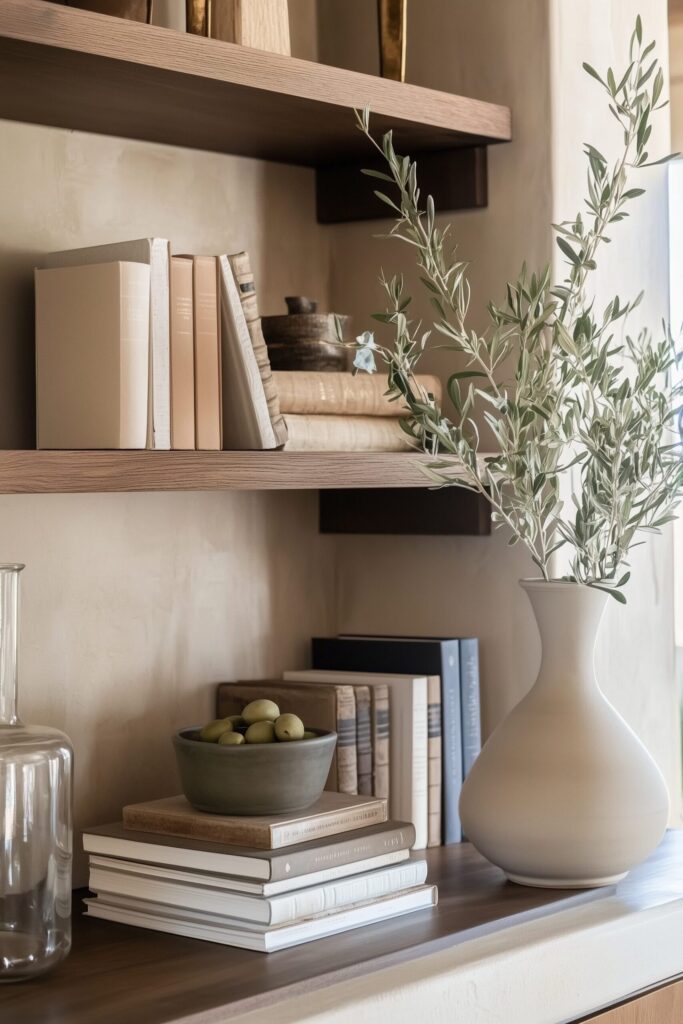
Shelves often become the graveyard of good intentions in collecting. Stick to a 1-In, 1-Out policy to have a nice rhythm: an old ceramic vase goes in and a picture frame comes out. Give air around objects so everything can read. I enjoy groupings of three objects with various heights, a matte finish next to something glossy, and at least one natural element In addition, if you’re adding books, rotate at least one book to be facing out with a pretty cover, and then you can release a dusty paperback you won’t reread.
Couch math: pillows, throws, and restraint
If a new linen pillow is joining, an overstuffed one retires. Same with throws. Two pillows per seat cushion is my max unless you’re doing a movie night. Keep one textured, one smooth; one pattern, one solid. The couch should invite you to sit, not ask you to solve a puzzle first.
Entryway sanity check

Every new hook or basket needs an exit buddy: that cracked umbrella, the mystery scarf, the fourth tote bag you never use. If shoes multiply, match them like socks and let only the everyday pairs live by the door. Everything else gets closet time or a donation run.
Kitchen counters that actually breathe

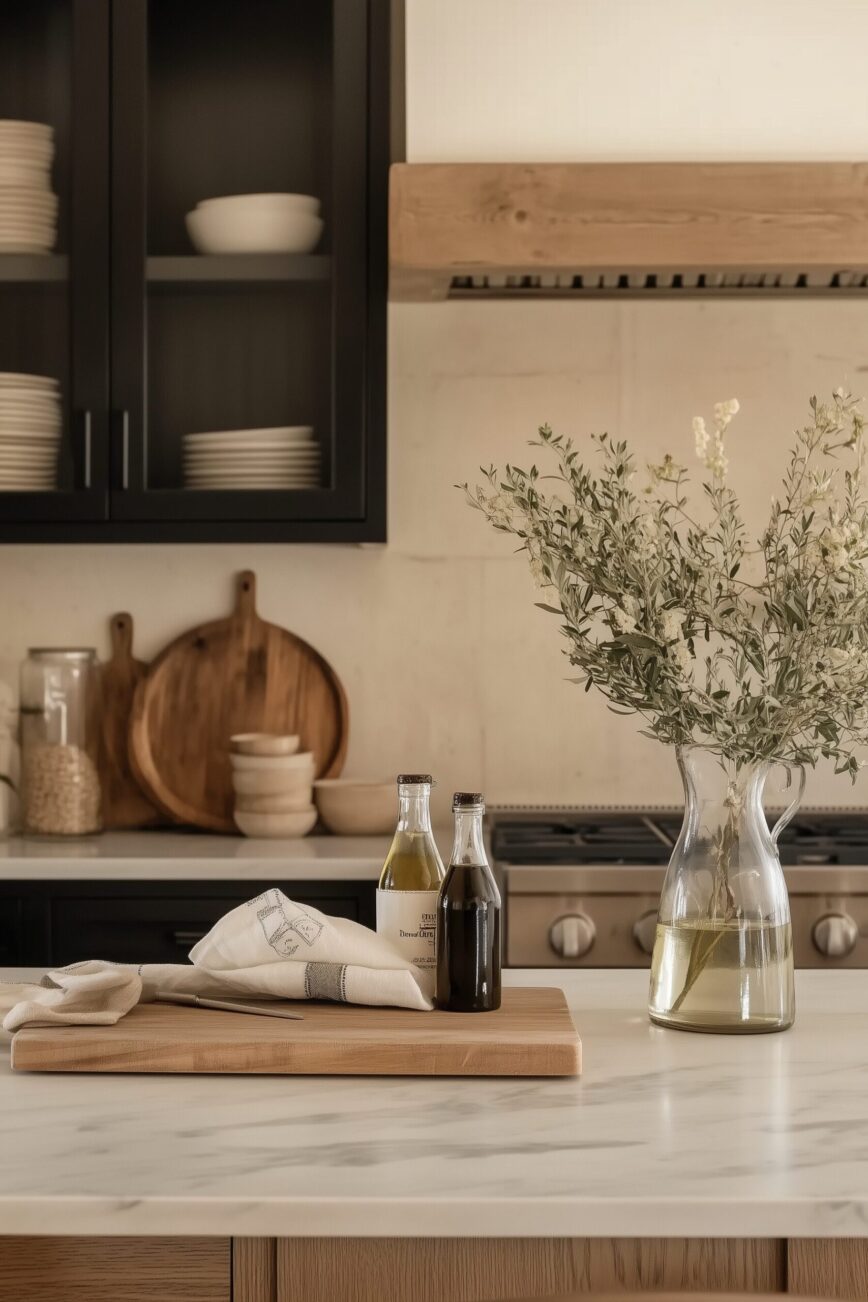
New cookbook stand? Great. Retire the drawer-bound gadget that hasn’t seen daylight since the last trend video. If a pretty olive oil cruet comes in, the ugly bottle goes. Limit “counter citizens” to what you use daily and what looks good enough to earn rent.
The closet: where this rule becomes a superpower
Clothes are emotional, so keep it specific. If jeans come in, jeans go out. Not a sock. If a white tee comes in, another white top leaves. Like-for-like keeps you honest and prevents your drawers from swelling. Tip: hang the newbie on a wooden hanger and put the outgoing piece in your Out Box immediately.
Contrarian take: I don’t keep “maybe” piles. I give myself one try-on in good lighting. If I’m fussing, it’s not me. Out it goes.
Kid stuff and sentimental landmines
For toys, use the “category trade.” A new puzzle in? Retire a board game with missing pieces. For art from school, I keep one bin per kid per year, photographed monthly. If a new masterpiece arrives, we pick an older one to file or recycle. Involve them so the rule feels fair, not sneaky.
Groceries, toiletries, and the sneaky clutter called “consumables”
You buy shampoo, it counts. 1-In, 1-Out applies to the nearly-empty bottle that’s been hanging on for six showers. Same with spices, skincare, candles. You’ll avoid duplicates and free up shelf space so your bathroom looks like a spa instead of a pharmacy aisle.
“But I’m a collector.” Same. Here’s the twist that keeps it joyful
Collections don’t escape the rule; they just get smarter. I rotate. If a new stoneware mug comes home, one goes to a friend who will love it. For books, I keep a tight shelf count. When the row fills, something has to earn its spot. A collection should read like a curated gallery, not a storage unit with better lighting.
Tracking without turning into a spreadsheet person
Use what you already touch: your Notes app or a sticky note on the fridge. I keep a rolling list titled “In/Out.” New: jute rug. Out: old runner (donated). It keeps me honest and makes donation pickups easier. If you love data, tally categories monthly to see where clutter creeps.
The quiet design payoff: sightlines and empty space
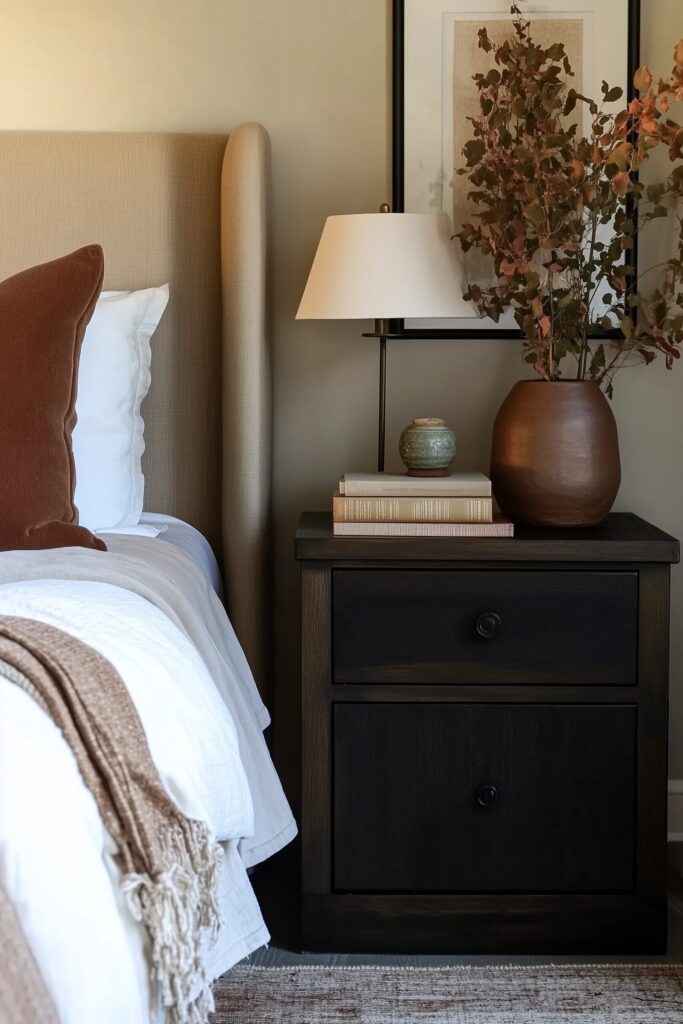
Here’s where style geeks perk up. 1-In, 1-Out protects negative space, which is the unsung hero of earthy modern rooms. When shelves, mantels, and consoles have breathing room, your best objects actually shine. Add a chunky travertine bowl? Let an older tray go. Your eye will travel smoothly across the room, and that’s what makes a space feel high-end without trying.
Earthy modern living room example you can copy tonight
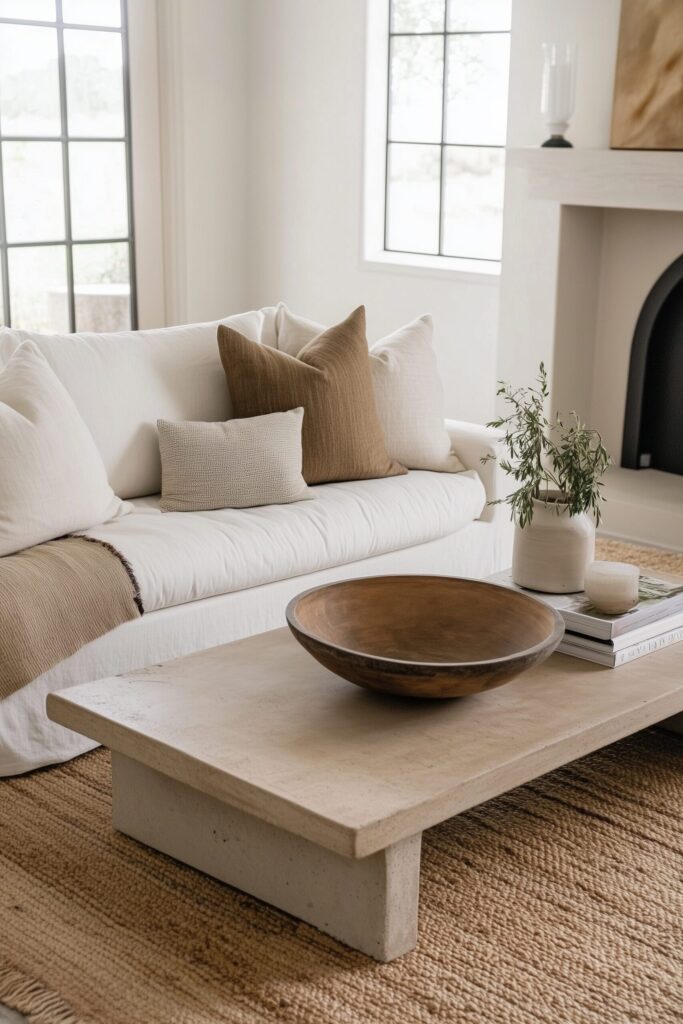
- Bring in one textured jute pillow. Out goes the flat poly-fill imposter.
- Add a low, wide ceramic bowl to the coffee table. Retire the wobbly candle cluster.
- Swap a busy art print for a calmer landscape. Release the print to a friend.
- Bring in a woven basket for throws. Let the extra throw go to the guest room or donation.
Now step back. You’ll see more wood grain, quieter color, and a room that looks styled on purpose.
Tiny apartment? The rule is basically your roommate
In small spaces, 1-In, 1-Out keeps you from playing Tetris with your stuff every night. Go stricter: if a small appliance comes in, measure first and release the least-used one. Folding tables, extra stools, decorative duplicates—gone. You’ll gain floor, not just order.
Partners, roommates, and the politics of other people’s things
Don’t enforce your rule on someone else’s stuff. Seriously. Share the benefits, set shared zones (entry, living room), and apply 1-In, 1-Out only there unless they opt in. If a new speaker arrives, maybe the tangled cable basket exits. Win-win without turning into a house manager.
Maintenance rituals that don’t feel like chores
I do three tiny check-ins:
- Sunday Sweep: Ten minutes to empty the Out Box into the trunk.
- Midweek Mini: If a package arrives, I choose the “out” before I open it.
- Monthly Reset: One shelf, one drawer, one surface. That’s it.
Treat it like brushing your teeth. Quick, habitual, and weird to skip.
What to do with the “outs” so they don’t boomerang
- Donate fast: Keep a charity list on your phone with hours and drop-off notes.
- Give intentionally: Text a friend a photo with a deadline to claim.
- Sell selectively: Only list items worth your time. If it won’t net $20+, donate.
- Recycle responsibly: Batteries, textiles, electronics—look up local options once and save it.
The trick is speed. The longer it sits, the more your brain makes excuses to keep it.
If you slip, here’s how to reset without drama
You bought three candles and forgot to send three out. Welcome to being human. Pick any three “outs” today. They don’t have to match category for the catch-up, but try to balance by week’s end. Then restart the rule like nothing happened. Progress loves neutrality.
My blunt conclusion
The 1-In, 1-Out Rule isn’t about perfection; it’s about attention. It holds you to the version of your home you keep pinning at midnight: calm, personal, and not stuffed with “almosts.” When something new comes in, you make space with intention. That’s design. That’s stewardship. And honestly, it feels good.
Quick Q&A
Q: Do consumables count (toilet paper, soap)?
A: Yes, but loosely. When a new one opens, ditch empties immediately so they don’t squat on shelves.
Q: What if I truly don’t have an “out”?
A: You do. Choose the least loved or least used. If everything feels essential, you’ve hit your cap; pause buying for a week.
Q: Can I bank “outs” for later?
A: Totally. Donate three things today and let yourself bring in something next week without guilt.
Q: Is category-matching mandatory?
A: It’s the cleanest method. If you’re overwhelmed, match by zone instead (living room in, living room out).
Q: How do I handle gifts?
A: Receive with grace, then apply the rule in private. You are the curator of your space, not the storage unit.




Leave a Reply