
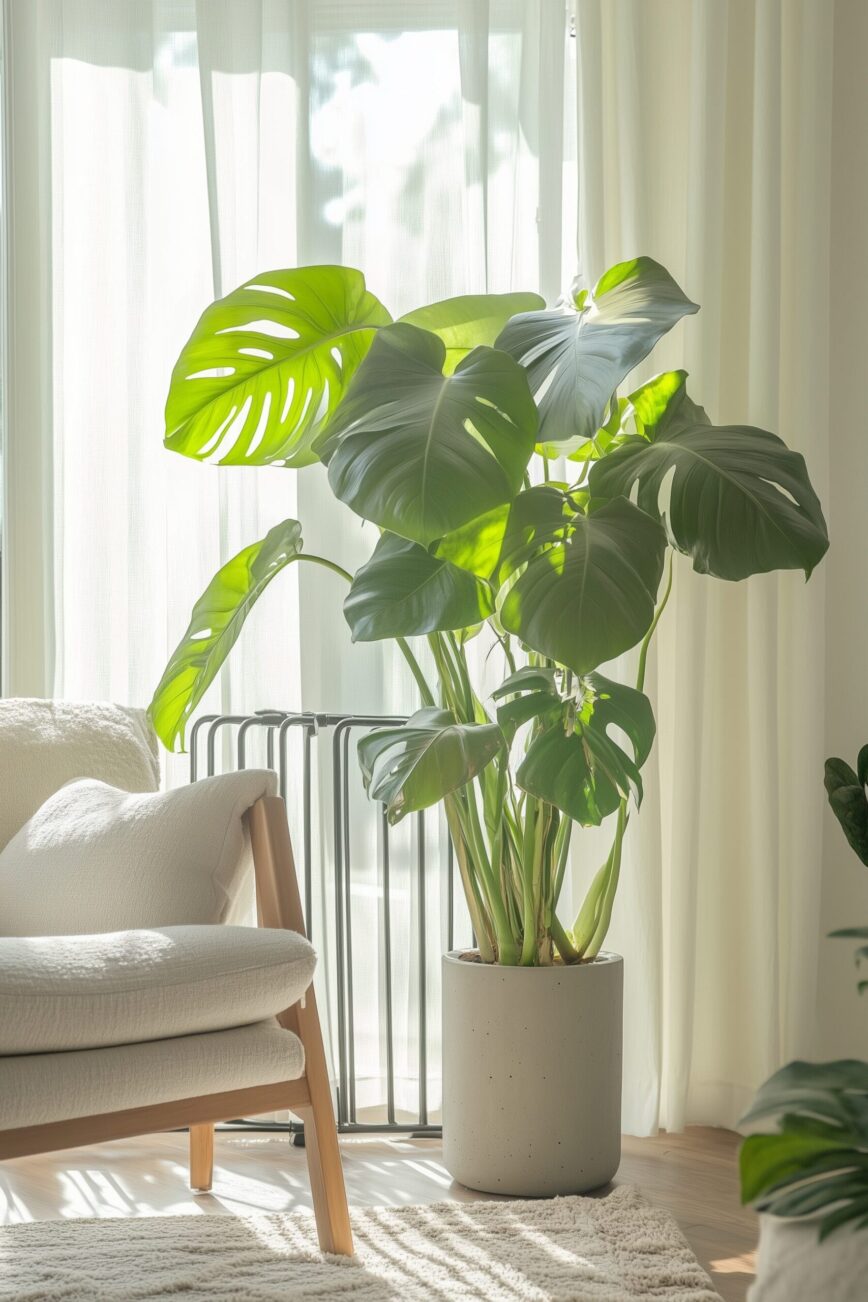
My phone’s search tabs look like an intervention of sorts: “Are monsteras toxic to cats,” “Cool-looking houseplants that are safe for pets,” “How to keep plants away from your dogs without making it look like a prison.” Real life is not neat. Real houses are messier. You want that beautiful monstera with the lush, split-leaf moment you can say you own, while also wanting your cat to just live a long, happy no-drama life without the stress of eating every botanical decoration like an amuse-bouche. This is the balance so many of us are trying to navigate presently – design we think looks adult, safe space we know is safe, and a routine we can manage weekly without making lists or crying.
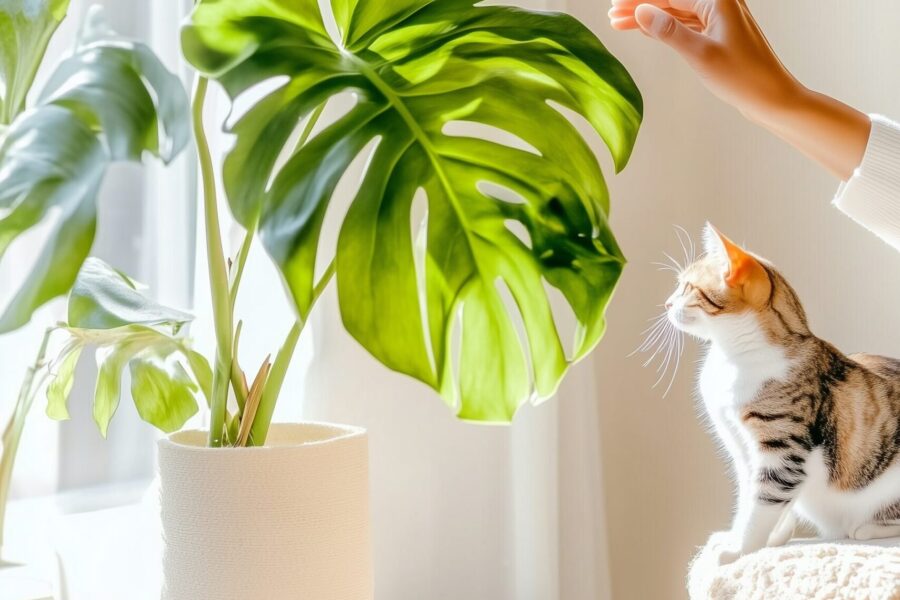
Here’s the quick, honest, and upfront for anyone skimming: monsteras are not safe for pets. They’re stunning, sculptural, Instagram royalty houseplants, but one of the reasons they are so inviting and keep the aesthetic interesting is that they have insoluble calcium oxalate crystals in their structure that can irritate your pets’ mouth and stomach. You may see it when they’re drooling, pawing at their mouth or vomiting. Usually not fatal, but still no fun. The internet likes absolutes. Your living room does not. In this post you will learn exactly what I understand about monsteras and your pets, how to style them without losing your cool, where to have them in your home so your dog is not attacking their new salad, and then what plants to purchase to create the same aesthetic but without the concerned panic or hysteria. The objective is to create a space that is beautiful, safe, and also manageable in regard to your weekly cleaning schedule, your Downy Calm, your Swiffer and your sanity.
I live in the land of pretty + practical.A well-organized space is a fabulous space. I am a huge fan of checklists, fresh sheets, and a trash can that does not smell. As well as a plant corner that has the aesthetic of a boutique hotel lobby. You are capable of thriving with both, I promise.
1) What “Toxic” Really Means For Monsteras + Your Pets
“Toxic” sounds scary; however, it is nuanced. Monsteras contain calcium oxalate crystals. When a pet (cat or dog) chews on the leaves or stem, the crystals can cause immediate oral irritation—tingling/burning, copious drooling, lip smacking, pawing the mouth, and even possibly vomiting. Severe reactions are uncommon for otherwise healthy pets. Emergency-level pet reactions usually occur when the animals eat large amounts or they also have an underlying health issue. I would suggest calling your veterinarian if your pet actually ingests a piece of the plant; especially if you see swelling or problems swallowing the piece. Quick gut check: be cautious, not panicked. That is the energy.
Professional tip for anxious brains: put your vet’s phone number in your phone contacts, grab a small notepad, and keep it in your kitchen drawer specifically for “pet incidents.” Simply write down what happened and when. It will hopefully relieve some anxiety having an example of a plan.

2) Where To Put Your Monstera So Your Cat Doesn’t Treat It Like Salad
Placement is the whole game. Elevation solves most of the issues. I have my monstera up on a sturdy pedestal planter that is about bar-height, tucked behind a console table, two feet away from the edge of the sofa. I am creating a no-landing-zone for crazy jumpers. Yes, it can go to a shelf; the classic hack! But style it like it is an intentional moment: stack a low chunky book, add a cute ceramic catch-all, then throw the plant there. Pretty + intentional = less desirable.More placement ideas that actually work:
Corner triangle: place plant behind an accent chair + next to a floor standing lamp. Difficult to reach, good light, creates ambiance.
Window “stage”: place monster plant on the windowsill or a window bench with a short clear acrylic riser. Barrier for pets, drama for humans.
Plant cluster: group plant with one or two tall, safe plants, in the same space. The plant trio looks lush and confuses the nibblers. Orchestra pit, not snack bar.
Also a bonus, add a moss pole or stake and tie large leaves slightly inward using soft plant ties. The silhouette will stay sculptural, less floppy and less likely to be batted or chewed.
3) House Rules That Save You From Running Out of Options
Pets need guardrails like we need a calendar. Simple house rules win in this instance:
No digging, so keep everything covered. Cover soil with chunky decorative rocks or coco coir chunks. When there is nothing to dig in, interest will decrease as curiosity will start to dull.
Food comes from bowls. Not leaves. Make them interested in toys, not leaves. Feels easy enough, works magically.
Use “leave it” as a repetitive reinforcement. If you have five treats, five minutes and choose one time a day to work on it for a week just by telling them to “leave it”. If nobody is injured, specifically your plant so it is boring till suddenly you have a café stop.
Have small children also in the mix? Same rules essentially but couples with “plants are for looking”, sounds silly articulate but works great some how with them.
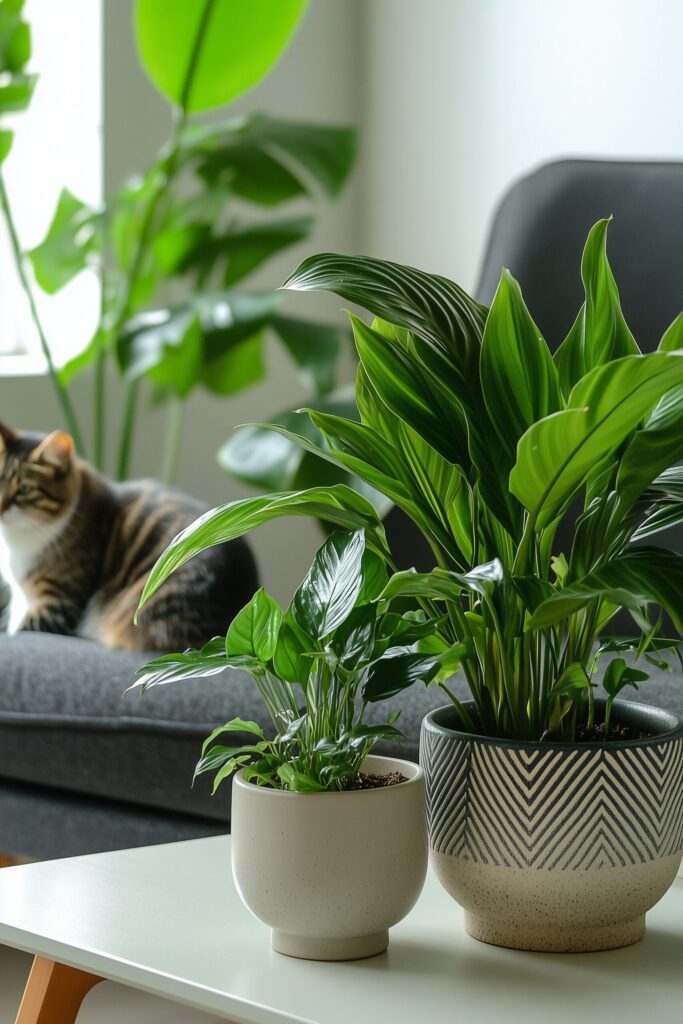
4) Styling A Monstera That Looks Designer, Functions; Like A Fort
I love a pretty space. I love my dog. That’s the equation you are trying to manage.
Pot: heavy + tall.I really like ribbed cement planters that won’t tip if your 60-pound dog air-sneezes.
Base: felt pads underneath the plant holder so you can micro-slide it during your weekly dash with the vacuum and not scratch your floor.
Underlayer: a clear plastic saucer hidden inside the planter. No puddles of surprise water.
Visual shields: a low basket, or a side table in front that says “this is decor, not a snack.” Pets read furniture the same way we read “Do Not Enter.”
When you line the back planter with a narrow console table, it makes a little “plant alley.” It feels like a thoughtful design, not barriers. Chic, not caged.
5) What To Do If Your Pet Nibbles Anyway
Life happens, and it’s okay. And, if they suddenly have no access to the plant. Move it temporarily into a bathroom or hijack some space on a kitchen counter while you investigate what is going on.
First, you want to gently rinse with water. Next use some kind of soft cloth to wipe off any sap any from the plant in their fur or at the edges of their mouth.
Then you have to monitor their symptoms. Sometimes this can lead to a little drooling and mild vomiting. These symptoms are usually short-term, but should you have any concerns, give your vet a call. Don’t feel bad; it is always better to call than to guess.
To stop it from continuing, charge back up your established boundaries. When things are calm you can experiment with placement: Higher. Tighter. Less jumpable.
You probably may need to retrain a refresh: two or three short but focused “leave it” sessions the following days gets you back on track.
And remember, if you have kids you probably get this already: keep your sense of humor. The worst I have ever walked into was a feline crime scene of shredded sphagnum while my cat was doing parkour on the nearest high-up surface. Everything worked out.
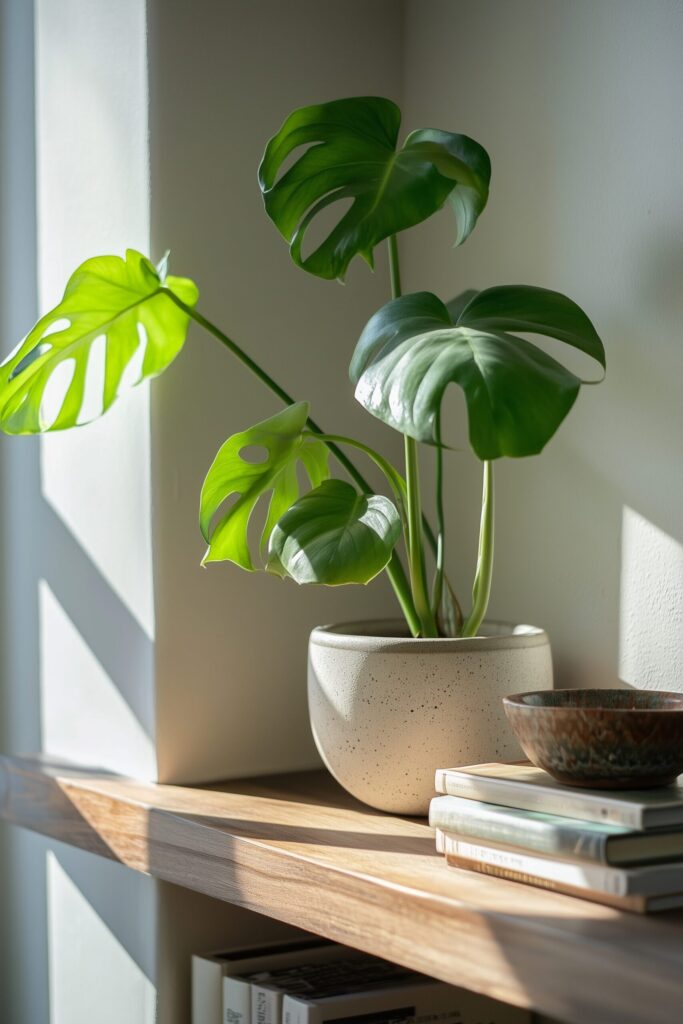
6) Weekly Monstera Care That Also Deters Chewing
Generally, a well cared for plant is less likely to look (or taste) like a collapsed broken toy. My routine as a pet deterrent:
With a barely damp microfiber cloth, dust leaves every Sunday. Clean leaves aren’t as fun to bat at and look pretty when fresh, bright light hits them.
Rotate the pot one-quarter turn each time you water. Lopsided plants grow toward walkways, and it creates an accidental swat by guests.
If you see a damaged leaf (especially a jagged edge), snip it off immediately with clean shears. Jagged edges are inviting! Snip, toss, and move on.
Create a watering schedule and stick with it. Watering when the plant is needing water will equal weeping monsteras and excess water = more chance of temptation. I always water when the top 2 inches are dry.
Only fertilize lightly in the growing season (and stop fertilizing when growth starts to slow). A calm, non-growing plant replaces the energy of chaos in the space with calm energy. Yes—I’m that person.
Close the loop with the floors too! Vacuum the stray potting mix from watering, wipe the planter rim, and refresh the decorative rocks; it takes minutes but the whole space feels more pulled together.
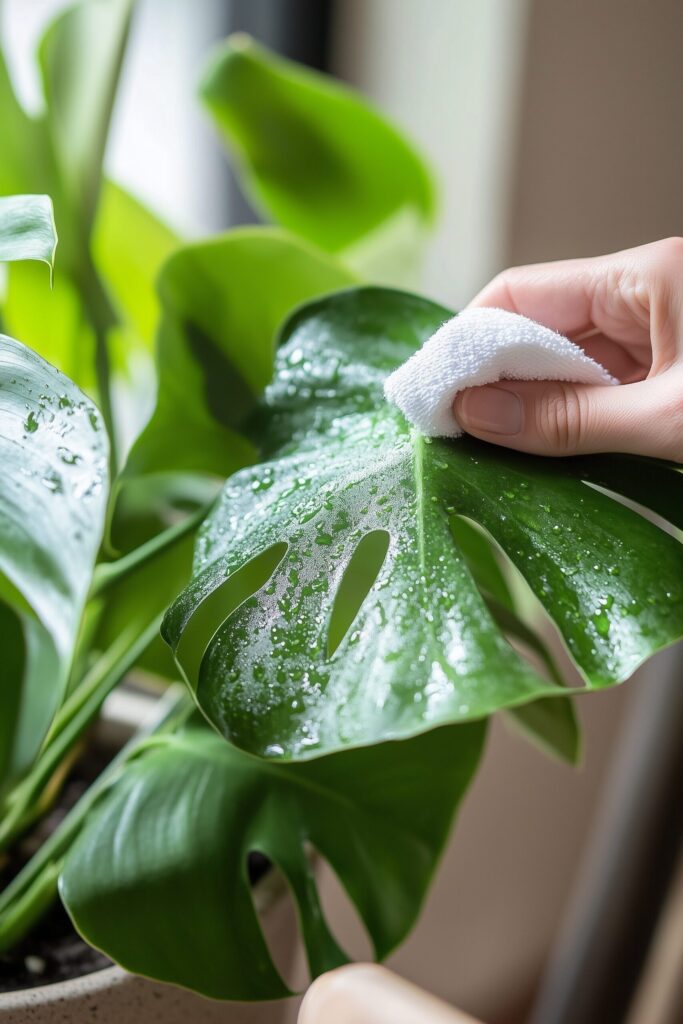
7) Tools And “Pet-Safeish” Support Items I Actually Use
I’m team practical—but these are the MVPs that I use to keep things easy:
A Swiffer duster for the dust that settles on the leaves between big wipe downs. Quick swish = instant shine!
A small, handheld vacuum for soil spills. I cannot stand gritty floors.
A fabric-safe deterrent spray on the outside of the pots, if your pet gets curious. Always spray the bottom rim of the pot first to ensure it is safe with the decorative rim on.
Soft Velcro plant ties to pull the leaves toward the pole and away habitats.
A simple folding pet gate works during plant care around options. Gate goes up to water + prune; gate goes down to leave the house as normal.
Maintain plants and not create a second job.
8) Zones for Kids and Pets that Keep the Plants Beautiful
If your living room is like Grand Central Station, consider subdividing space:
Reading corner: chair + lamp + side table + monstera on a plinth above and behind the chair. No touching, eyes on.
TV wall: console + baskets + framed art. This wall always remains safe plants only. Your cat thinks they live here.
Entry drop zone: hooks + bench + closed closet for various supplies. Don’t keep fertilizer or shears under the sink where the tail wags.
Everything we love deserves its own space. Then everything we love lasts longer. Even your sanity.

9) Pet-Friendly Options That Share Monstera Vibes
You want the height, drama and texture for your room without the worry. Here are lovely options with the ‘not toxic to cats/dogs’ designation:
Calathea orbifolia or makoyana: full leaves and painterly patterns; set the spa vibe.
Parlor palm (Chamaedorea elegans): fluffy, soft, and low-key maintenance.
Areca palm: the kept beach vibe, taller, with soft feathered tops that distract the eye.
Spider plant: jumping playful arching leaves, babies through-out the year, amazing look in a pedestal pot.
Peperomia obtusifolia: shiny, round leaves, especially impressive in groups.
Boston fern: full, lovable, photogenic, always loves bathrooms and kitchens.
Combine two or three. Vary the height, size and pot texture. Your combined composition will distract the eye and give pets the opportunity to experience you, rather than thinking about any foliage.
10) Let’s Get Real About “Rehoming The Plant” vs “Rehoming The Factors”
When the thought crosses your mind, do I keep the plant or my sanity. I would vote for habits to change first. Relocate, alter, add your petition with a gate. Train “leave itAfter a couple of weeks, most households grow accustomed to the new surroundings. If your pet is truly freaked out about the monstera or if you’re away for long hours and can’t witness the mayhem, changing to a pet-safe plant is not failing – it’s a sign of style growth. Beautiful is easy. Peaceful is better.
11) The Design Recipe: Lush, Safe, and Easy
This is the recipe I use for clients and friends because it works in small studio apartments and sprawling homes:
- Choose your hero. If your hero is a monstera, grab a healthy medium monstera, not a big boisterous monstera that you can’t control.
- Build a base. Pair a tall, heavy planter with a riser insert, hidden saucer, and a few decorative rocks on the top layer.
- Set the scene. Hide it behind furniture with a clear visual barrier in the room.
- Tether the growth. I use a moss pole and soft ties, facing the leaves slightly inward.
- Layer some friends. Add one medium pet-friendly plant that looks interesting and one smaller pet-safe textural plant to make it look intentional.
- Train your cast. Daily, for two weeks, seriously state – “leave it,” and give a treat like you mean it.
- Clean weekly. Dust leaves, vacuum the floors, refresh decorative rocks, and do a quick suiting with a micro-fiber cloth.
- Review monthly. Rotate the pot, do some light pruning, and repeatedly evaluate placement as the plant grows.
What do you have now? Cool home that looks designed and lives easy-peasy, ridiculous to live in.

12) FAQs You’re Definitely Thinking
- Is it dangerous for young children to touch the leaves? Touching is good. Chewing or sap exposure, interpreted through their eyes, not good. Let’s be real – monitor your toddlers like you monitor everything else … a lot.
- Do monsteras release toxins in the air? No. There’s no cloud of toxicity floating in the air.- The issue arises from chewing, or getting sap into their eyes. It’s not necessarily something from the ambient air. In some situations it doesn’t seem to be an issue under any controlled exposure.
- If I have a cat, can I keep a monstera in the bedroom? You can if it is raised, blocked off, or your kitty understands boundaries. If during the transition of that cherished cat under the stars, you slept like a rock, then I would have something more controlled.
- If I’m traveling, what do I do about watering? Just set the planter in the tub with a towel on the bottom for stability, warn the plant well before you go, and gate the room for the pet-sitter while you are away, easy!
13) The Gentle Exit Strategy If It’s Not Working
Sometimes the vibe isn’t vibing. Pass the plan onto a friend or a lofty office for sunnier ceilings, get a parlor palm, update the couch pillows, or maybe a candle. At the end of the day, your living room should have a moment of joy for maintaining adulthood. It’s approximately feeling like a fresh sheet Sunday with vacuum lines every once in a while. That is the point.
14) One final word, Beauty Without Worry
Your home gets to feel like you. A plant lady can ultimately even be a pet parent. A monstera is beauty and art, right? Those huge split leaves give you a “I drink iced coffee and file my taxes on time” type of feel. Pets create life, joy, gewgaws, and some occasional crime scenes. With some smart placement, a small amount of routine, and some barriers, you can get both. Safety is not anti-design; it is the most indulgent aspect of design because it allows you to rest. I promise this works. I have done it in a tiny apartment, the busy family room, and in a tiny bedroom. It is lovely, safe, and easy. Goals met.



Leave a Reply