

There’s something enchanting about the lush, green Monstera you’ve enjoyed and want to take home: those iconic split leaves that add vitality and tropical character to any space! It’s no surprise that these popular plants have become favorites on Instagram feeds and with home décor enthusiasts everywhere. But if you happen to have a curious cat or rambunctious puppy, that beautiful Monstera may raise an important question: is it safe for my furry friends?!
I’ll never forget bringing my first Monstera deliciosa home. Within minutes my cat Willow was sniffing the leaves as if she had just discovered the jungle. Then it dawned on me: I actually did not know if Monsteras were pet friendly. The first thing I did was look it up and oh, how I wish I had fact-checked this before I even put the plant down… Monsteras are toxic to your pets if you chew or consume them. If you’re in the same boat, just take a deep breath. This post will cover the basics of Monsteras, toxicity, and keeping both your plants and pets safe!
So, right off the bat, yes, Monsteras are toxic to pets like cats and dogs. They contain calcium oxalate crystals, which are a major irritant when exposed to their mouths or digestive system, causing irritation and discomfort. Although rarely fatal, this can be an irritating and traumatic experience for you both. The trick is to know how to avoid it, and what to look for if your pet does take a bite. Now let’s get into everything you need to know about Monsteras and pets so that you can safely and confidently decorate!
Shop: monstera plant care tools
Are Monsteras Toxic to Pets and Why Does It Matter?
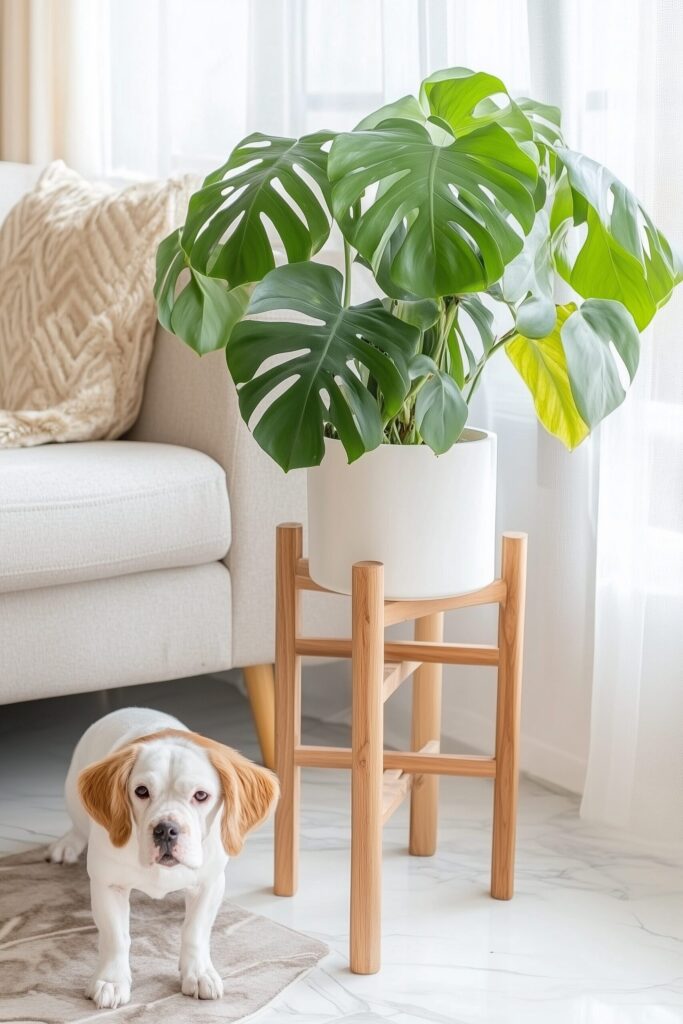
Monsteras, particularly Monstera deliciosa and Monstera adansonii, contain insoluble calcium oxalates within the stems and into the leaves. When your animal chews or bites the plant, these microscopic-sized crystals can become embedded in the mouth, tongue, and stomach wall, leading to burning, swelling, and irritation. You may see your cat drooling excessively, pawing at its face, or refusing food. In a dog, it may vomit, whimper, or paw at its mouth after contact with a Monstera.
The reaction is not typically life-threatening, but it is certainly distressing to your animal and alarming to watch. That is why understanding Monstera toxicity is important before bringing them into pet-friendly homes.
- Mild symptoms: Drooling, mild swelling, pawing at the mouth
- Severe symptoms: Vomiting, difficulty swallowing, reduced appetite
- Rare cases: Intense throat irritation or swelling that warrants vet attention
If you suspect ingestion, contact your veterinarian immediately or call a pet poison hotline. While it might resolve on its own, professional guidance is always safest.
Shop: cat safe plant alternatives
How Can You Keep a Monstera If You Have Pets?
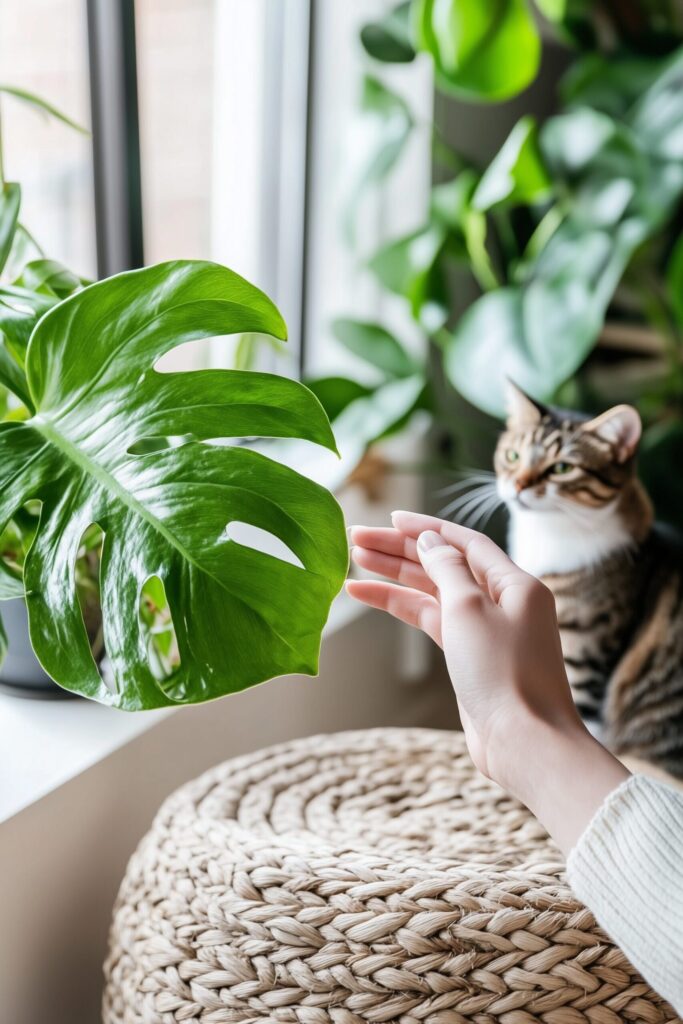
It’s totally possible to have Monsteras and pets under one roof—if you’re smart about placement and supervision. The first line of defense is keeping the plant physically out of reach. You can display it on a tall plant stand, inside hanging planters, or on wall shelves where cats and dogs can’t access it. If you’ve got an agile cat, opt for enclosed shelving or wall-mounted propagation planters for smaller Monstera cuttings.
For watering, be mindful of drips—pets sometimes lick water off plant trays or leaves, which could contain trace plant sap. Use gooseneck watering cans and drainage trays to control spills. And if there’s ever pruning or propagation happening, keep pets in another room until cleanup is complete.
Additionally, look for the occasion of leaf damage. If you see chew marks, your furry friend’s curiosity is still an issue, so think about either moving the plant to a different location or swapping it out for a non-toxic look-a-like, such as a Calathea or Areca palm.
Shop: hanging planters
Are Monsteras Toxic to Pets in Every Variety?
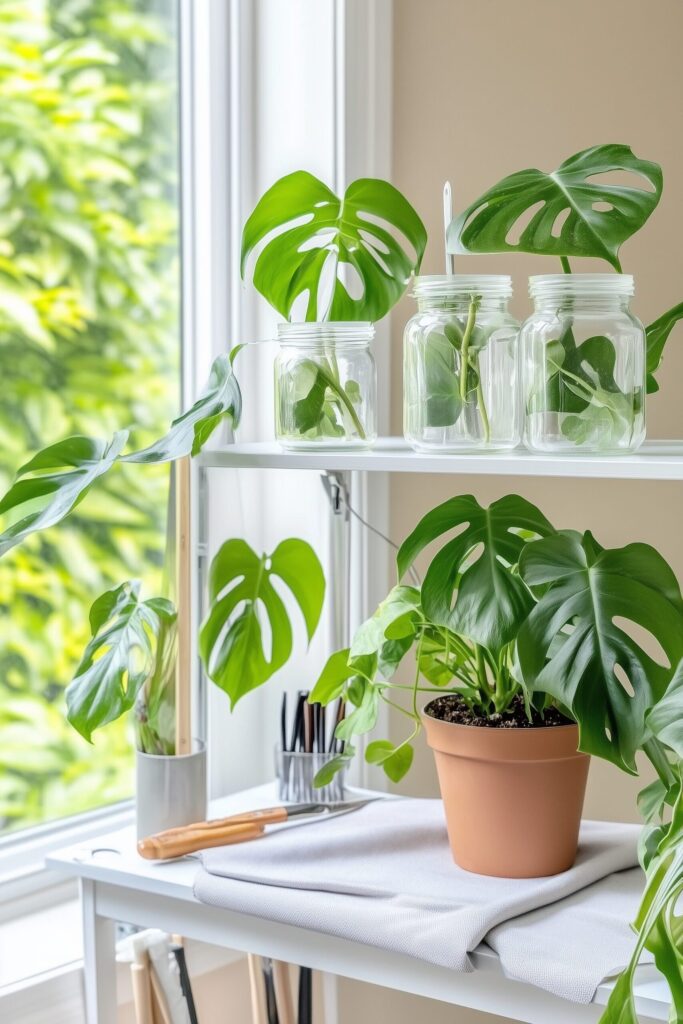
Indeed, every species of Monstera contains calcium oxalate crystals, including the crowd-pleaser Monstera deliciosa, the Swiss cheese plant, Monstera adansonii, and rare variegated types. Not a single species is considered cat or dog safe!
So if the tropical vibe of Monsteras excites you but cannot be an option, there are plenty of pet safe plants that provide the same lush foliage look as the Monsteras without the worries! Consider plants like the Parlor Palm, Boston Fern, or Spider Plant. Each of these pet-friendly plants provide a lush textured foliage without toxic concern and look great together! Many plant parents incorporate both – keeping their Monsteras as statement plants higher than where the pets can access, but using pet safe varieties adjoining their pet areas or on window perches where pets are fond of hanging out.
Shop: pet safe tropical plants
How Should You Care for a Monstera Safely Around Pets?
If you opt to keep your Monstera, regular plant care routines will help it be more successful and reduce the risk of surprise, accidental contact with your pet. A healthy Monstera will “sneeze” less sap, and splinter less often, leading to fewer reasons to nibble!
Here’s your go-to care routine:
- Light: Bright, indirect light is best. If natural light is limited, supplement with LED grow lights or full-spectrum grow bulbs.
- Water: Water only when the top few inches of soil feel dry—check with a moisture meter for accuracy.
- Soil: Use a chunky mix of all-purpose indoor potting mix, orchid bark mix, perlite, and a touch of peat moss.
- Humidity: Keep humidity high (around 60%) using a humidifier or pebble tray.
- Feeding: Apply organic houseplant food or slow-release fertilizer pellets monthly during the growing season.
As always, wipe off any sap residue after pruning with pruning shears. Sap may contain the same irritants as the leaves, so disposal and cleanup are crucial.
Shop: monstera care kit
Are Monsteras Toxic to Pets If They Only Touch the Leaves?
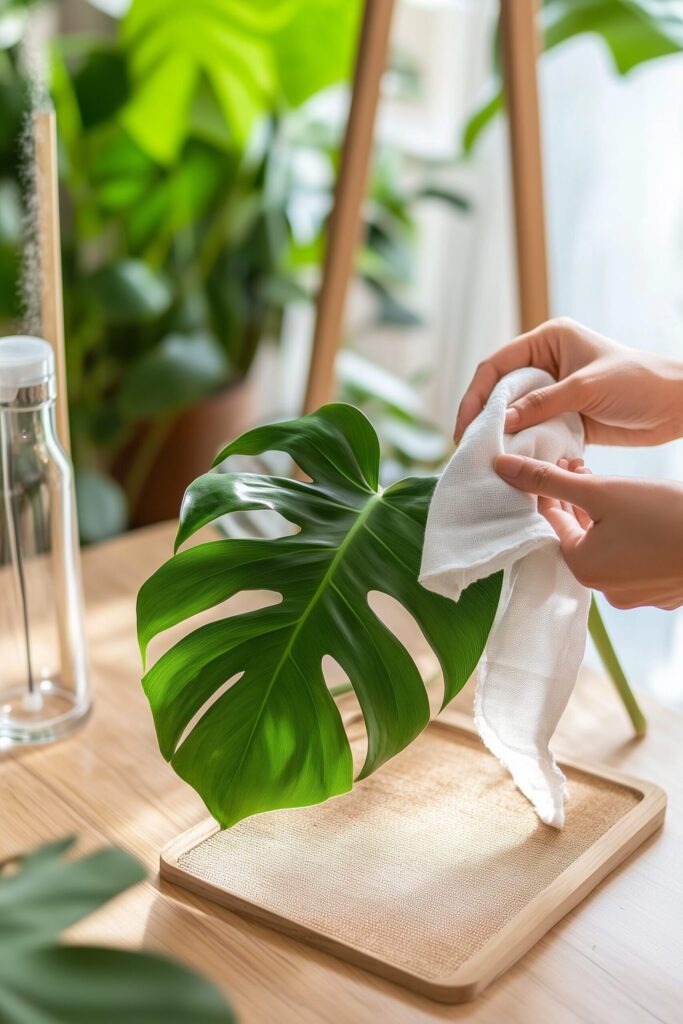
The good news is that your pet won’t be harmed just by rubbing against a Monstera leaf. The concern arises when chewing or ingestion occurs, as the oxalate crystals are located within the tissue versus on top. Just keep in mind that, if you’ve cut a leaf or damaged it recently, there may be sap that can get on sensitive skin or noses when they rub up against it, but it will not hurt your pet.
This means that if your cat is rubbing against the leaves, it is typically not a problem. However, just be sure that there is no visible sap left on the leaves. If your pet is especially sensitive, it may be worthwhile to wipe the leaves once in a while with a damp cloth or fine mister to remove dust and residue. It’ll also keep your Monstera looking camera-ready.
Shop: plant misters
What Should You Do If Your Pet Eats a Monstera Leaf?

Even with the best preventative measures in place, accidents can occur. If you’ve noticed chew marks on your plant or think your cat or dog has eaten part of your Monstera, take these simple steps:
- Remove access – As a first step, quickly try to remove access to the plant and move the plant out of reach to inhibit any further nibbling.
- Flush out your pet’s mouth with water – With a damp washcloth or a small amount of water, you can wipe your pet’s mouth to wash away the plant residue.
- Look for signs – Signs of an animal licking, vomiting, pawing at their mouth, or swelling of their face.
- Call your vet – Even if no symptoms exist it is important to call your family vet; and if you have access to the plant take a photo or bring a leaf sample if possible.
Most pets recover quickly, but in senior animals or those with pre-existing medical conditions, mild irritation can escalate. Having a pet first aid kit handy is never a bad idea for minor mishaps.
Shop: pet first aid kit
Are Monsteras Toxic to Pets When Propagated or Repotted?
Yes—the same toxicity applies while propagating and/or repotting your plant, since you will be cutting or dividing your plant. Just keep your pets away when cutting or dividing the plant. If a pet licks the sap of one of the freshly cut stems, it may irritate their mouth or skin. Wear gloves, use a clean pruning shear, and dust fresh cuttings with rooting hormone powder before planting in moistened soil using your soil scoop.
After this process, be sure to wipe down any surfaces you used, and bag the discarded leaves, as some pets may want to dig into discarded plant material. When repotting your monstera, be sure to use fresh soil that drains freely, while adding some of the following components such as LECA clay pebbles and activated charcoal for aeration and freshness. Keep all plant workstations off the floor if your pets are known explorers.
Shop: indoor repotting kit
Are Monsteras Toxic to Pets Over Time or Only When Ingested?
It’s only harmful if eaten or chewed; however, being exposed to the plant over time is not good for the pet either. Pets that get in the habit of chewing on leaves will have irritation build up over time, even if they only eat a little, and some pets will develop a mild aversion because of one event while others will keep trying. If you find your pet to be determined, it may be worth it to temporarily put the Monstera in a rooms that can be closed off.
You can also introduce deterrents by applying a gentle pet-safe spray or sprinkle a small amount of diatomaceous earth around the pot’s rim—it keeps pests away and often discourages licking behavior. For both your plant’s and pet’s long-term health, establishing a physical boundary remains the best prevention strategy.
Shop: pet deterrent spray for plants
Which Pet-Safe Alternatives Resemble Monsteras?

If you can’t risk it or have especially mischievous pets, you can still create a Monstera-like aesthetic using safe lookalike plants. Try:
- Peperomia obtusifolia: Compact, shiny leaves and completely non-toxic.
- Prayer Plant: Stunning movement as its leaves fold and unfold through the day.
- Spider Plant: Arching greenery that adds the same visual drama.
- Calathea orbifolia: Broad, striped leaves and lush tropical vibes.
Group these with tall planters or shelves for a layered, jungle-inspired look that’s 100% safe. Mix in some self watering terracotta pots to make maintenance even easier.
Shop: pet safe houseplants
Conclusion: Can You Have Monsteras and Pets Together?
Of course—you can enjoy your Monstera and coexist safely with your pets as long as you are informed and intentional about you practices. Just because Monsteras are sometimes toxic to pets doesn’t mean you have to give them up; it’s simply creating a beautiful, pet-safe environment with small incremental steps. Your Monstera can still thrive out of paw’s reach, and your pets can thrive below, all due to small consistent adjustments in your awareness and care.
Remember, plants and pets bring us so much love and joy in our homes. You don’t have to choose one or the other. All you need is the right tools, some well-thought-out plant placement, and an awareness of what grows under your roof. Balancing all of those elements together can help shape your area into not only a home but a sanctuary.
This post was all about Understanding Monsteras and Pets: The Information You Need to Know.
Reader Q&A
Q1: Can I train my cat not to chew on my Monstera?
Yes! Use positive redirection—offer cat grass or pet-safe chew toys while moving the Monstera higher or out of sight.
Q2: Are Monsteras toxic to birds or rabbits?
Yes, similar reactions can occur. Keep Monsteras completely away from aviaries or rabbit enclosures.
Q3: Will a small lick of Monstera sap harm my dog?
It can cause mild irritation or drooling, but symptoms usually subside quickly with plenty of water. Still call your vet for advice.
Q4: Is Monstera water toxic if it runs off into my pet’s bowl?
Potentially. Always water plants away from food or water areas for your pets to avoid contamination.
Q5: What is the safest tropical-looking plant for pet owners?
Try the Parlor Palm—it delivers major tropical vibes without toxicity concerns.



Leave a Reply