At one point in my life, I thought that ‘plant people’ were born. I figured they just had some sort of a secret gene that let them know when to water and why their fiddle leaf occupied so much real estate with its biweekly tantrums. Spoiler alert: there’s no gene. There is just one simple rhythm, a few tiny tools, and one basic weekly routine that even a beginner can manage. If you are looking for the easy, practical, totally-doable way to set up your space, select plants, and keep them alive without turning your living room into a science experiment, this is the beginner’s guide to indoor plants for you! If you are looking a plan for indoor plant care, easy indoor plants that tolerate low light, the best soil for indoor plants, or a weekly indoor watering schedule that makes sense, you will find all of it in the the following guidelines. We are keeping this neat and clean and oh-so real.
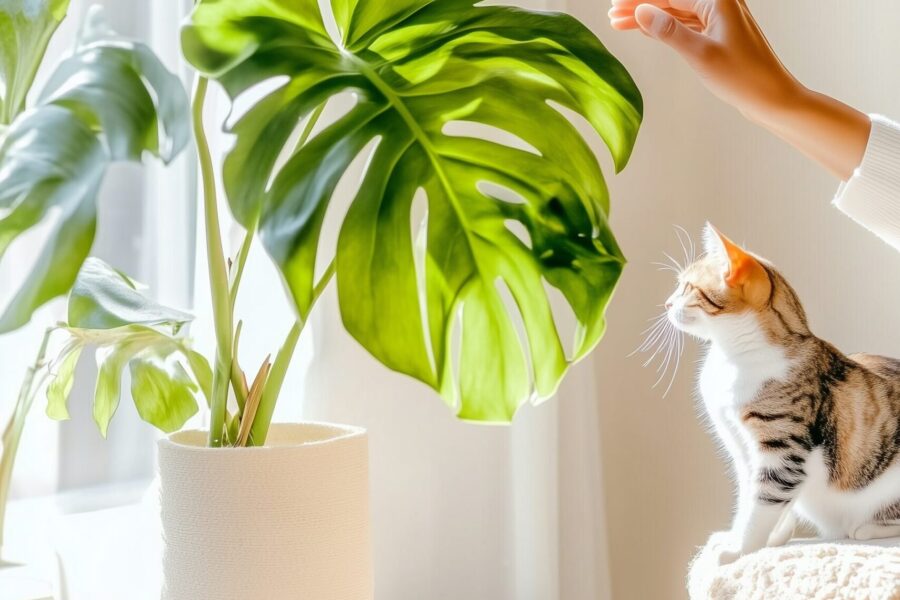
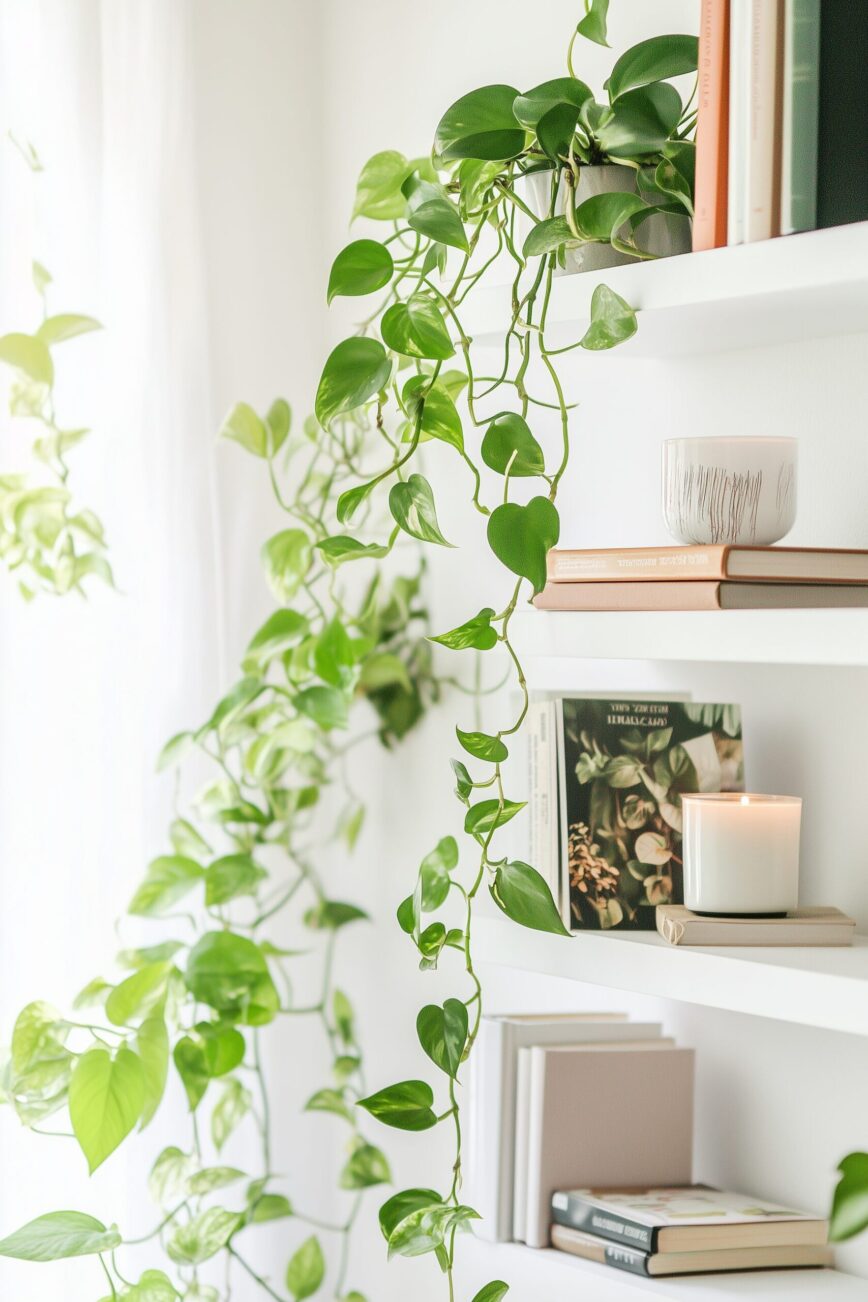
My first indoor plant was one pothos. Classic starter plant. I placed it on a bookshelf, forgot about it, and felt personally victimized when my one pothos turned crispy. No more of that nonsense. Plants aren’t dramatic. Plants are just particular. If you provide with plants the basics—light, water, soil, and airflow—they will you pay back with glossy leaves and anything that feels spa-like. You will learn. Accountability! And yes, I still have lengthy political conversations with my Monstera. No big deal.
Below is everything I do; the exact plan I wish someone had presented me with on a simple one-page checklist. It’s simple. It’s repeatable. It’s the ultimate guide for beginners to houseplants, as it is simple and actually enjoyable.
Know What Plants are right for your light
Now you must glance around your house today and over the next few days. Daily. What time of day is the sun shining in that part of your house? Which corners are bright and indirect? Bright enough to read a book without turning on a lamp? How are you finding the right plants? You don’t need an app for that.
Direct. or indirect. For the complete beginner, choose plants that turn out to be forgiving:
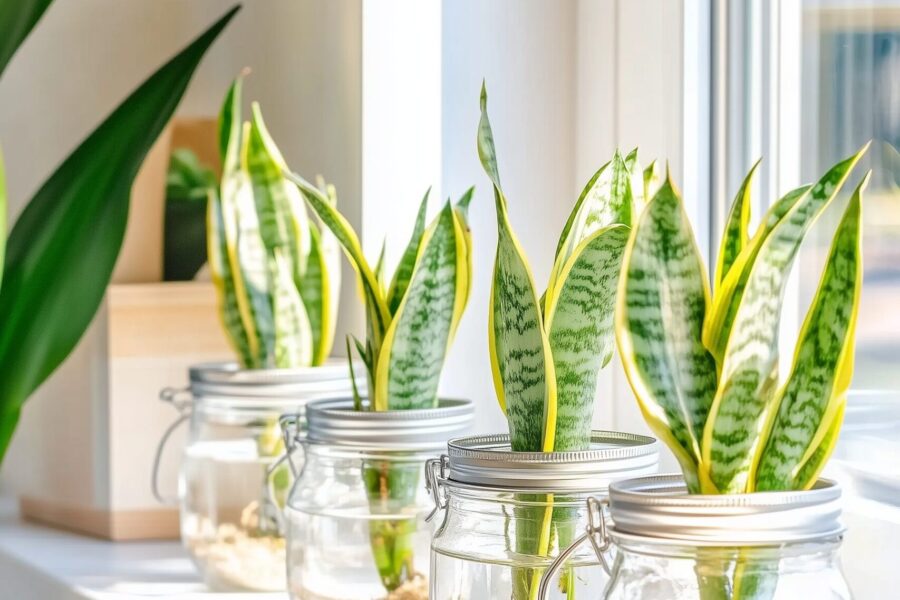
- Low light. Snake plants, ZZ plant, pothos, philodendron, cast iron plant.
- Bright indirect light. Monstera deliciosa, rubber plant, noodle plant, dracaena.
- Sunny window all day. Succulents, cacti, jade, string of pearls.
Know the golden rule of watering
Overwatering is not watering too much at one time; it is watering too often, and this is a big difference to know. Most tropical houseplants to get a good drink and then rest a little dryer. Here’s how to tell when to water: Use your fingertip, stick it in the dirt. If the first inch or two feel dry, then water it. If it feels cool/damp, then don’t water.
If you are not sure, it is okay to buy a cheap moisture reader, it will help a little while you are learning, but not always the answer (and not necessary). Water the plant until you can see it draining from the botto, then empty the saucer.
Create a ritual of checking in on your plants. I check in on Sundays once a week and I find it pretty painless.
Remember that the plants in bright light will dry out quicker, and the plants in low light will hold moisture longer. You will learn to tell when to water the plants pretty quickly.
3.Pot And Soil: Don’t Choke The Roots
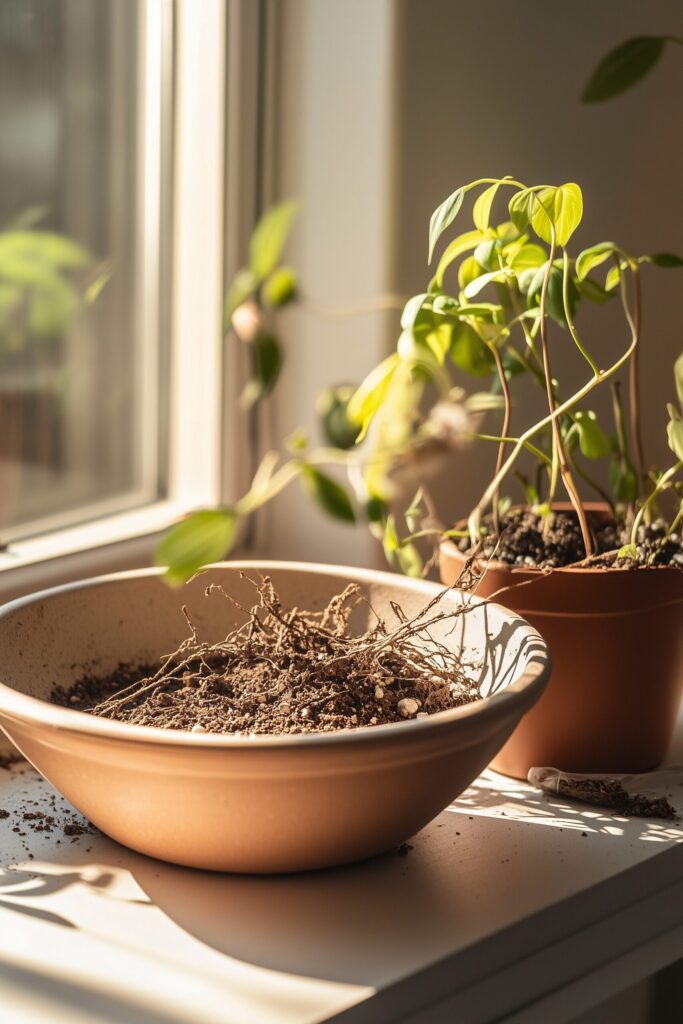
Roots require air pockets and drainage. Flow. Use a pot that has at least one drainage hole. If your gorgeous pot doesn’t have a drainage hole (insert montage of pup dancing, water, sadness), you can always use a lightweight plastic nursery pot like a liner inside your pot to receive the excess water.
Soil basics for newbies:
- General indoor potting mix for tropicals
- Add perlite (a lightweight volcanic glass to add air flow) if your plant is always wet
- Cacti/succulents want gritty, fast draining mix
- Orchids are better on chunky bark
- LECA ( clay balls) are a fun, advanced option, not for day 1 though
Repot your plants every 12-18 month or when they want to break their way out of the bottom of the pot and the water goes right through.
Light As Food: Supplement If You Can
If it is cave-core in your home (or office?) then an easy-to-use organized LED grow light can’t be beaten….nothing intense, I promise. A small panel or clip-on bars near your plant, and do on a timer—or course! 10-12 hrs is good.
Have the light close (8-18 inches away); putting it too close burning your leaves. You’ll know if you’re too close if your new growth comes in long and leggy “I’m hungry for more light.”
Humidity + Airflow: The Quiet Details
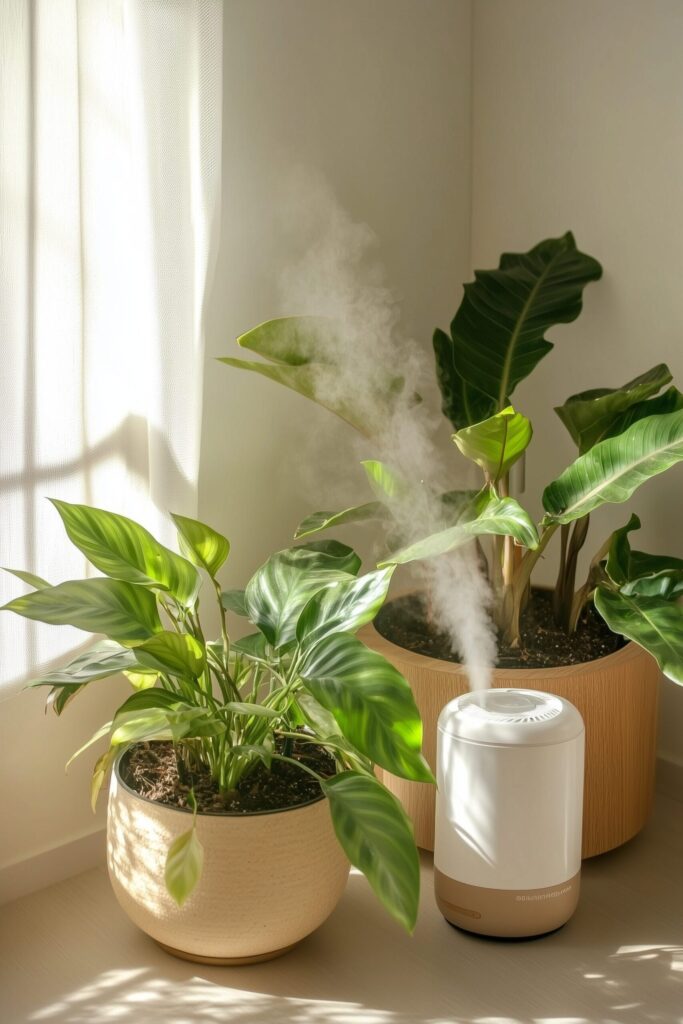
A majority of tropical plants won’t mind average homes as long as they are comfortable. If you see crispy tips of leaves, it’s possible that your air humidity is low.
Small humidifier natural cluster of plants = happy leaves.
You can also provide a gentle bump by adding a pebble tray ( an inexpensive shallow tray of pebbles with water below the pot)—great option!
Whether it’s light or still air flow movement, a simple light oscillating fan (on low) is ideal.
Fertilizer: A Little, Not A Lot
Feed the plant in its time of active growth, e.g, spring through early fall. For beginners, half-strength liquid fertilizer every four to six weeks is ideal. In winter, when growth slows, feeding should also be skipped. More is not better, and too many nutrients can burn roots and create unnecessary issues.
An Easy Weekly Plant Care Routine
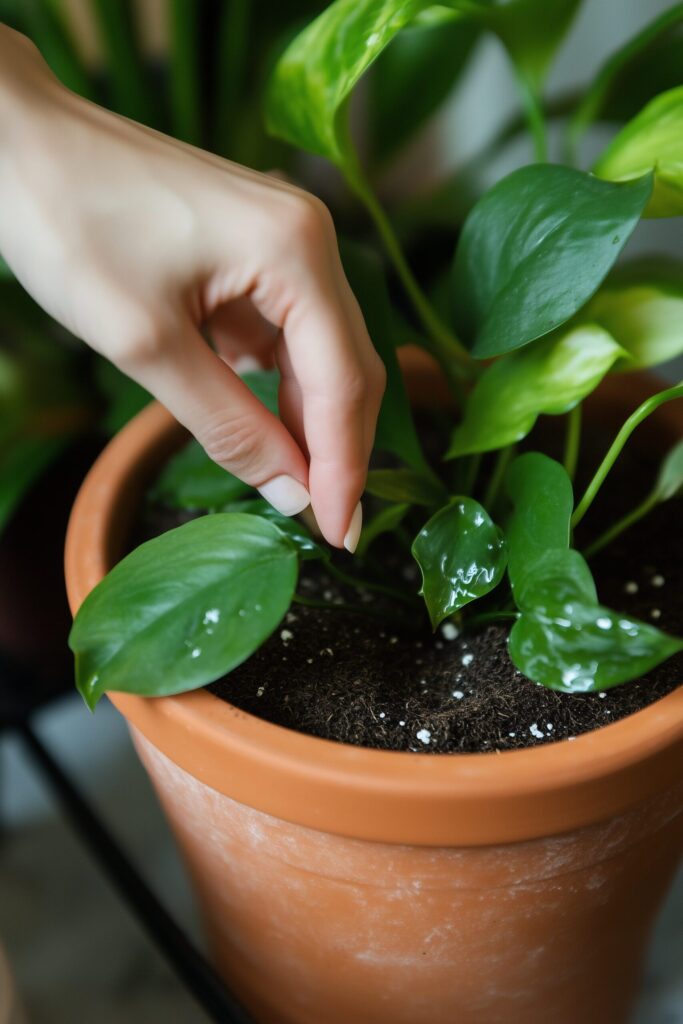
The routine below is exactly how I tend my plants, and it takes, at most, 15 minutes to do:
Walk and Check
Look at each plant. New growth? Dusty leaves? Droop? Quick overview.
Water As Needed
Finger test: if dry, completely water. If moist, skip. I keep “ready to water” together in the sink.
Dust and Shine
Use a barely damp microfiber cloth to wipe the leaves of loose debris. Clean leaves photosynthesize better and look beautiful. It’s like giving your plant a little (tiny) spa day.
Rotate
Every pot should be turned a quarter turn, to keep the growth even, and the plant from leaning.
Prune Dead Bits
Yellow leaves can easily be cut close to the stem. Don’t feel guilty; the plant is directed to use its energy for healthy leaves.
Refresh The Topsoil
If the topsoil looks compacted, loosen a small amount with a chopstick, to allow for airflow.
Simple, easy, fresh.
Choosing Pots That Work (And Look Good)
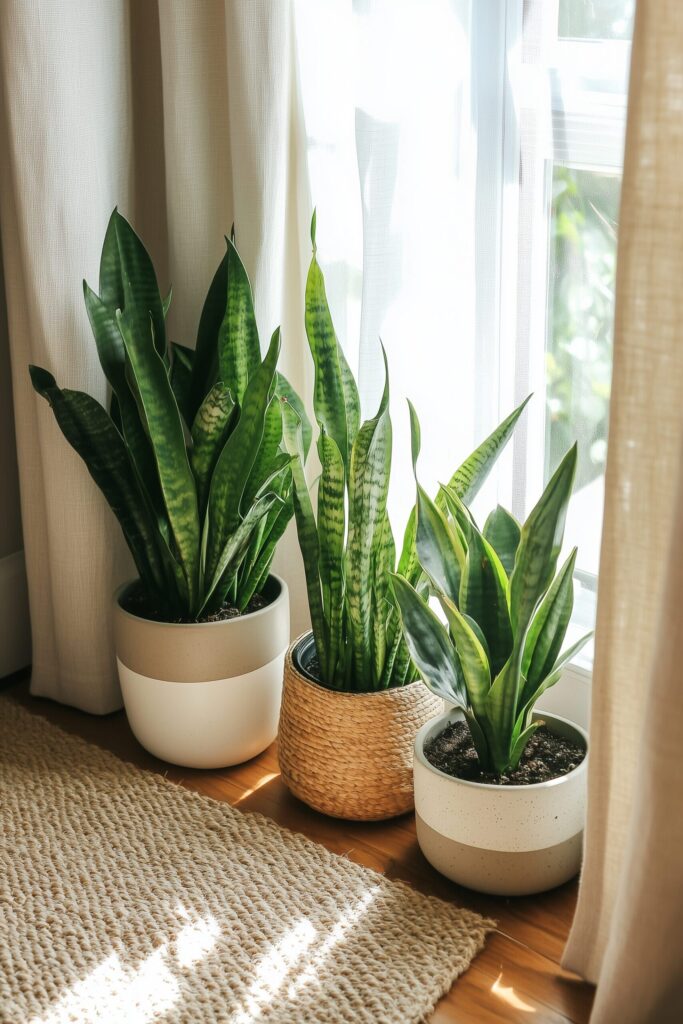
Of course, the pots should be stylish. Use pots that are in your style (mainly of your vibe), but at a minimum, all inner pots should have drainage holes that allow the soil and plant to breathe. As for pot size, think of this rule: pot size should be around the same size as the plant. When re-potting, the new pot should be no more than 1-2 inches larger in diameter than the last pot, because the larger/fatter the pot, the wetter the soil stays, and the wetter the soil, the higher the chance of root rot. Who wants that?A saucer does not only help protect your shelves, it also helps keep your downstairs neighbor happy.
Styling your Plants in your Space
I have always thought of the plants as decor that just so happens to be living. A tall floor plant to anchor a corner. Some trailing pothos to put up high for some motion. Or, a small structured plant that can fit in a stack of coffee table books provides some nice texture. I prefer to have different shapes of leaves in your plants – round, spiky and heart-shaped shapes all provide some visual interest. Once you add in some repetition, you look like you did it on purpose: three small plants in matching pots on your windowsill? Chef’s kiss.
The Baby Lineup: My Stress-Free Starter Kit!
Pick and choose 3-5 plants from the list below, and after about a month, you’ll feel like a complete pro:
- Snake plant: unkillable, tolerant of low light, water every 2-3 weeks.
- ZZ plant: glossy leaves, drought tolerant, low light tolerant.
- Golden pothos: grows fast, trails nicely, forgiving.
- Heart leaf philodendron: very similar to (and often confused with) pothos, soft and romantic trails.
- Rubber plant: loves bright, indirect light; will show you if it’s happy, sturdy with a dramatic shape.
- Peace lily: droops when thirsty. Water and it perks back up quickly.
- Spider plant: produces “baby” “spider” plants, easy to propagate.
- Chinese evergreen: patterned leaves, tolerable in low light.
Overall, pick two trailing ones, one that stands up or is upright, and one statement plant and you are all set.
Troubleshooting: What Your Plant is Telling You
Yellow leaves towards the bottom of the plant = most often from over watering, or normal aging of leaves. Always check if the soil is wet!
Crispy brown tips on leaves = low humidity, underwatering, or you have water with lots of minerals in it. Maybe try filtered water, and/or a small humidifyer.
Mushy stems & soil smells like sour = you have been overwatering or poor drainage. You can repot into some airy soil once it dries.
Leggy, stretching growth = your plant needs more light. Move closer to a window or consider getting a grow light.
Leaves are dropping off after you bring it home: It’s in an adjustment period. Just leave it in the same conditions and wait it out.
Pests Happen- Deal with Them First
- If you see sticky residue, webbing, small moving dots, or leaves speckled like they were hit by pepper- we have a pest situation.
- You will want to separate the plant immediately.
- You may give it a shower- gently, but make sure to get the undersides of the leaves.
- You may also want to wipe down the leaves with water that has a drop of mild dish soap added to warm water.
- Then you can start a light neem oil routine after the shower once a week for a few weeks.
- You want to keep air moving, put a fan on it since pests don’t like wind.
- It is totally normal. You can do it!
Propagation, Yes please, Free Plants
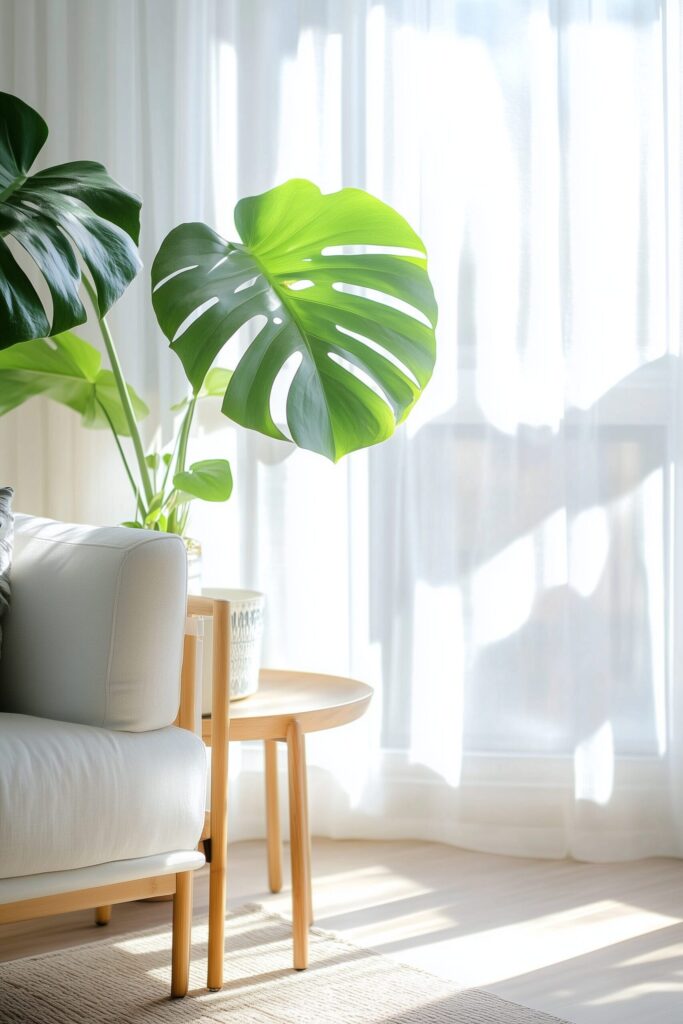
Some plants just propagate for fun. You can take a stem cutting just under a node (that little bump where the leaves sprout on the stem) and put it in water.
Just wait for roots to appear. Pothos, philodendron, and spiders are usually pretty good about giving you babies. Once the roots are a couple inches long you can place it in soil.
It’s oddly satisfying and makes good little gifts!
Pet Safe Plants (Because We Love our Fur Babies)
If your pets are nibbles, then you really just want plants that are consistently on the lists as non-toxic to cats and dogs:
parlor palm, calathea, peperomia, polka dot plant, pilea, hoya, spider plant.If you do decide to keep a toxic beauty, like pothos or philodendron, put it up high, or behind some barrier. And always do a quick safety check on anything you bring home.
Seasonal Adjustments: Keeping it Simple
Spring/Summer: plants are growing faster—water a little more often, possibly also start fertilizing lightly.
Fall: maybe water a little less since the days will be shorter.
Winter: plants will stop growing and need watering less often, stop fertilizing, water less often, and moved the pot away from any cold draft or heated radiator in winter. Clean the dust off your windows as small as that seems, every little bit is useful!
Tiny Doesn’t Always Mean Insignificant
Don’t Hold on to Common Myths
“Ice cubes are a good way to water orchids.” No, they are not. Give your orchid a proper soaking in room-temperature water, then drain a bit of excess water off.
“Misting has replaced watering.” It hasn’t. It is entirely a moment for human connection, not anything resembling actual hydration.
“More water = more love.” They don’t want to be drowned, like the rest of do not want to be drowned.
“It died because I have a ‘black thumb.” You did not. You just didn’t know the routine yet.
The Five-Minute Emergency Revive
- If your plant looks tragic, try a five minute reset:
- Check the light. Move it brighter (but still indirect).
- Check the soil. If it is bone dry give it a total soak and drain. If it is soggy, let it dry and increased the airflow.
- Trim the dead.
- Loosen the top soil.
- Leave it alone for a week. Stop hovering. Look for new growth.
Most plants will recover from what looks bad-bad (that is bad enough to be something more than bad). Give it time.
Your Beginner Supplies List (under 10 items)
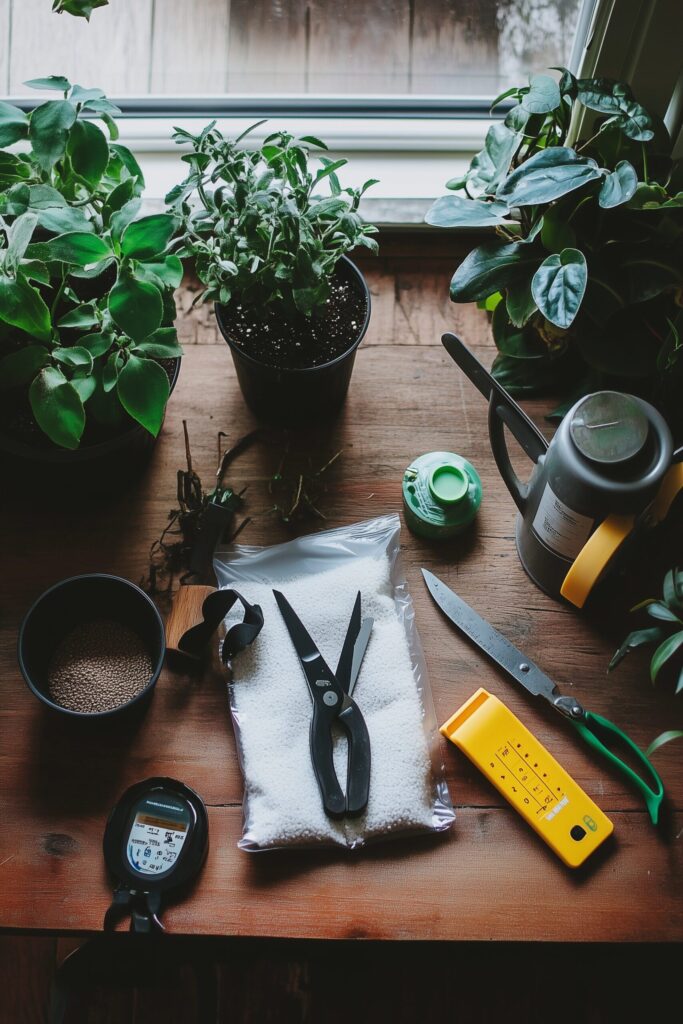
- Some people think you need a cart, which you don’t. Keep it simple, be a little brave.
- 3–5 good beginner plants for your level of light
- One potting mix suitable for indoors plus a small bag of perlite
- Pots with drainage holes for both and trays or additives.
- A microfiber cloth
- Some pruning snips
- A moisture meter (add/get this as needed, it will help)
- A small humidifier (as needed, if your air is dry)
- Now you have everything you need.
My indoor plant watering schedule
This will be subject to change as seasons change and plants behaviors towards changes , but here’s a starting template you can take cop, and then tweak:
Sunday: Check all plants. Water any that need it. Rotate. Wipe off any dust on leaves.
Wednesday: a quick check in the sunnyest windows only for mid week. It dries out faster in the sun.
Every First Sunday: all actively growing plants, fertilize with reduced half-strength.
Every three months: Wash each pot out, holding over the sink with a gentler long watering, to flush out any residual fertilizer sap.
Re-potting day last reference: this is a single afternoon where you can spend time with any root bound plants, listen to music, do what makes you happy.
It’s All a Vibe
So your plants are not just decoration, well-making an attempt anyway. They are a tiny little peice of routine you can rely on. You water, or wipe a leaf, or rotate the pot and your brain gets this great little hit of “I took care of something”. I did something to contribute to that…. It’s a nice experience. It’s a way of being present (not challenging), calm, and more. A clean sink or a made bed or your happy plant can change your whole mood.
This really is everything you need to know to get started. It is common to hold the viewpoint that you need to have tons of tools and somewhat be educated, simple, and present with it.
This post was all about the Beginner’s guide to houseplants, stay tuned for the next one on our goals to refer to, and let me know if anything did not make sense or if writing out your quotes are good. Thank you!